
Central Asia (1972–1983 CE): Late Soviet Stability, …
Years: 1972 - 1983
Central Asia (1972–1983 CE): Late Soviet Stability, Rising National Consciousness, and Socioeconomic Strains
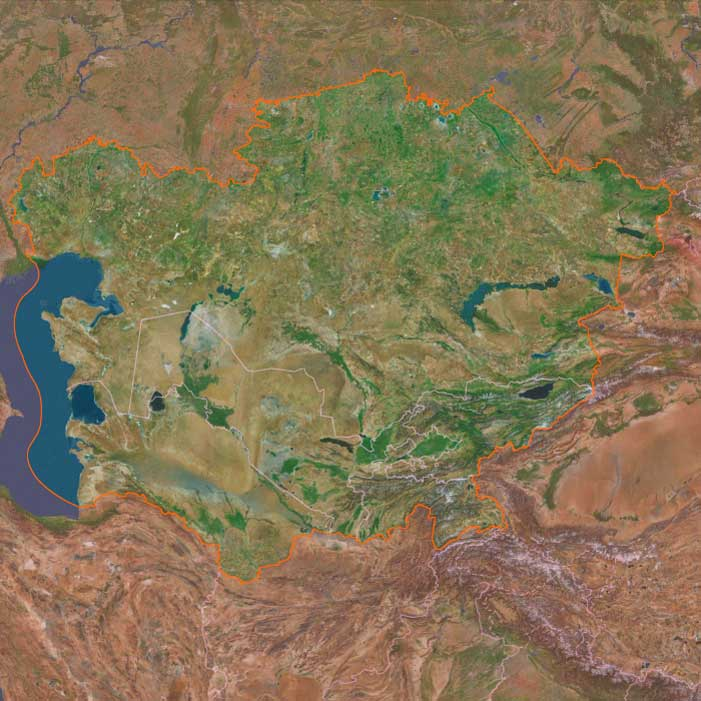
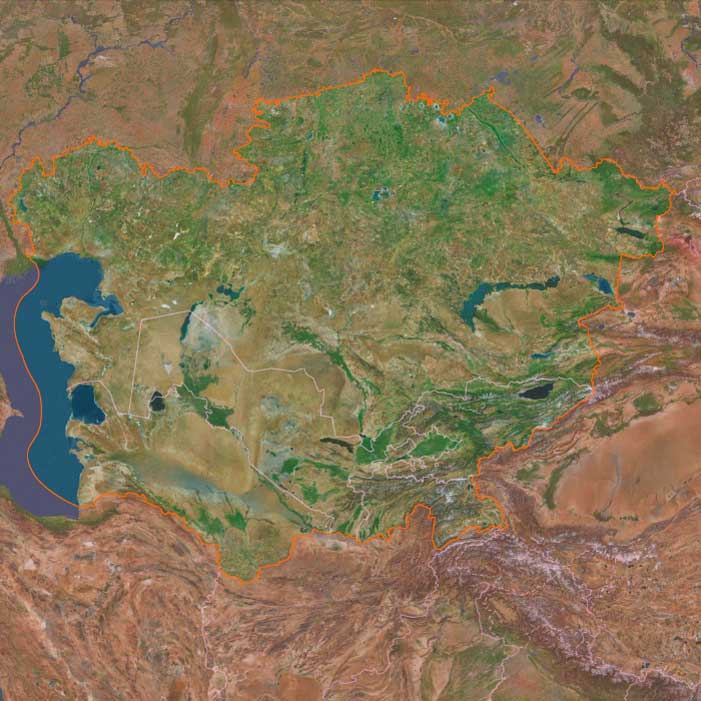
From 1972 to 1983 CE, Central Asia—encompassing modern-day Kazakhstan, Kyrgyzstan, Uzbekistan, Tajikistan, and Turkmenistan—experienced relative stability under late Soviet governance, yet beneath the surface, growing national consciousness, cultural revival, and mounting economic tensions became evident. This short era marked the subtle beginnings of transformations that would significantly influence the region's eventual independence.
Political Developments
Continued Soviet Centralization
Throughout the era, the Soviet government maintained strict centralized political control across Central Asia. Local leadership positions were closely managed by Moscow, reinforcing loyalty to Communist Party directives and limiting political autonomy.
Growing Ethnic Representation
Nevertheless, during this period, Central Asian Communist Party officials, such as Dinmukhamed Kunaev (Kazakhstan) and Sharaf Rashidov (Uzbekistan), increasingly represented local interests within Soviet politics, subtly enhancing national identity and regional influence.
Economic Developments
Stagnation and Economic Strains
Despite sustained industrial growth, Central Asian economies increasingly reflected the broader Soviet economic stagnation of the Brezhnev era. Production inefficiencies, resource mismanagement, and persistent shortages became more pronounced, creating mounting dissatisfaction among populations accustomed to improving living standards.
Environmental Crisis and Agricultural Decline
Agricultural productivity stagnated due to excessive irrigation, inefficient collective farming methods, and declining soil quality, especially in cotton-dependent Uzbekistan and Turkmenistan. The ecological disaster of the shrinking Aral Sea worsened dramatically, causing health crises and deepening economic hardship.
Cultural and Social Developments
Resurgence of Cultural Identity
During these years, despite tight Soviet censorship, Central Asian societies experienced a subtle yet discernible revival of cultural and national identity. Interest in traditional history, literature, language, and music began to rise, often expressed indirectly through literature, art, and informal social networks.
Islamic Revival in Private Spheres
Islamic traditions persisted quietly, often in domestic or private spheres. Informal religious networks and private ceremonies increased subtly in response to the limitations on public religious expression, laying the groundwork for later Islamic renewal after independence.
Social Developments and Urbanization
Urban Expansion and Population Growth
Rapid urbanization continued, with cities like Tashkent, Almaty, Dushanbe, and Bishkek experiencing steady growth. Urban infrastructures struggled to keep pace with population increases, leading to crowded housing, inadequate public services, and increasing social frustrations.
Educational Advances and Youth Frustration
Education levels remained high, yet the mismatch between educational attainment and limited career opportunities created frustration among educated youth. High expectations of employment and social mobility clashed with economic stagnation and bureaucratic inefficiency.
Long-Term Consequences and Historical Significance
The brief era from 1972 to 1983 CE revealed growing tensions beneath Central Asia's apparent stability. Politically, subtle nationalist sentiments began emerging within the Soviet political framework. Economically, stagnation deepened dissatisfaction, setting the stage for future unrest. Culturally and socially, this period subtly but importantly fostered a resurgence of ethnic identity and religious traditions, significantly influencing Central Asia’s path toward independence in the subsequent decade.
People
Groups
- Tajik people
- Kyrgyz
- Kazakhs (also spelled Kazaks, Qazaqs)
- Islam
- Turkmens (Central Asia)
- Uzbeks
- Russian Soviet Federated Socialist Republic
- Uzbek Soviet Socialist Republic
- Turkmen Soviet Socialist Republic
- Tajik Soviet Socialist Republic
- Kazakh Soviet Socialist Republic
- Kyrgyz Soviet Socialist Republic
Topics
Commodoties
Subjects
Regions
Subregions
Related Events
Filter results
Showing 10 events out of 2588 total
Northern South Atlantic (1972–Present): Strategic Shifts, Conservation, and the Pursuit of Sustainability
Ascension Island: Strategic Evolution and Technological Expansion
From the 1970s onward, Ascension Island consolidates its critical role as a strategic communications and military installation. The island's significance peaks during the Falklands War (1982) when the British military leverages the Wideawake Airfield as a vital staging point for aircraft deploying to the South Atlantic conflict zone. The strategic value demonstrated during this conflict strengthens Ascension’s geopolitical prominence.
Throughout the late 20th and early 21st centuries, Ascension continues to serve as an essential node in global communications and military infrastructure. Advanced satellite tracking and telemetry facilities support international space exploration and monitoring programs, most notably those operated by the European Space Agency (ESA), NASA, and the U.S. Air Force. High-tech installations like the BBC Atlantic Relay Station, established to broadcast radio transmissions into Africa and South America, further enhance Ascension's international relevance.
In recent decades, Ascension's governance evolves toward greater civilian participation. A small, diverse resident population develops, characterized by unique legal and social frameworks designed to balance civilian life with the island’s strategic military functions. However, permanent residency rights and self-determination remain ongoing issues, as most inhabitants remain temporary contract workers, highlighting the island's continued ambiguity between military use and civil society aspirations.
St. Helena: Isolation, Economic Revival, and Connectivity
Since the late 20th century, St. Helena grapples continuously with economic stagnation due to geographic isolation. Persistent emigration, primarily toward the UK, South Africa, and the Falkland Islands, exacerbates demographic pressures and contributes to labor shortages. The island’s reliance on British financial aid remains pronounced, though gradual efforts to diversify the local economy begin to take hold in the 21st century.
Efforts to improve global connectivity culminate with the construction and eventual opening of St. Helena Airport in 2016. Despite initial setbacks—including wind-shear problems limiting large aircraft access—the airport marks a significant shift toward economic self-sufficiency, promoting tourism, facilitating faster travel, and enabling increased investment opportunities. The new infrastructure is envisioned as a catalyst for economic revitalization, potentially ending centuries of acute geographic isolation.
Governance on St. Helena advances significantly during this period, with the island achieving greater administrative autonomy through enhanced democratic structures, including expanded local councils, ministerial systems, and public participation. Education, healthcare, and environmental sustainability become focal points for development policies, reflecting broader trends toward social progress and self-governance.
Conservation Initiatives and Ecological Restoration
Beginning in the 1980s and intensifying into the 21st century, both islands witness a growing awareness of environmental challenges, biodiversity conservation, and sustainable development. Ascension Island Marine Protected Area (MPA), established in 2019, covers 100% of Ascension's Exclusive Economic Zone, becoming one of the world's largest marine reserves. These efforts seek to protect critical habitats, including breeding grounds for endangered species like green turtles and nesting sites for seabirds.
Similarly, St. Helena establishes its own Marine Protected Area in 2016, significantly safeguarding local marine biodiversity. Both islands pursue aggressive conservation policies aimed at reversing environmental degradation caused by historic human activity, promoting reforestation, protecting endemic species, and fostering sustainable fishing and eco-tourism.
Geopolitical Importance in the 21st Century
Ascension’s geopolitical role continues to evolve amid renewed global strategic competition, especially between Western powers and emerging global actors. The island serves as a key asset for intelligence, surveillance, and global communications, underscoring its enduring strategic value within British and international military and diplomatic networks.
St. Helena, by contrast, positions itself as a peaceful haven promoting eco-tourism, scientific research, and historical tourism, notably around Napoleonic heritage sites. The island seeks stronger economic ties through partnerships in science and education, aiming to mitigate the vulnerabilities inherent to small island communities.
Legacy of the Age
The period from 1972 to the present marks a transformative chapter for both Ascension Island and St. Helena. Ascension has solidified its position as an essential strategic and communications nexus, intricately woven into global technological and geopolitical networks. Conversely, St. Helena has progressively overcome historical isolation, leveraging improved connectivity and economic diversification to enhance sustainability and local governance. Both islands, through proactive conservation efforts and policy innovations, illustrate broader global themes of strategic geopolitics, environmental sustainability, and evolving local identity in the face of changing global circumstances.
Explorers mount expeditions on an unprecedented scale, from the mapping of the entire Earth above and below the seas, to the landings on the Moon, to voyages through the solar system and beyond.
Silicon plays a major role in the development of the plastics industries and computer technologies that dominate the age.
With the availability of affordable automobiles and passenger aircraft, the era experiences a tremendous increase in mobility.
The improvement of aircraft facilitates Admiral Richard Byrd’s mapping of the last great unexplored regions of the globe, Antarctica and the Arctic.
Northwest Europe (1972–1983): Turbulent Transitions, Economic Struggles, and Renewed Global Realignment
Britain’s European Integration (1972–1975)
In 1973, following prolonged negotiations, Britain formally entered the European Economic Community (EEC)alongside Ireland and Denmark. Under Prime Minister Edward Heath’s Conservative government (1970–1974), joining Europe represented a fundamental shift away from Britain’s historical imperial and Commonwealth ties toward deeper European integration. However, British membership soon became controversial, provoking intense debates over sovereignty, economics, and national identity.
To resolve internal divisions, Labour Prime Minister Harold Wilson (1974–1976) held a nationwide referendum in 1975, resulting in 67% voting decisively in favor of continued EEC membership, temporarily settling Britain’s European direction.
Economic Crisis: Inflation, Strikes, and Industrial Unrest
Britain faced severe economic challenges throughout the 1970s, dominated by inflation, rising unemployment, and industrial decline. The 1973 oil crisis, triggered by the OPEC oil embargo following the Yom Kippur War, dramatically exacerbated economic problems, causing soaring inflation, energy shortages, and severe recession.
Industrial relations worsened sharply. Major strikes erupted, particularly among miners, dockers, railway workers, and public-sector employees, destabilizing Britain economically and politically. The coal miners’ strike in 1974 led directly to Prime Minister Edward Heath’s downfall, prompting new elections and Labour’s return under Wilson, followed by James Callaghan (1976–1979).
The “Winter of Discontent” (1978–1979) and Thatcher’s Ascendancy
Under Callaghan’s Labour government, Britain faced severe industrial disruption culminating in the notorious “Winter of Discontent” (1978–1979), characterized by widespread public-sector strikes, severe shortages, and public disillusionment.
The chaos significantly weakened Labour’s political credibility, propelling the Conservative Party, under Margaret Thatcher, to power in May 1979—Britain’s first female Prime Minister. Thatcher immediately adopted decisive free-market economic reforms and determined confrontation with trade unions, fundamentally altering Britain’s political and economic landscape.
Margaret Thatcher and Radical Economic Reform (1979–1983)
Thatcher rapidly implemented neoliberal economic policies emphasizing deregulation, privatization, reduced public spending, and confrontation with organized labor. Early reforms included reducing taxes, weakening union power through stringent legislation, and privatizing state industries, signaling profound shifts away from postwar welfare-state policies toward market-driven capitalism.
Initially, Thatcher’s economic reforms exacerbated unemployment and social unrest. Industrial closures caused devastating hardship, particularly in northern England, Wales, and Scotland, fueling widespread protests and resistance. Yet, Thatcher persisted defiantly, laying foundations for Britain’s subsequent economic transformation and significantly altering British politics for decades.
The Falklands War and British Patriotism (1982)
In April 1982, Argentina invaded the British-controlled Falkland Islands (Malvinas), triggering a swift British military response. Under Thatcher’s resolute leadership, Britain mobilized rapidly, retaking the islands after a brief but fierce conflict lasting ten weeks.
Victory in the Falklands War dramatically boosted Thatcher’s popularity, reaffirming British national pride and significantly strengthening her domestic political standing. The war restored Britain’s self-confidence internationally, temporarily masking underlying economic challenges and intensifying nationalistic sentiment.
Escalation and Complexity of Northern Ireland Conflict (“The Troubles”)
Throughout the 1970s and early 1980s, Northern Ireland’s violent sectarian conflict intensified. The IRA escalated terrorist campaigns against British authorities and Unionist communities, prompting severe British security responses, internment, and controversial military actions, such as Bloody Sunday (1972), when British soldiers killed 14 Catholic protesters in Londonderry (Derry), profoundly worsening communal tensions.
Attempts at political resolution repeatedly failed amid deep mistrust. By 1981, the IRA prisoners’ hunger strikes, notably Bobby Sands’s death, dramatically heightened nationalist sentiment internationally, highlighting Britain’s complex challenges in Northern Ireland.
Decolonization and Continuing Imperial Withdrawal
Britain’s ongoing imperial withdrawal continued throughout these years. Colonies in Africa, Asia, and the Caribbean achieved full independence, with key milestones including:
-
Bahamas (1973)
-
Grenada (1974)
-
Papua New Guinea (1975)
-
Solomon Islands (1978)
-
Zimbabwe (formerly Rhodesia, 1980) after protracted conflict and negotiation
Britain transitioned toward a Commonwealth emphasizing voluntary cooperation rather than colonial governance, acknowledging fully its diminished global imperial role.
Cold War Realities and NATO Alliance
Britain remained central within Cold War geopolitics. Thatcher adopted a strong stance against Soviet expansion, reinforcing Britain’s NATO commitment, significantly increasing defense spending despite domestic economic constraints. Britain supported NATO decisions to deploy American nuclear cruise missiles in Europe from 1979 onwards, affirming strong transatlantic security ties and Western unity.
Technological Innovations: Telecommunications, Computing, and Aviation
Technologically, Britain significantly advanced during this period. Telecommunications improved dramatically, exemplified by increased satellite usage and early mobile-telephone developments.
Computing technology advanced markedly, symbolized by innovations such as the Sinclair ZX81 (1981) and early personal computers, indicating Britain’s pivotal role in emerging digital technologies.
Aviation saw notable achievements, exemplified by supersonic Concorde services (operating commercially from 1976onwards), highlighting continued British technical prowess despite economic stagnation.
Scandinavian Stability and Welfare-State Prosperity
In stark contrast to Britain’s economic difficulties, Scandinavian countries experienced sustained prosperity, social stability, and robust welfare states. Sweden, Norway, and Denmark maintained economic growth, comprehensive social security, and political stability. They pursued strict neutrality diplomatically, balancing Cold War tensions effectively and preserving regional stability and prosperity.
Iceland similarly maintained economic resilience through fisheries, prudent economic management, and NATO strategic alignment, securing long-term stability and high living standards.
Cultural Vibrancy Amid Turmoil
Culturally, Britain remained vibrant despite turmoil. Popular music evolved dramatically, with punk rock bands (Sex Pistols, The Clash) reflecting economic frustrations, youthful rebellion, and social dissatisfaction.
Film and television thrived. Influential British filmmakers—Ridley Scott ("Alien," 1979; "Blade Runner," 1982), Richard Attenborough ("Gandhi," 1982)—achieved international acclaim. Television series from the BBC, notably natural-history documentaries by David Attenborough, gained global recognition, reinforcing Britain’s cultural significance.
Literary life flourished, with prominent authors including Salman Rushdie, whose "Midnight’s Children" (1981) captured post-colonial narratives powerfully, symbolizing Britain’s multicultural shifts.
Conclusion: Britain’s Decisive Shift Toward Modernity (1972–1983)
From 1972 to 1983, Northwest Europe—especially Britain—underwent profound turbulence and transitions. European integration decisively altered Britain’s global direction, while severe economic crises and industrial unrest highlighted domestic vulnerabilities. Margaret Thatcher’s ascendancy marked a decisive ideological shift toward neoliberal economics, profoundly reshaping Britain politically, economically, and socially.
Cultural dynamism persisted, reflecting deep social tensions and rapid shifts. Internationally, Britain reasserted confidence through Falklands victory yet faced severe imperial decline and Cold War realities. Northern Ireland’s escalating conflict underscored Britain’s internal divisions and complex national identity.
This turbulent era profoundly transformed modern Britain, shaping decisively the nation’s economic policies, political culture, social dynamics, and international standing, establishing the foundations for contemporary British identity and society.
Northwest Europe (1972–1983): Turbulent Transitions, Economic Struggles, and Renewed Global Realignment
Britain’s European Integration (1972–1975)
In 1973, following prolonged negotiations, Britain formally entered the European Economic Community (EEC) alongside Ireland and Denmark. Under Prime Minister Edward Heath’s Conservative government (1970–1974), joining Europe represented a fundamental shift away from Britain’s historical imperial and Commonwealth ties toward deeper European integration. However, British membership soon became controversial, provoking intense debates over sovereignty, economics, and national identity.
To resolve internal divisions, Labour Prime Minister Harold Wilson (1974–1976) held a nationwide referendum in 1975, resulting in 67% voting decisively in favor of continued EEC membership, temporarily settling Britain’s European direction.
Economic Crisis: Inflation, Strikes, and Industrial Unrest
Britain faced severe economic challenges throughout the 1970s, dominated by inflation, rising unemployment, and industrial decline. The 1973 oil crisis, triggered by the OPEC oil embargo following the Yom Kippur War, dramatically exacerbated economic problems, causing soaring inflation, energy shortages, and severe recession.
Industrial relations worsened sharply. Major strikes erupted, particularly among miners, dockers, railway workers, and public-sector employees, destabilizing Britain economically and politically. The coal miners’ strike in 1974 led directly to Prime Minister Edward Heath’s downfall, prompting new elections and Labour’s return under Wilson, followed by James Callaghan (1976–1979).
The “Winter of Discontent” (1978–1979) and Thatcher’s Ascendancy
Under Callaghan’s Labour government, Britain faced severe industrial disruption culminating in the notorious “Winter of Discontent” (1978–1979), characterized by widespread public-sector strikes, severe shortages, and public disillusionment.
The chaos significantly weakened Labour’s political credibility, propelling the Conservative Party, under Margaret Thatcher, to power in May 1979—Britain’s first female Prime Minister. Thatcher immediately adopted decisive free-market economic reforms and determined confrontation with trade unions, fundamentally altering Britain’s political and economic landscape.
Margaret Thatcher and Radical Economic Reform (1979–1983)
Thatcher rapidly implemented neoliberal economic policies emphasizing deregulation, privatization, reduced public spending, and confrontation with organized labor. Early reforms included reducing taxes, weakening union power through stringent legislation, and privatizing state industries, signaling profound shifts away from postwar welfare-state policies toward market-driven capitalism.
Initially, Thatcher’s economic reforms exacerbated unemployment and social unrest. Industrial closures caused devastating hardship, particularly in northern England, Wales, and Scotland, fueling widespread protests and resistance. Yet, Thatcher persisted defiantly, laying foundations for Britain’s subsequent economic transformation and significantly altering British politics for decades.
The Falklands War and British Patriotism (1982)
In April 1982, Argentina invaded the British-controlled Falkland Islands (Malvinas), triggering a swift British military response. Under Thatcher’s resolute leadership, Britain mobilized rapidly, retaking the islands after a brief but fierce conflict lasting ten weeks.
Victory in the Falklands War dramatically boosted Thatcher’s popularity, reaffirming British national pride and significantly strengthening her domestic political standing. The war restored Britain’s self-confidence internationally, temporarily masking underlying economic challenges and intensifying nationalistic sentiment.
Escalation and Complexity of Northern Ireland Conflict (“The Troubles”)
Throughout the 1970s and early 1980s, Northern Ireland’s violent sectarian conflict intensified. The IRA escalated terrorist campaigns against British authorities and Unionist communities, prompting severe British security responses, internment, and controversial military actions, such as Bloody Sunday (1972), when British soldiers killed 14 Catholic protesters in Londonderry (Derry), profoundly worsening communal tensions.
Attempts at political resolution repeatedly failed amid deep mistrust. By 1981, the IRA prisoners’ hunger strikes, notably Bobby Sands’s death, dramatically heightened nationalist sentiment internationally, highlighting Britain’s complex challenges in Northern Ireland.
Decolonization and Continuing Imperial Withdrawal
Britain’s ongoing imperial withdrawal continued throughout these years. Colonies in Africa, Asia, and the Caribbean achieved full independence, with key milestones including:
-
Bahamas (1973)
-
Grenada (1974)
-
Papua New Guinea (1975)
-
Solomon Islands (1978)
-
Zimbabwe (formerly Rhodesia, 1980) after protracted conflict and negotiation
Britain transitioned toward a Commonwealth emphasizing voluntary cooperation rather than colonial governance, acknowledging fully its diminished global imperial role.
Cold War Realities and NATO Alliance
Britain remained central within Cold War geopolitics. Thatcher adopted a strong stance against Soviet expansion, reinforcing Britain’s NATO commitment, significantly increasing defense spending despite domestic economic constraints. Britain supported NATO decisions to deploy American nuclear cruise missiles in Europe from 1979 onwards, affirming strong transatlantic security ties and Western unity.
Technological Innovations: Telecommunications, Computing, and Aviation
Technologically, Britain significantly advanced during this period. Telecommunications improved dramatically, exemplified by increased satellite usage and early mobile-telephone developments.
Computing technology advanced markedly, symbolized by innovations such as the Sinclair ZX81 (1981) and early personal computers, indicating Britain’s pivotal role in emerging digital technologies.
Aviation saw notable achievements, exemplified by supersonic Concorde services (operating commercially from 1976onwards), highlighting continued British technical prowess despite economic stagnation.
Scandinavian Stability and Welfare-State Prosperity
In stark contrast to Britain’s economic difficulties, Scandinavian countries experienced sustained prosperity, social stability, and robust welfare states. Sweden, Norway, and Denmark maintained economic growth, comprehensive social security, and political stability. They pursued strict neutrality diplomatically, balancing Cold War tensions effectively and preserving regional stability and prosperity.
Iceland similarly maintained economic resilience through fisheries, prudent economic management, and NATO strategic alignment, securing long-term stability and high living standards.
Cultural Vibrancy Amid Turmoil
Culturally, Britain remained vibrant despite turmoil. Popular music evolved dramatically, with punk rock bands (Sex Pistols, The Clash) reflecting economic frustrations, youthful rebellion, and social dissatisfaction.
Film and television thrived. Influential British filmmakers—Ridley Scott ("Alien," 1979; "Blade Runner," 1982), Richard Attenborough ("Gandhi," 1982)—achieved international acclaim. Television series from the BBC, notably natural-history documentaries by David Attenborough, gained global recognition, reinforcing Britain’s cultural significance.
Literary life flourished, with prominent authors including Salman Rushdie, whose "Midnight’s Children" (1981) captured post-colonial narratives powerfully, symbolizing Britain’s multicultural shifts.
Conclusion: Britain’s Decisive Shift Toward Modernity (1972–1983)
From 1972 to 1983, Northwest Europe—especially Britain—underwent profound turbulence and transitions. European integration decisively altered Britain’s global direction, while severe economic crises and industrial unrest highlighted domestic vulnerabilities. Margaret Thatcher’s ascendancy marked a decisive ideological shift toward neoliberal economics, profoundly reshaping Britain politically, economically, and socially.
Cultural dynamism persisted, reflecting deep social tensions and rapid shifts. Internationally, Britain reasserted confidence through Falklands victory yet faced severe imperial decline and Cold War realities. Northern Ireland’s escalating conflict underscored Britain’s internal divisions and complex national identity.
This turbulent era profoundly transformed modern Britain, shaping decisively the nation’s economic policies, political culture, social dynamics, and international standing, establishing the foundations for contemporary British identity and society.
Gold's official role in the international monetary system ends by the 1970s, but the metal remains a highly regarded reserve asset: approximately forty-five percent of all the world's gold is held by governments and central banks for this purpose.
All nations continue to accept gold as a medium of international payment.
Cyprus is formally divided, with ethnic Turks controlling the island’s northeastern third and ethnic Greeks controlling the rest.
Greece forms a socialist government.
Nationalistic communist governments, increasingly independent of communist party lines, form in Albania, Yugoslavia, Romania, and Bulgaria.
Smallpox is officially eradicated from the globe in October 1979.
Northeast Asia (1972–1983 CE)
Cold War Geopolitics, Industrial Expansion, and Environmental Awareness
Between 1972 and 1983, Northeast Asia experienced substantial changes shaped by Cold War geopolitics, intensified industrial development, and growing environmental awareness. The region, encompassing the easternmost areas of Siberia (east of 130°E), the northeastern portion of China's Heilongjiang province, northern Primorsky Krai, and most of Hokkaido, excluding its southwestern portion, remained strategically significant.
Strategic tensions escalated during this period as the Soviet Union strengthened military infrastructure, particularly along the Pacific coastline and the Kuril Islands. The region became critical in the broader Soviet strategy to project power in the Pacific, prompting the expansion of naval bases, airfields, radar installations, and missile sites. The military build-up was part of the Soviet Union’s broader effort to assert dominance in East Asia, particularly vis-à-vis Japan and the United States.
Industrial expansion continued to accelerate under the Soviet Union’s five-year economic plans, prioritizing the development of mining, fisheries, and heavy industry. Vast mineral and energy resources, including coal, oil, natural gas, and metals, were aggressively exploited. Fishing fleets expanded dramatically, enhancing Soviet maritime capabilities but also contributing to significant overfishing and marine ecosystem damage.
The rapid industrialization led to substantial ecological degradation, marked by pollution, deforestation, and habitat destruction. Prominent environmental issues included severe water pollution from mining operations, declining fish populations due to intensive industrial-scale fishing, and air pollution from heavy industrial activities. These issues began to raise public awareness about environmental sustainability, prompting early calls for more responsible resource management practices.
Indigenous populations, including the Ainu, Evenki, and various Siberian peoples such as the Chukchi, Koryaks, and Itelmen, continued to face severe disruptions to traditional livelihoods due to industrialization and militarization. Social and economic pressures grew as Soviet modernization encroached upon traditional hunting, fishing, and herding practices, leading to increased advocacy for indigenous rights and cultural preservation, reflecting broader global movements.
Internationally, territorial disputes, particularly over the Kuril Islands between Japan and the Soviet Union, persisted, influencing diplomatic relations and regional security dynamics. This issue remained a significant impediment to peace treaty negotiations and shaped Northeast Asia’s geopolitical landscape.
By 1983, Northeast Asia had become a region defined by intensified Cold War tensions, rapid industrial growth, and emerging environmental concerns. The interplay between strategic imperatives, resource-driven industrialization, and rising ecological and indigenous awareness would profoundly influence the region’s trajectory into subsequent decades.
Northwestern North America (1972–1983 CE): Environmentalism, Legal Turning Points, and Cultural Resurgence
Environmental context
The 1970s brought formal conservation regimes to a region long managed by Indigenous stewardship. In the U.S., the Marine Mammal Protection Act (1972) and Endangered Species Act (1973) reshaped harvest rules along the Gulf of Alaska and the Northwest Coast; parallel Canadian policies expanded protected areas and fisheries regulation. Scientific monitoring ramped up on the Fraser, Skeena, and Columbia systems, tracking habitat loss from historic logging, dams, and industrial runoff. Coastal forests remained productive, but old-growth pressure mounted; salmon runs showed mixed recovery—strong in some tributaries, fragile in others.
Political and legal change
Two legal landmarks reframed rights:
-
Calder v. British Columbia (1973) recognized that Aboriginal title could exist in Canadian law, catalyzing negotiations across the coast and Plateau.
-
The Boldt Decision (1974) in Washington affirmed treaty-reserved fishing rights, restoring up to half the harvest to signatory tribes and mandating co-management—reverberations extended northward through shared salmon corridors.
In Alaska, implementation of the Alaska Native Claims Settlement Act (1971) defined the 1970s: regional and village corporations consolidated lands and capital, reshaping governance and economic strategy from the Aleutians to the Arctic Slope.
Economy and infrastructures
The regional economy pivoted:
-
Commercial salmon and timber industries persisted but faced new limits from conservation rulings and market shifts.
-
Oil and gas rose: the Trans-Alaska Pipeline was constructed (mid-1970s), bringing wage labor, roads, and boomtown effects to the subarctic and Arctic margins.
-
Port expansions modernized export capacity from Southeast Alaska to the central British Columbia coast, while inland corridors connected Plateau communities to coastal markets.
Arctic and Bering Strait dynamics
Arctic communities balanced subsistence with regulatory change as marine mammal protections tightened. DEW Line radar sites and airfields continued Cold War operations; icebreaker patrols and research cruises increased in the Bering, Chukchi, and Gulf of Alaska. Indigenous organizations negotiated co-management of marine mammals and pushed for community-led science.
Cultural resurgence
The decade saw a visible renaissance in language, ceremony, and monumental art:
-
House restoration projects and crest-bearing carvings re-anchored political identities in winter villages and urban cultural centers.
-
Tribal schools, language classes, and archives expanded; museum partnerships supported repatriation dialogues and training in traditional arts.
-
Ocean-going dugout canoe building revived as both cultural practice and political statement, reconnecting coastal polities along ancestral sea lanes.
Environmental conflicts and diplomacy
Emerging anti-clearcut and anti-offshore drilling campaigns intersected with Indigenous land and water rights actions. Fisheries co-management forums became diplomatic theaters, aligning scientific data with hereditary authority and state law. Cross-border salmon negotiations increasingly acknowledged Indigenous sovereign interests.
By 1983 CE
Northwestern North America entered the 1980s with:
-
Stronger legal footing for Indigenous title and treaty fisheries,
-
A diversifying economy (resource extraction plus Native corporations and co-management roles),
-
And a surging cultural revival visible in art, language, and governance.
The stage was set for modern treaty processes, expanded protected areas, and more assertive Indigenous leadership in regional planning.
North Polynesia (1972–1983 CE)
Economic Growth Amid Global Challenges
Between 1972 and 1983, North Polynesia—particularly the State of Hawaii—experienced sustained economic growth despite broader global economic turbulence, including oil crises and inflation. Driven primarily by tourism, construction, and real estate development, the islands navigated economic uncertainties while continuing to develop infrastructure and modernize urban areas, notably Honolulu and surrounding regions.
Tourism Expansion and International Recognition
The tourism industry in North Polynesia flourished throughout this period, benefiting from aggressive marketing campaigns, improved international air routes, and expanded hospitality infrastructure. Waikiki Beach and other coastal resort areas gained global recognition, attracting millions of visitors annually from North America, Asia (especially Japan), and Europe, cementing Hawaii’s status as a premier international destination.
Environmental Challenges and Conservation Initiatives
Rapid economic and tourism growth brought heightened environmental concerns. Coastal erosion, habitat degradation, and threats to endemic wildlife prompted significant conservation initiatives. Notably, Hawaii expanded its protected areas, including the establishment of marine sanctuaries and strengthened regulations protecting native ecosystems, recognizing the islands’ unique biodiversity and ecological fragility.
Native Hawaiian Cultural Revival and Political Activism
The period from 1972 to 1983 witnessed an intensified revival of Native Hawaiian culture and political advocacy. Movements emphasizing sovereignty, cultural rights, and indigenous identity became more prominent, exemplified by significant events such as the occupation of Kahoʻolawe in 1976 by Native Hawaiian activists protesting military bombing practices. This activism fostered greater awareness of indigenous rights and promoted educational programs emphasizing Hawaiian language and culture.
Advances in Civil Rights and Social Justice
Advances in civil rights and social justice remained notable, reflecting broader American trends. Efforts to address racial and economic inequalities gained prominence through active political participation by Native Hawaiian and Asian-American communities. Educational institutions emphasized cultural inclusivity, while political representation diversified considerably at local and state levels, reflecting Hawaii’s multiethnic composition.
Technological and Infrastructural Modernization
Technological modernization continued to transform daily life across the islands. Expanded telecommunications, increased television broadcasting, and advances in transportation infrastructure—including improved highway networks and expanded airport facilities—supported economic growth and enhanced connectivity between islands and with the mainland U.S.
Strategic and Military Developments
The strategic importance of North Polynesia, particularly during the late stages of the Cold War, ensured continued significant U.S. military presence. Pearl Harbor and other military installations on Oahu remained crucial in the U.S. defense network. Tensions related to military land use persisted, however, with ongoing community debates surrounding environmental impacts and indigenous land rights.
Education, Healthcare, and Social Welfare Improvements
Substantial investments in education and healthcare infrastructure characterized this era. Expansion of the University of Hawaii system, alongside increased funding for public schools, provided greater access to higher education and vocational training. Healthcare services improved with the development of advanced medical facilities and expanded public health initiatives, significantly enhancing the quality of life for residents.
Conclusion of the Era
The era from 1972 to 1983 in North Polynesia was marked by robust economic development, cultural revitalization, and intensified environmental awareness amid evolving social and political landscapes. Through this dynamic period, the region solidified its distinctive identity, balancing modernization and global integration with respect for indigenous culture and environmental stewardship.
South Polynesia (1972 – 1983 CE)
Geographic scope: This subregion includes Norfolk Island, the Kermadec Islands, the Chatham Islands, and all of New Zealand’s North Island except for the extreme southwest.
Climate and Environmental Conditions
The decade was marked by a generally temperate maritime climate, with year-to-year variability driven by El Niño and La Niña events. Eastern North Island districts occasionally experienced drought, while northern and western areas saw periods of heavy rainfall. The Chatham Islands retained their cool, windy, cloudy conditions; the Kermadec Islands remained subtropical, though exposed to periodic tropical cyclones; and Norfolk Island enjoyed a mild, oceanic climate.
Vegetation and Landscape
North Island (excluding extreme southwest): By this period, much of the original lowland podocarp–broadleaf forest had long been replaced by farmland, pine plantations, or urban development. Remaining native forests were concentrated in upland reserves, rugged terrain, and protected areas. Alpine vegetation persisted only above ~1500 m on Ruapehu, Ngauruhoe, Tongariro, Mt Taranaki, and other volcanic peaks. Wetlands were reduced but increasingly subject to restoration efforts.
Chatham Islands: Coastal vegetation remained modified by pastoral use, but conservation initiatives began to gain momentum.
Kermadec Islands: Native evergreen subtropical forests persisted, with active pest and weed control in some areas.
Norfolk Island: Remaining native pines and hardwood forests were subject to protection programs.
Political and Social Context
In the North Island, the 1970s brought intensified Māori political activism. The Māori Land March of 1975, led by Whina Cooper, highlighted longstanding grievances over land alienation and treaty breaches. This movement, alongside the establishment of the Waitangi Tribunal in the same year, signaled a shift toward addressing historical injustices under the Treaty of Waitangi. Protests at places such as Bastion Point (1977–78) demonstrated the determination of Māori communities to defend ancestral land.
In the Chatham Islands, Moriori and Māori communities navigated changes in fishing rights and resource management. Norfolk Island’s population debated issues of governance and local autonomy under Australian administration, while the Kermadec Islands remained uninhabited aside from research and monitoring personnel.
Economic Activity
Agriculture, forestry, and fishing remained central to the North Island’s economy. Dairy and sheep farming continued to dominate rural areas, while pine forestry expanded in central districts. Fishing rights and quotas became more contested, with the 200-mile Exclusive Economic Zone declared in 1978 extending New Zealand’s maritime jurisdiction over much of this subregion’s surrounding waters.
Tourism began to grow as an important sector, with visitors drawn to cultural sites, volcanic landscapes, and coastal environments. Conservation and eco-tourism efforts emerged in tandem with environmental awareness campaigns.
Cultural Developments
The 1970s and early 1980s saw the strengthening of the Māori Renaissance, with renewed interest in te reo Māori, traditional arts, and tribal governance. Urban marae were established to serve growing Māori populations in cities. Cultural exchange and preservation became priorities, supported by community organizations and government funding.
In the Chatham Islands, both Moriori and Māori worked to preserve unique local traditions. Norfolk Island maintained its distinct blend of Pitcairn heritage and Australian governance influences, while the Kermadec Islands gained recognition for their scientific and conservation value.
Hand allegedly launders some of the enormous profits generated.
Years: 1972 - 1983
People
Groups
- Tajik people
- Kyrgyz
- Kazakhs (also spelled Kazaks, Qazaqs)
- Islam
- Turkmens (Central Asia)
- Uzbeks
- Russian Soviet Federated Socialist Republic
- Uzbek Soviet Socialist Republic
- Turkmen Soviet Socialist Republic
- Tajik Soviet Socialist Republic
- Kazakh Soviet Socialist Republic
- Kyrgyz Soviet Socialist Republic
