
Filters:
Tāufaʻāhau, who holds the chiefly title of …
Years: 1875 - 1875
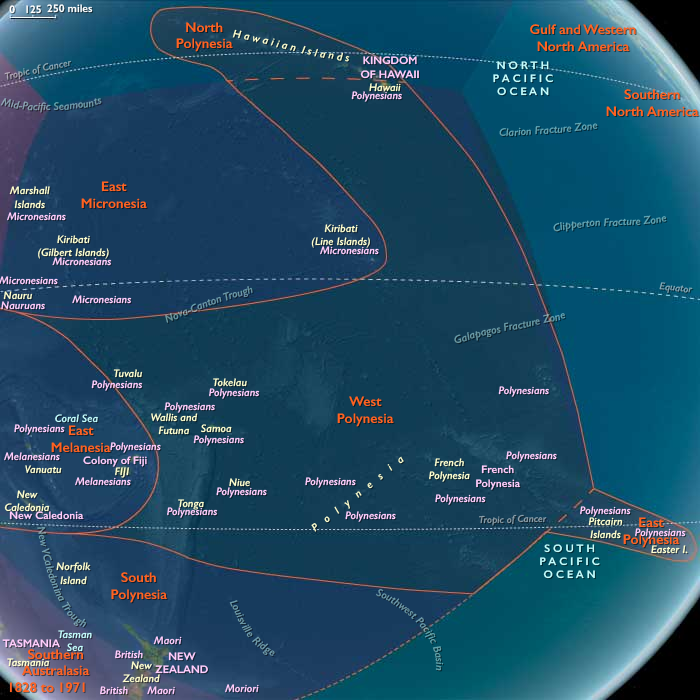
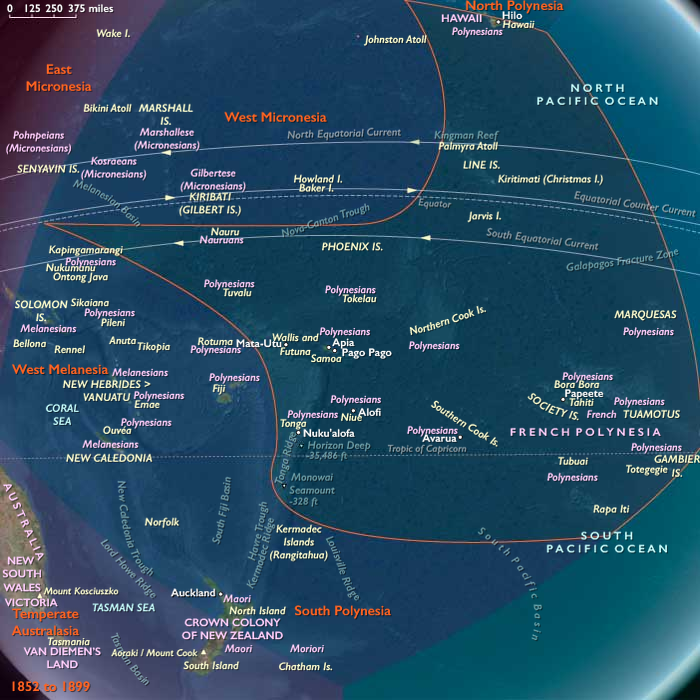
Tāufaʻāhau, who holds the chiefly title of Tu'i Kanokupolu, but has been baptized with the name King George Tupou I, declares Tonga a constitutional monarchy in 1875, with the help of missionary Shirley Baker, at which time he emancipates the 'serfs', enshrines a code of law, land tenure, and freedom of the press, and limits the power of the chiefs.
Civil war had erupted in Tonga in the fifteenth century and again in the seventeenth.
It was in this context that the first Europeans had arrived, beginning with Dutch explorers Willem Schouten and Jacob Le Maire.
Between April 21 to 23, 1616, they had moored at the Northern Tongan islands "Cocos Island" (Tafahi) and "Traitors Island" (Niuatoputapu), respectively.
The kings of both of these islands had boarded the ships and Le Maire had drawn up a list of words in Niuatoputapu (a language now extinct).
On April 24, 1616 they had tried to moor at the "Island of Good Hope" (Niuafo'ou), but a less welcoming reception there made them decide to sail on.
On January 21, 1643, the Dutch explorer Abel Tasman had become the first European to visit the main island (Tongatapu) and Haʻapai after rounding Australia and New Zealand.
The most significant impact had been the visits of Captain Cook in 1773, 1774, and 1777, followed by the first London missionaries in 1797, and the Wesleyan Methodist Walter Lawry in 1822.
Around that time, most Tongans had converted en masse to the Wesleyan (Methodist) or Catholic faiths.
The murder, in 1799, of Tonga’s fourteenth ruler of the Tuʻi Kanokupolu dynasty had sent Tonga into a civil war for fifty years; the islands had finally been united into a Polynesian kingdom in 1845 by the ambitious young warrior, strategist, and orator Tāufaʻāhau.
Civil war had erupted in Tonga in the fifteenth century and again in the seventeenth.
It was in this context that the first Europeans had arrived, beginning with Dutch explorers Willem Schouten and Jacob Le Maire.
Between April 21 to 23, 1616, they had moored at the Northern Tongan islands "Cocos Island" (Tafahi) and "Traitors Island" (Niuatoputapu), respectively.
The kings of both of these islands had boarded the ships and Le Maire had drawn up a list of words in Niuatoputapu (a language now extinct).
On April 24, 1616 they had tried to moor at the "Island of Good Hope" (Niuafo'ou), but a less welcoming reception there made them decide to sail on.
On January 21, 1643, the Dutch explorer Abel Tasman had become the first European to visit the main island (Tongatapu) and Haʻapai after rounding Australia and New Zealand.
The most significant impact had been the visits of Captain Cook in 1773, 1774, and 1777, followed by the first London missionaries in 1797, and the Wesleyan Methodist Walter Lawry in 1822.
Around that time, most Tongans had converted en masse to the Wesleyan (Methodist) or Catholic faiths.
The murder, in 1799, of Tonga’s fourteenth ruler of the Tuʻi Kanokupolu dynasty had sent Tonga into a civil war for fifty years; the islands had finally been united into a Polynesian kingdom in 1845 by the ambitious young warrior, strategist, and orator Tāufaʻāhau.

Portrait of George Tupou I, King of Tonga. This image is in an album of photographs representing imagery of Tonga belonging to James Edge-Partington. It is unknown whether Edge-Partington photographed these images himself or whether they have been photographed by different individuals. (c. 1880s), British Museum
Locations
People
Groups
- Tonga, Kingdom of
- Christians, Roman Catholic
- Methodists
- London Missionary Society
- Britain (United Kingdom of Great Britain and Ireland)
Topics
Subjects
Regions
Subregions
Years: 1875 - 1875
Portrait of George Tupou I, King of Tonga. This image is in an album of photographs representing imagery of Tonga belonging to James Edge-Partington. It is unknown whether Edge-Partington photographed these images himself or whether they have been photographed by different individuals. (c. 1880s), British Museum
Locations
People
Groups
- Tonga, Kingdom of
- Christians, Roman Catholic
- Methodists
- London Missionary Society
- Britain (United Kingdom of Great Britain and Ireland)
Topics
Subjects
Regions
Subregions