In Russia, following the Great War, with …
Years: 1919 - 1919
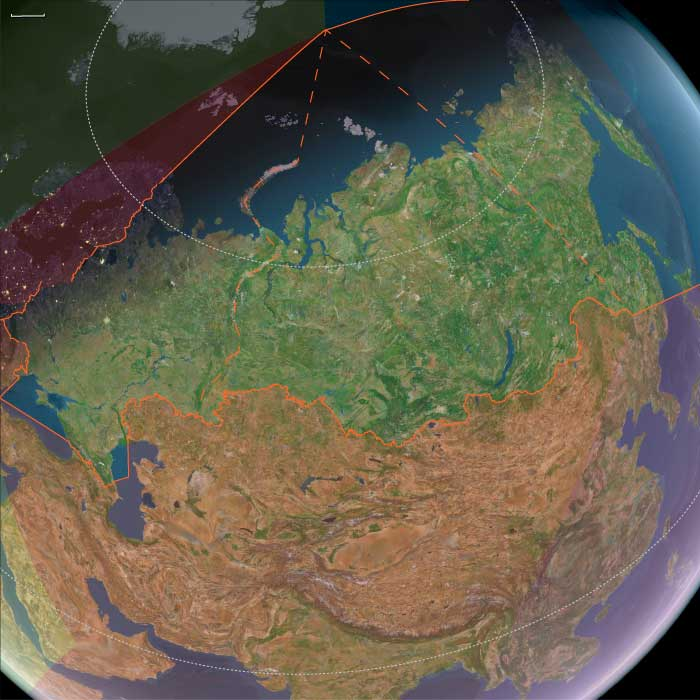
In Russia, following the Great War, with the attendant wave of revolutions (in which many Jews had participated), the Protocols of the Elders of Zion, an elaborate forgery prepared under Nicholas II at the turn of the century, has a great impact on the West, giving rise to a new waves of anti-Semitism.
Related Events
Filter results
Showing 10 events out of 7426 total
Australia’s Country party is founded in 1919 as a patriotic, conservative movement to protect the interests of grazers and farmers.
Following the war, Australia secures separate representation at the Paris Peace Conference and becomes an independent member of the League of Nations, which awards Australia a post-war mandate over the former German holdings of German New Guinea and the phosphate-rich island of Nauru.
Japan brutally suppresses Korea’s so-called March movement of 1919.
William Donovan, working for the US government, travels on classsified missions to China and Siberia in 1919 and 1920.
The Allied Powers meet in Paris to negotiate peace treaties with the Central Powers between January 1919 and January 1920.
At the conference, Amir Faisal (representing the Arabs) and Chaim Weizmann (representing the Zionists) set forth their cases.
Weizmann and Faisal reach a separate agreement on January 3, 1919, pledging the two parties to cordial cooperation; however, Faisal writes a proviso on the document in Arabic that his signature depends upon Allied war pledges regarding Arab independence.
Since these pledges will not be fulfilled to Arab satisfaction after the war, most Arab leaders and spokesmen will not consider the Faisal-Weizmann agreement as binding.
The 1919 reforms do not satisfy political demands in India.
The British repress opposition, and reenact restrictions on the press and on movement.
An apparently unwitting example of violation of rules against the gathering of people leads to the massacre at Jalianwala Bagh in Amritsar in April 1919.
This tragedy galvanizes such political leaders as Jawaharlal Nehru and Mohandas Karamchand Gandhi, and the masses who follow them to press for further action.
After the end of the Mughal Empire, the Ottoman caliph had become the symbol of Islamic authority and unity to Indian Sunni Muslims.
Because the Ottoman empire had sided with the Central Powers in the Great War, the British have done their best to neutralize the Muslim feelings by promising to respect the status of the Khalifa.
The Allies' post-war peace settlement with Turkey provides an additional stimulus to the grievances of the Muslims, who fear that one goal of the Allies is to end the caliphate of the Ottoman sultan.
A pan-Islamic movement, known as the Khilafat Movement, spreads in India.
It is a mass repudiation of Muslim loyalty to British rule and thus legitimates Muslim participation in the Indian nationalist movement.
The top Muslim leaders -- Maulana Zafar Ali Khan, Maulana Mohammad Ali, Maulana Shaukat Ali, Hasrat Mohani, and Obaidullah Sindhi -- decide not to cooperate with the government until the terms of the treaty are revised.
The leaders of the Khilafat Movement use Islamic symbols to unite the diverse but assertive Muslim community on an all-India basis and bargain with both Congress leaders and the British for recognition of minority rights and political concessions.
Jinnah, who continues his membership in the Indian National Congress until 1919, is described by a leading Congress spokesperson as the “ambassador of Hindu-Muslim unity” during this dual membership period.
Constitutional reforms are embodied in the Government of India Act of 1919 -- also known as the Montagu-Chelmsford Reforms (Edwin Samuel Montagu is Britain's secretary of state for India; the Marquess of Chelmsford is viceroy).
These reforms represent the maximum concessions the British are prepared to make at this time.
The franchise is extended, and increased authority is given to central and provincial legislative councils, but the viceroy remains responsible only to London.
The changes at the provincial level are significant, as the provincial legislative councils contain a considerable majority of elected members.
In a system called “dyarchy”, the nation-building departments of government -- agriculture, education, public works, and so on -- are placed under ministers who are individually responsible to the legislature.
The departments that make up the “steel frame” of British rule -- finance, revenue, and home affairs -- are retained by executive councilors who are often, but not always, British and who were responsible to the governor.
With the outbreak of the Great War in August 1914, there had been widespread support in Afghanistan of Ottoman Turkey against the British.
Habibollah, duly impressed with British power, had resisted pressures from Tarzi, Amanullah (Habibollah's third son, who had married Soraya, a daughter of Tarzi), and others to enter the war on the side of the Central Powers (Germany, Austria-Hungary, the Ottoman Empire, and Bulgaria).
Habibollah, however, had been able to maintain a policy of noninvolvement throughout the war, despite British pressure and despite German encouragement of anti-British feelings and Afghan rebellion along the borders of British India.
Habibollah's policy of neutrality was not, however, universally popular within the country.
The peace ending the war brings death to Habibollah; nationalists associated with the anti-British movement murder him on February 20, 1919, while he is on a hunting trip.
Amanollah, a favored son of his late father, takes possession of the throne immediately after his father's assassination.
The national flag changes from black to one of four alternating red and green horizontal bars, the national arms in white within a black circle centered upon the field.
Although Britain exercises an important influence on Afghan affairs, Amanollah, in his coronation address, declares total independence from Great Britain.
This leads in May 1919 to a third war with the British, but fighting is confined to a series of inconclusive skirmishes between an ineffective Afghan army and a British Indian army exhausted from the heavy demands of the Great War.
The desultory month-long conflict, known as the Third Anglo-Afghan War, ends on August 8, 1919, with the signing of the Treaty of Rawalpindi, which gives Afghanistan full control over its foreign relations.
Later in the year, Afghanistan's first museum is instituted at Baghe Bala.
Amanollah, although a charming man and a sincere patriot and reformer, is also impulsive and tactless, and tends to surround himself with poor advisers.
Shortly after his accession, he pushes for reforms, including an education program and road-building projects, but reactionaries oppose him.
Until 1919, the Pashtuns still keep some Hazaras as slaves.
Although Amanollah bans slavery in Afghanistan during his reign, the tradition will carry on unofficially for many more years.
The Großes Schauspielhaus (Great Theater), a theater in Berlin, often described as an example of expressionist architecture, is designed by Hans Poelzig for theater impresario Max Reinhardt.
The structure, originally a market built by architect Friedrich Hitzig, retained its external, gabled form.
It then became the Zirkus Schumann, a circus arena.
It is renovated by Poelzig and reopens in 1919, containig seating for 3500 people.
Reinhardt wants to attract a working class audience to the theater.
The large size allows for people who can pay top prices for the best seats to support the low-cost seats in the back of the theater.
It is painted red.
The cavernous, domed space has no balconies, which contributes to its vastness.
The dome and pillars are decorated with maquernas, a honeycombed pendentive ornament, which resembles stalactites.
When illuminated, the ceiling's lightbulbs form patterns of celestial constellations, and the vaulted ceiling takes on another concept, the night sky.
In the lobby and elsewhere, Poelzig makes use of colored light bulbs to create striking visual backdrops.
Separate entrances are provided for the expensive and the cheap seats.
The theater also includes a restaurant for the wealthy audience members, a cafeteria for the poorer audience members, and a bar.
The performers and technicians enjoy their own bar, a barber shop, ample dressing room space, and the modern stage equipment.
Stockholm City Hall, the building of the Municipal Council for the City of Stockholm in Sweden, stands on the eastern tip of Kungsholmen island, next to Riddarfjärden's northern shore and facing the islands of Riddarholmen and Södermalm.
It houses offices and conference rooms as well as ceremonial halls, and the luxury restaurant Stadshuskällaren.
It is the venue of the Nobel Prize banquet and one of Stockholm's major tourist attractions.
In 1907 the city council decided to build a new city hall at the former site of Eldkvarn.
An architectural contest was held which in a first stage resulted in the selection of drafts by Ragnar Östberg, Carl Westman, Ivar Tengbom jointly with Ernst Torulf, and Carl Bergsten.
After a further competition between Westman and Östberg the latter was assigned to the construction of the City Hall, while the former was asked to construct Stockholm Court House.
Östberg modified his original draft using elements of Westman's project, including the tower.
During the construction period, Östberg constantly reworked his plans, resulting e.g.
in the addition of the lantern on top of the tower, and the abandonment of the blue glazed tiles for the Blue Hall.
Oskar Asker was employed as construction leader and Paul Toll, of construction company Kreuger & Toll, designed the foundations.
The construction takes twelve years, from 1911 to 1923.
Nearly eight million red bricks are used.
The dark red bricks, called "munktegel" (monks's brick) because of their traditional use in the construction of monasteries and churches, are provided by Lina brick factory near Södertälje.
Construction is carried out by craftsmen using traditional techniques.
The building is inaugurated on 23 June 1923, exactly 400 years after Gustav Vasa's arrival in Stockholm.
Years: 1919 - 1919
Locations
Groups
Regions