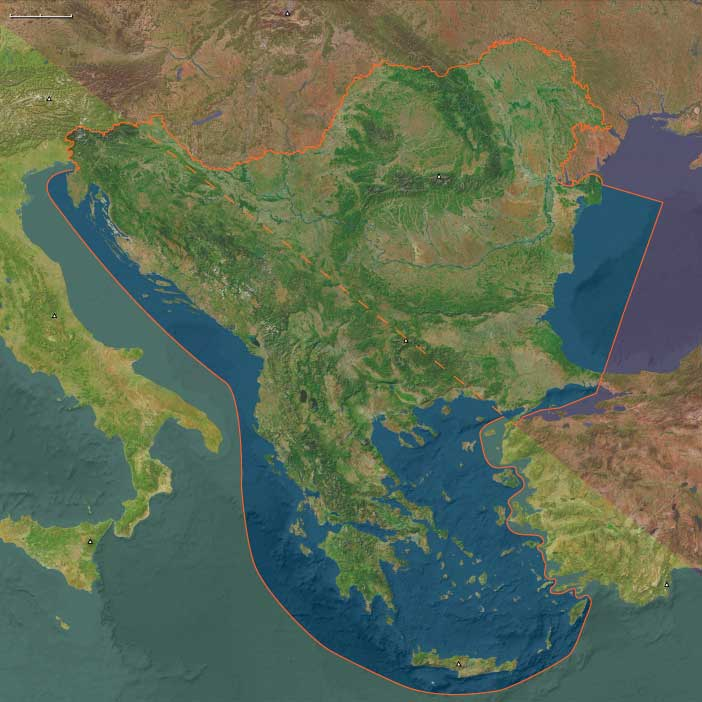
In Romania, strains in the relations between …
Years: 1958 - 1958
In Romania, strains in the relations between Gheorghiu-Dej and Soviet party leaders come to the surface in the late 1950s.
Gheorghiu-Dej, a long-time disciple of rapid industrialization and, since 1954, a supporter of "national" communism, fears that the de-Stalinization campaign launched by Khrushchev, the Soviet Union’s new premier, might force him from power, since he had been (and continues to be) one of the most rigid of Stalinists.
However, he also objects vehemently to Khrushchev's insistence that Romania abandon its headlong drive to industrialize and, instead, accept the more modest role of supplier of agricultural products and raw materials to the designated “industrial powers” of Comecon.
Thus, the emergence of Romanian national communism is accompanied and in part stimulated by growing friction with the Soviet Union.
The PCR is firmly in control of the country and Romania is securely within the Warsaw Pact.
Therefore, with Chinese support, Gheorghiu-Dej is able to coax the Soviet Union into removing its forces from Romanian soil, which occurs in May 1958.
Romanian-Soviet trade soon slowed to a trickle.
With no Soviet troops in Romania to intimidate him, Gheorghiu-Dej's defiance stiffens, and his negotiators begin bringing home Western credits to finance purchases of technology for Romania's expanding industries.
Khrushchev apparently seeks to undermine Gheorghiu-Dej within the PMR and considers military intervention to unseat him.
The Romanian leader counters by attacking anyone opposed to his industrialization plans and by removing Moscow-trained officials and appointing loyal bureaucrats in their place.
The November 1958 PMR plenum asserts that Romania must strengthen its economy to withstand external pressures.
Industrialization, collectivization, improved living standards, and trade with the West become the focal points of the party's economic policy.
Years: 1958 - 1958
Locations
Groups
- Union of Soviet Socialist Republics (USSR), or Soviet Union
- Romanian People's Republic
- Comecon (Council for Mutual Economic Assistance)
- Warsaw Pact (Treaty of Friendship, Co-operation and Mutual Assistance)
Commodoties
Subjects
Regions