
Pope Innocent III's Final Ultimatum to King …
Years: 1213 - 1213
February
Pope Innocent III's Final Ultimatum to King John (February 1213)
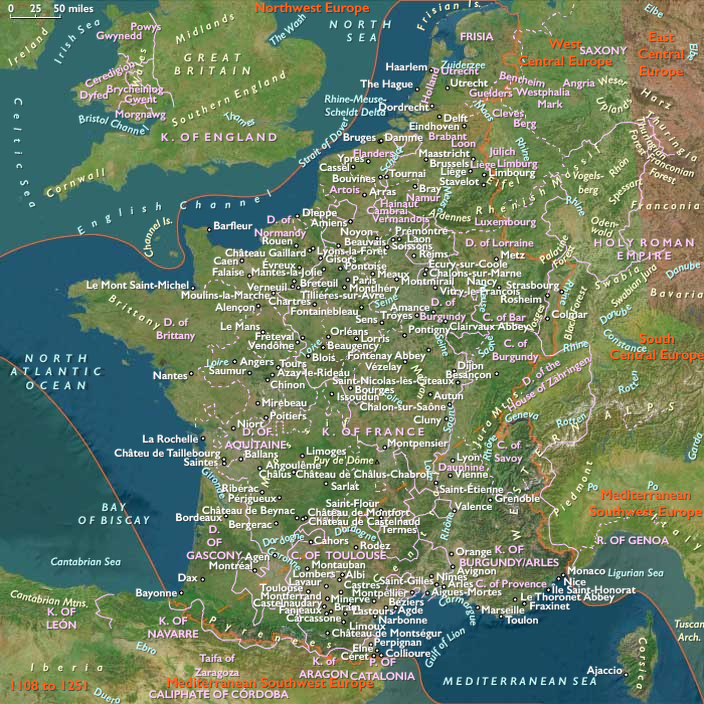
By February 1213, after years of defiance from King John of England, Pope Innocent III issued a final ultimatum, threatening stronger measures unless John submitted to papal authority. This marked the climax of a long struggle between the English king and the Papacy over the appointment of Stephen Langton as Archbishop of Canterbury.
The Papal Threat and Its Implications
-
Further Church Sanctions
- England had already been under interdict since 1208, forbidding church services and sacraments.
- John himself had been excommunicated in 1209, meaning he was cut off from the Church and Christian sacraments.
- Now, Innocent III threatened even stronger measures, including:
- Declaring John’s subjects free from allegiance to him.
- Authorizing his deposition and replacement by another ruler.
-
Authorization of Philip II’s Invasion
- Pope Innocent formally empowered Philip II of France to invade England to execute John’s deposition.
- Philip had already been preparing an invasion fleet, aiming to install his son Prince Louis as King of England.
- If John continued to resist, Philip would be justified not just as an enemy of England but as a champion of the Church.
John’s Submission to the Papacy (May 1213)
- Realizing that he could not fight both Philip II and his own rebellious barons, John submitted to the Pope in May 1213.
- He publicly surrendered England and Ireland to Pope Innocent III, receiving them back as a papal fief and agreeing to pay an annual tribute to Rome.
- This outmaneuvered Philip II, as Innocent immediately revoked the invasion order, depriving Philip of a justification for war.
Consequences of John’s Submission
- England became a papal vassal state, securing papal protection but humiliating John in the eyes of his nobles.
- Philip II lost his excuse to invade England, forcing him to redirect his ambitions elsewhere.
- Baronial resentment in England intensified, leading to the rebellion that resulted in Magna Carta (1215).
John’s political survival in 1213 was a masterstroke of diplomacy, but it came at the cost of further alienating his nobility, setting the stage for internal unrest and the eventual baronial revolt.
Locations
People
Groups
- Papal States (Republic of St. Peter)
- Flanders, County of
- Holy Roman Empire
- France, (Capetian) Kingdom of
- Christians, Roman Catholic
- England, (Plantagenet, Angevin) Kingdom of
Topics
Commodoties
Subjects
Regions
Subregions

Related Events
Showing 10 events out of 47382 total
Years: 1213 - 1213
February
Locations
People
Groups
- Papal States (Republic of St. Peter)
- Flanders, County of
- Holy Roman Empire
- France, (Capetian) Kingdom of
- Christians, Roman Catholic
- England, (Plantagenet, Angevin) Kingdom of
Topics
Commodoties
Subjects
Regions
Subregions