
Merkava initiates (tzenu'im) in Babylonian …
Years: 942 - 942
Merkava initiates (tzenu'im) in Babylonian Jewish mysticism, limited to a select few with specific moral qualities, are required to prepare themselves by fasting.
A successful visionary journey depends, in part, on the use of certain magical formulas (called seals) that are used to placate the angelic gatekeeper of each heavenly dwelling.
The use of an incorrect seal could result in severe injury or a fiery death.
The Talmud warns that among four men who engaged in Merkava, one died, one went mad, one apostatized, and only Rabbi Akiva ben Joseph had a true visionary experience.
Those who practice Merkava are sometimes called Explorers of the Supernatural World (Yorde Merkava).
The oldest literary sources of the movement are two hekhalot texts: the “Lesser” attributed to Rabbi Akiva, the “Greater” to Rabbi Ishmael ben Elisha.
The Book of Enoch and the Shi 'ur qoma (”Divine Dimensions”) belong to this same tradition.
The latter contains highly exaggerated anthropomorphic descriptions of God.
Known as a religious philosopher, Bible exegete, apologist, and liturgical poet, Saadia Gaon serves as head (Gaon) of the Talmudic academy of Sura, in Babylonia, and spiritual head of Babylonian Jewry.
Saadia has been party to a protracted dispute with Babylonia’s Karaite rulers over their opposition to Judaic tradition.
Among Saadia’s important translations of the Bible from the Hebrew into Arabic and his Arabic commentary on the Scriptures is his well-known Emunot ve-Deot (“Book of Beliefs and Opinions”).
In this, he expounds a system of Jewish faith, colored by Muslim rational theology (Kalam) and Aristotelianism, which harmoniously blends revelation and reason.
The first to compose a Hebrew grammar and an Order of Prayer, Saadia also writes religious poetry and a commentary on the mystical Book of Creation.
Saadia compiles his siddur (Jewish prayer book) in 940.
The office of the Exilarch, for seven centuries the seat of the temporal leader of Babylonian Jewry, seems to have been abolished in 942; dissension with the 'Abbasid rulers of the Islamic world is the precipitating factor in its demise.
'Ukba is mentioned as exilarch immediately following Hasdai II; he had been deposed at the instigation of Kohen Zedek, gaon of Pumbedita, but had been reinstated in 918 due to some Arabic verses with which he had greeted the caliph Al-Muktadir.
Deposed again soon afterward, he had fled to Kairouan, where he was treated with great honor.
After a short interregnum, 'Ukba's nephew, David ben Zakkai, became exilarch; but he had had to contend for nearly two years with Kohen Zedek before he was finally confirmed in his power (921).
In consequence of Saadia's call to the gaonate of Sura and his controversy with David, the latter had become one of the best-known personages of Jewish history.
Saadia had had David's brother Josiah (Al-Hasan) elected anti-exilarch in 930, but the latter had been defeated and banished to Khorasan.
David ben Zakkai, the last exilarch to play an important part in history, died a few years before Saadia; his son Judah died seven months afterward.
Judah had left a son (whose name is not mentioned) twelve years of age, whom Saadia had taken into his house and educated.
His generous treatment of the grandson of his former adversary is continued until Saadia's death in 942, at which the role of the Jewish Academy in Babylonia begins to decline.
Locations
People
Groups
- Jews
- Khorasan, Greater
- Islam
- Karaite Judaism
- Muslims, Sunni
- Abbasid Caliphate (Baghdad)
- Ifriqiya, Fatimid Caliphate of
Topics
Subjects
Regions
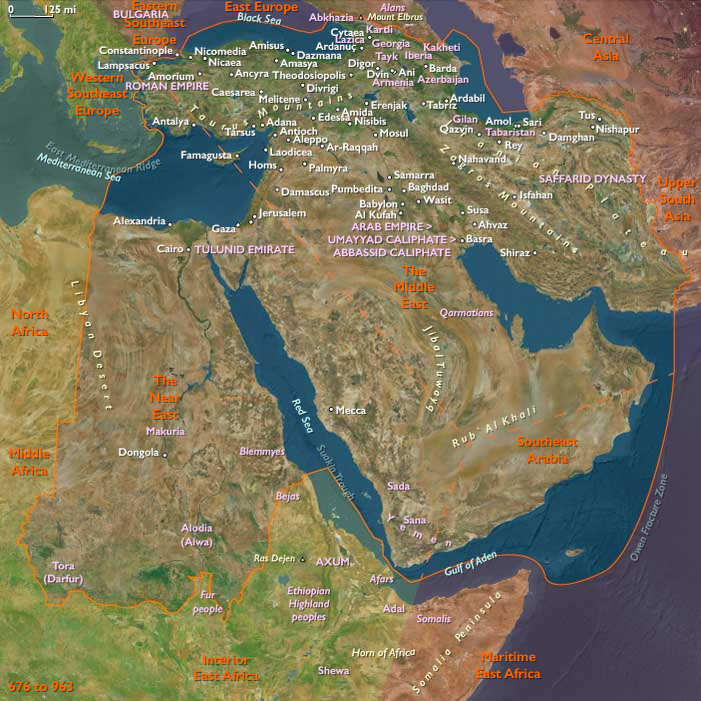
Subregions
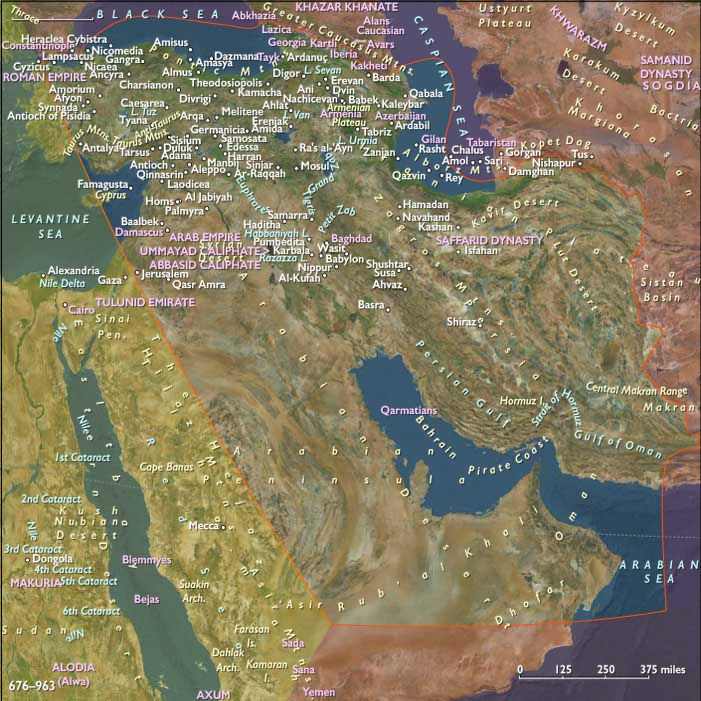
Related Events
Showing 10 events out of 53026 total
Years: 942 - 942
Locations
People
Groups
- Jews
- Khorasan, Greater
- Islam
- Karaite Judaism
- Muslims, Sunni
- Abbasid Caliphate (Baghdad)
- Ifriqiya, Fatimid Caliphate of
Topics
Subjects
Regions
Subregions