
Filters:
The treaty of Aix-la-Chapelle does little to …
Years: 1748 - 1748
November
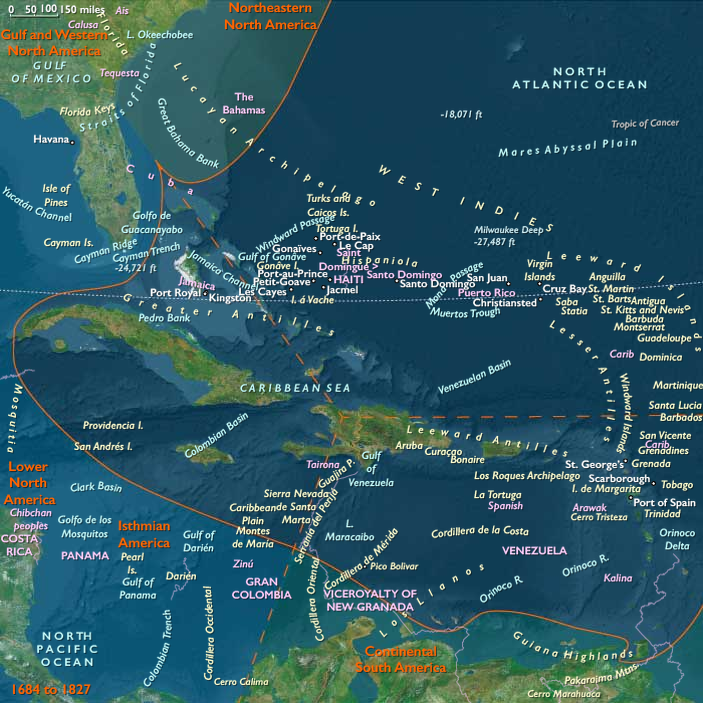
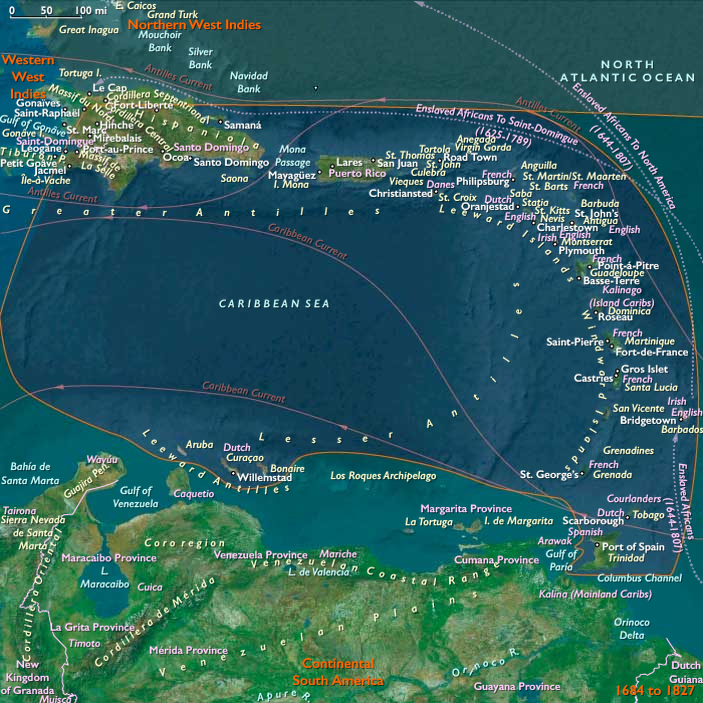
The treaty of Aix-la-Chapelle does little to address possession of the islands in the West Indies.
European powers have long pursued control of the Americas, viewing them as well-needed resources and proof of power.
Spain, the Netherlands, France and Britain all had had unresolved tensions following settlements like the Treaty of Breda (1667), the Treaty of Westminster (1672) and the Treaty of Nijmegen.
The islands of Saint Lucia and Tobago had by 1713 become the subjects of Anglo-Franco conflict.
However, the Treaty of Aix-la-Chapelle declares neutrality in Tobago, Grenada, Saint Vincent and Dominica, allowing all European powers unfettered economic access and forbidding garrisons.
In addition, France gains Saint Lucia as a colony.
European powers have long pursued control of the Americas, viewing them as well-needed resources and proof of power.
Spain, the Netherlands, France and Britain all had had unresolved tensions following settlements like the Treaty of Breda (1667), the Treaty of Westminster (1672) and the Treaty of Nijmegen.
The islands of Saint Lucia and Tobago had by 1713 become the subjects of Anglo-Franco conflict.
However, the Treaty of Aix-la-Chapelle declares neutrality in Tobago, Grenada, Saint Vincent and Dominica, allowing all European powers unfettered economic access and forbidding garrisons.
In addition, France gains Saint Lucia as a colony.
People
- Frederick the Great
- George II of Great Britain
- Louis XV of France
- Maria Theresa
- Maurice de Saxe
- Wenzel Anton, Prince of Kaunitz-Rietberg
Groups
- Netherlands, United Provinces of the (Dutch Republic)
- France, (Bourbon) Kingdom of
- Grenada (French colony)
- Saint Lucia (French colony)
- Britain, Kingdom of Great
- Dominica (French colony)
Topics
- Colonization of Asia, French
- Colonization of the Americas, British
- Jenkins' Ear, War of
- Austrian Succession, War of the
Commodoties
Subjects
Regions
Subregions
Years: 1748 - 1748
November
People
- Frederick the Great
- George II of Great Britain
- Louis XV of France
- Maria Theresa
- Maurice de Saxe
- Wenzel Anton, Prince of Kaunitz-Rietberg
Groups
- Netherlands, United Provinces of the (Dutch Republic)
- France, (Bourbon) Kingdom of
- Grenada (French colony)
- Saint Lucia (French colony)
- Britain, Kingdom of Great
- Dominica (French colony)
Topics
- Colonization of Asia, French
- Colonization of the Americas, British
- Jenkins' Ear, War of
- Austrian Succession, War of the
Commodoties
Subjects
Regions
Subregions