
Maine residents who paid taxes were to …
Years: 1839 - 1839
February
Maine residents who paid taxes were to be issued a tax refund in 1837, as a consequence of the closing of the Second Bank of the United States, and a special census had been created to determine eligible recipients.
Penobscot County Census Representative Greeley thus began a census of the upper Aroostook River territory.
When word reached Provincial authorities, led by the newly appointed Sir John Harvey, that an official from Maine was offering money to settlers, New Brunswick authorities had had him arrested and taken to Fredericton.
Letters from New Brunswick had accused the Governor of Maine of bribery and threatened military action if Maine continued to exercise jurisdiction in the Aroostook river and its tributaries.
In response, Governor Robert Dunlap of Maine had issued a general order announcing that Maine had been invaded by a foreign power.
Both American and New Brunswick lumbermen were cutting timber in the disputed territory during the winter of 1838-1839, according to reports submitted to the Maine Legislature.
On January 24, 1839, the Maine Legislature had authorized the newly elected Governor John Fairfield to send the Maine State Land Agent, the Penobscot County Sheriff and a posse of volunteer militia to the upper Aroostook to pursue and arrest the New Brunswickers.
The posse leaves Bangor, Maine, on February 8, 1839.
Arriving at T 10 R 5, the posse establishes a camp at the junction of the St Croix Stream and the Aroostook River and begins confiscating New Brunswick lumbering equipment and sending any lumbermen caught and arrested back to be tried.
A group of New Brunswick lumbermen, on learning of these activities and unable to retrieve their oxen and horses, arms themselves by breaking into the arsenal in Woodstock, gathers their own posse, and seizes the Maine Land Agent and his assistants in the middle of the night.
The Maine officials are transported in chains to Woodstock where they are held for an "interview".
Terming the Americans "political prisoners", Sir John Harvey sends correspondence to Washington DC that he has to await instructions from London before he can act on the arrests.
In the meantime, he adds, he is exercising his responsibilities to ensure that the Aroostook is kept under British jurisdiction and demands removal from the region of all Maine forces.
He then sends his military commander to the T 10 R 5 campsite and orders the Maine militia to leave.
Captaon Rines and the others refuse, stating they are following orders and doing their duty.
The New Brunswick Military commander is then himself taken into custody by the Maine side.
On February 15, the Maine state Legislature authorizes one thousand additional volunteers to augment the posse now on the upper Aroostook River, led by Major General Isaac Hodsdon.
Additional correspondence from Sir John Harvey, along with reports that British Regulars are being brought up from the West Indies, that the Mohawk nation has offered their services to Quebec, and that New Brunswick forces are gathering on the St. John, result in the Issuance of General Order No. 7 on February 19, 1839, calling for a general draft of Maine Militia.
Mustered in Bangor, militia companies will be sent to the Upper Aroostook until February 26, 1839 when the early construction of Fort Fairfield on the Presque Isle River (built from seized stolen timber by the early posse) allows for troops to be camped on the eastern boundary.
Locations
Groups
- New Brunswick, British colony of
- United States of America (US, USA) (Washington DC)
- Britain (United Kingdom of Great Britain and Ireland)
- Maine, State of (U.S.A.)
Topics
Commodoties
Subjects
Regions
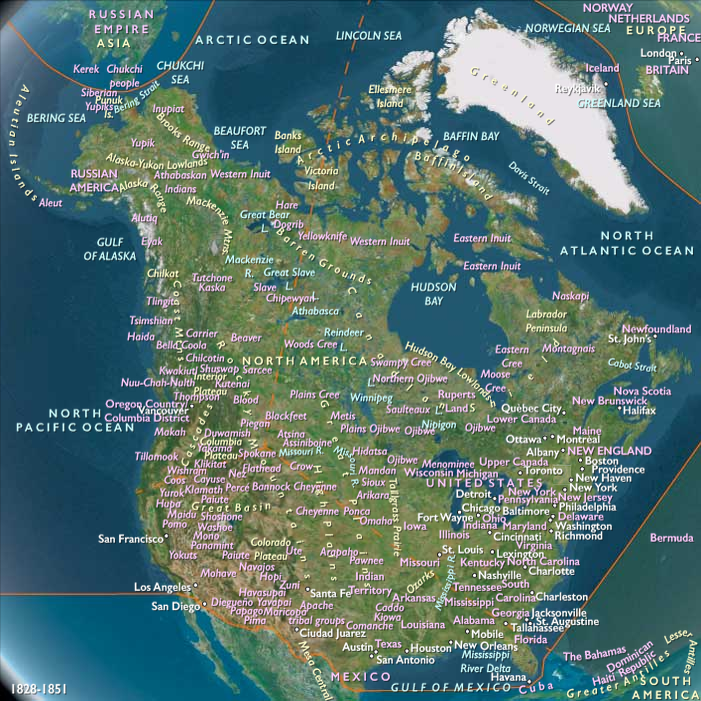
Subregions
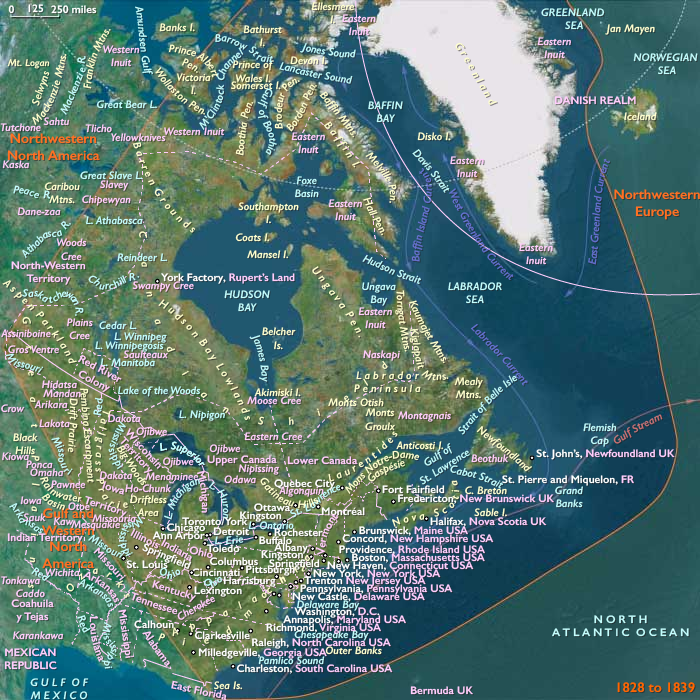
Related Events
Showing 10 events out of 18167 total
Years: 1839 - 1839
February
Locations
Groups
- New Brunswick, British colony of
- United States of America (US, USA) (Washington DC)
- Britain (United Kingdom of Great Britain and Ireland)
- Maine, State of (U.S.A.)
Topics
Commodoties
Subjects
Regions
Subregions