
The New Zealand Company (the first to …
Years: 1839 - 1839
The New Zealand Company (the first to bear the name) had formed in London in 1825 and sent out settlers, led by Captain James Herd, to the Hokianga in the far north of New Zealand.
The company's investors hoped for large profits, convinced there were fortunes to be made from New Zealand flax, kauri timber, whaling and sealing, but little of permanence had come of the venture.
In 1837, Edward Gibbon Wakefield had persuaded a group of notable men to join him in the New Zealand Association to promote the settlement of New Zealand.
As early as 1829, while in prison for abducting a fifteen-year-old heiress, he had published a pamphlet promoting the colonizing of Australasia.
Wakefield's plan entailed the company buying land from the indigenous residents very cheaply and then selling it to speculators and "gentleman settlers" for a much higher sum.
The emigrants would provide the labor to break in the gentlemens' lands and cater to their employers' everyday needs.
They would eventually be able to buy their own land, but low rates of pay would ensure they first labored for many years.
However, they had encountered strong opposition in London from the Colonial Minister and from the Church Missionary Society, and the Association had lapsed.
The following year, however, several of the intending colonists had formed a joint stock company.
Former members of the New Zealand Association join them and obtain a charter for the New Zealand Land Colonisation Company in 1839.
Once again, Wakefield provides the driving impetus.
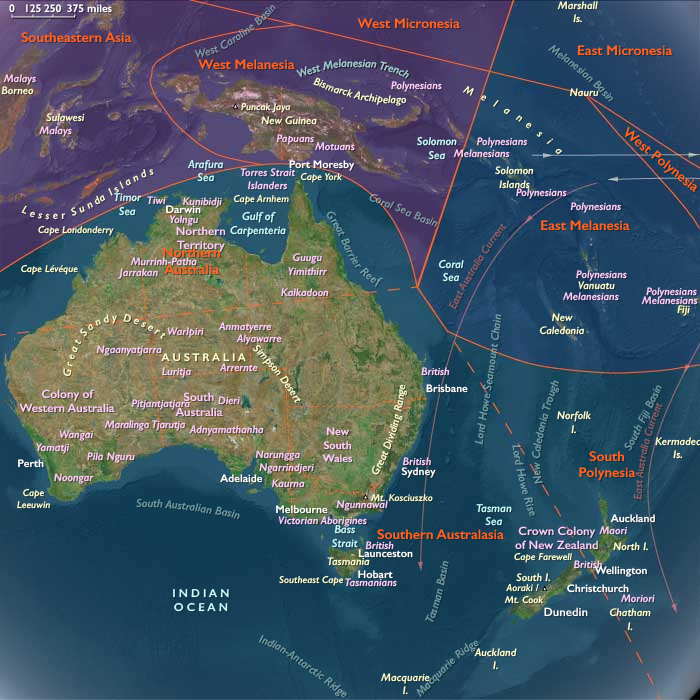
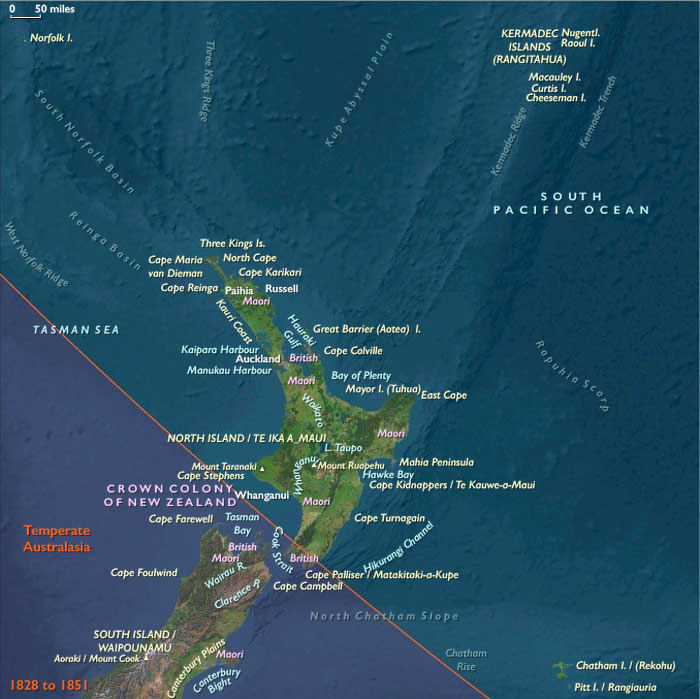
The British, concerned over Wakefield’s dispatch of a survey party to purchase Maori lands and suspicious of increasing French activity on South Island, appoint naval captain William Hobson lieutenant governor of New Zealand, still a part of the New South Wales colony.
Events start to push the politicians towards a declaration of British sovereignty over New Zealand.
The officers of the New Zealand Company know that such a declaration, if that were to happen, would involve a freeze on all land sales pending the establishment of effective British control.
They have other plans, which involve treating New Zealand as a foreign country and buying the land directly from the Maori, knowing they can get a better deal that way.
Locations
People
Groups
- Aotearoa
- Maori people
- Australia, British
- New South Wales (British colony)
- Britain (United Kingdom of Great Britain and Ireland)
- France, constitutional monarchy of
- New Zealand Company
Topics
Commodoties
Subjects
Regions
Subregions
Years: 1839 - 1839
Locations
People
Groups
- Aotearoa
- Maori people
- Australia, British
- New South Wales (British colony)
- Britain (United Kingdom of Great Britain and Ireland)
- France, constitutional monarchy of
- New Zealand Company
Topics
Commodoties
Subjects
Regions
Subregions