
Oman's ruling family divides in 1793 into …
Years: 1792 - 1803
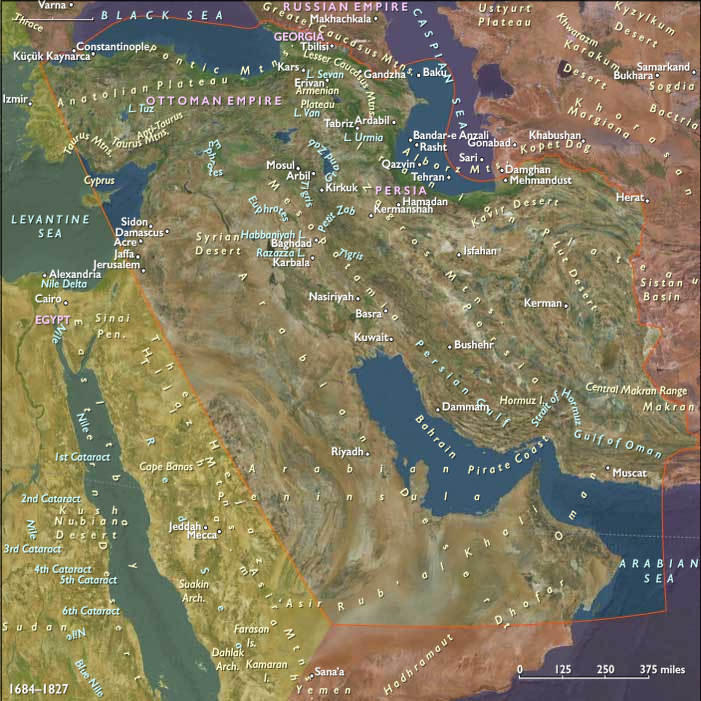
Oman's ruling family divides in 1793 into two main lines: Sultan ibn Ahmad's line controls the maritime state, with nominal control over the entire country; and the Qais branch has authority over the Al Batinah and Ar Rustaq areas.
After the reign of Sa'id ibn Ahmad Al Sa'id, no other member of the family wins the official approval of the Ibadi religious establishment.
Consequently, the Al Sa'id rulers call themselves sultans, a secular title having none of the religious associations of imam.
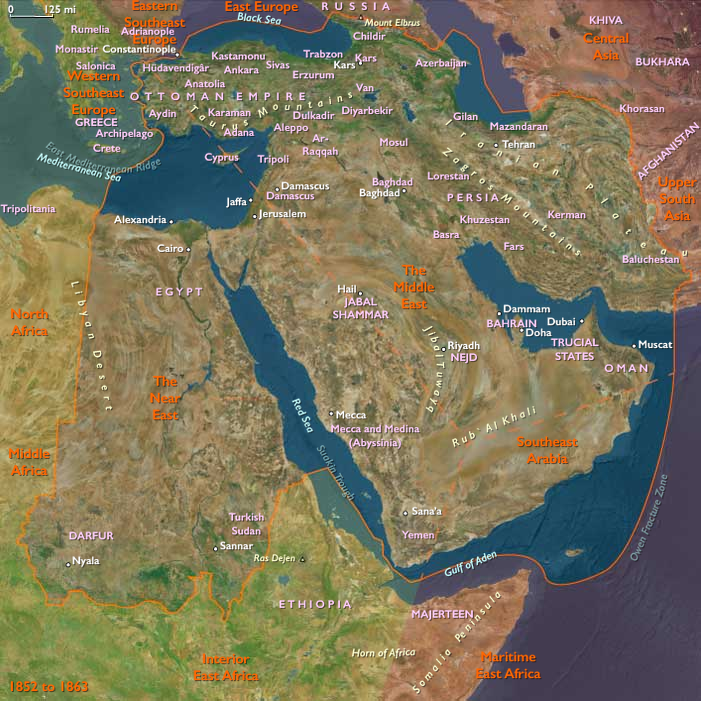
The sultan expands the dynasty's possessions in the late eighteenth century to include Bahrain in the Persian Gulf and Bandar-e 'Abbas, Hormuz, and Qeshm (all in Iran).
The threat of central Arabia's militant, puritanical Wahhabi Muslim sect, allied with the Saudis, causes him to conclude a treaty in 1798 with the East India Company that would assure a British presence in Muscat, an important port on the trade route to India.
Locations
Groups
- East India Company, British (The Company of Merchants of London Trading into the East Indies)
- Wahhabism
- Diriyah, Emirate of
- Oman, Sultanate of
- Persia, Zandid Kingdom of
- Persia, Qajarid Kingdom of
- Bahrain, Omani
- Britain (United Kingdom of Great Britain and Ireland)
Subjects
Regions
Subregions
Years: 1792 - 1803
Locations
Groups
- East India Company, British (The Company of Merchants of London Trading into the East Indies)
- Wahhabism
- Diriyah, Emirate of
- Oman, Sultanate of
- Persia, Zandid Kingdom of
- Persia, Qajarid Kingdom of
- Bahrain, Omani
- Britain (United Kingdom of Great Britain and Ireland)
Subjects
Regions
Subregions