
Filters:
The Treaty of Fort Harmar, an agreement …
Years: 1789 - 1789
January
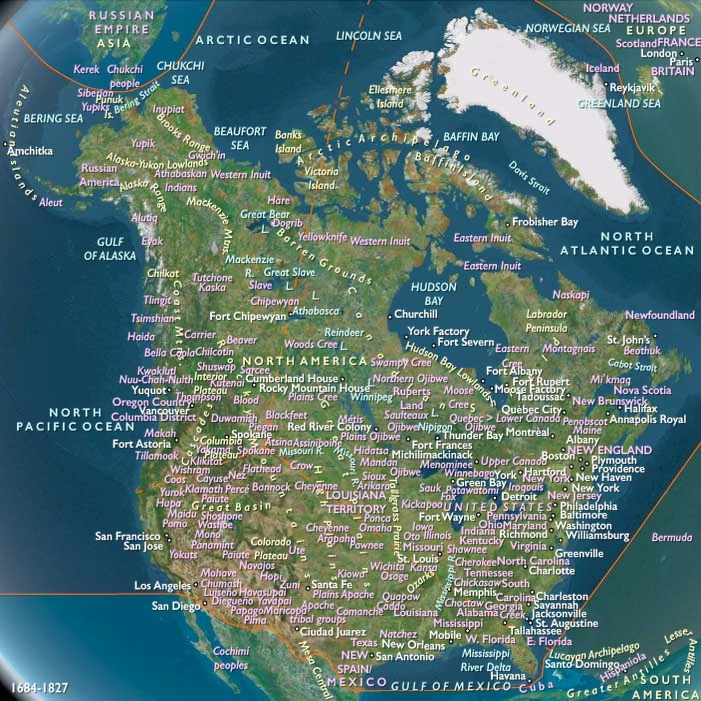
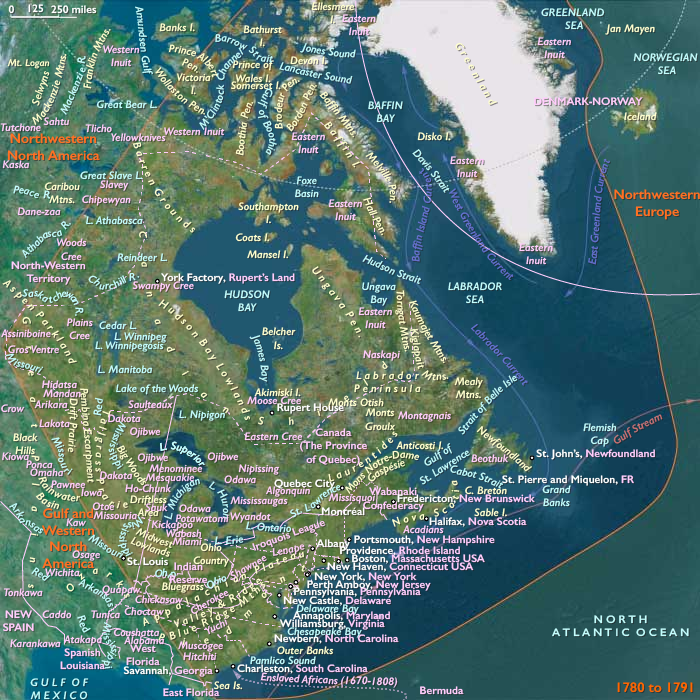
The Treaty of Fort Harmar, an agreement between the United States government and numerous native tribes with claims to the Northwest Territory, is signed at Fort Harmar, near present-day Marietta, Ohio, on January 9, 1789.
Representatives of the Iroquois Six Nations and other groups, including the Wyandot, Delaware, Ottawa, Chippewa, Potawatomi and Sauk meet with Arthur St. Clair, the governor of the Northwest Territory, and other American leaders such as Josiah Harmar and Richard Butler.
The treaty is supposed to address issues remaining since the 1784 Treaty of Fort Stanwix and the 1785 Treaty of Fort McIntosh; but, the new agreement does little more than reiterate the terms of those two previous documents with a few minor changes.
The negotiations and document fail to address the most important grievances of the tribes, namely, the settlement of New Englanders in the Firelands portions of the Western Reserve, an area that extends into the territory set aside for the tribes.
Governor Arthur St. Clair had been authorized by Congress and Secretary of War Henry Knox to offer back some lands reserved for American settlement in exchange for the disputed Firelands of the Western Reserve.
St. Clair had refused to give up these lands and instead, through threats and bribery, has negotiated a treaty that simply reiterates the terms of previous treaties.
Several regional tribes, such as the Shawnee, have been excluded from the negotiations.
As a result, the Shawnee will refuse to abide by the treaty.
The new treaty will do almost nothing to stop the rash of violence along the frontier from confrontations between settlers and natives.
The failure of the treaty will lead to an escalation of the Northwest Indian War (or "Little Turtle's War") as the tribes try to expel the pioneers; it will continue for six years until the United States defeats the tribal alliance at the Battle of Fallen Timbers in 1794.
Representatives of the Iroquois Six Nations and other groups, including the Wyandot, Delaware, Ottawa, Chippewa, Potawatomi and Sauk meet with Arthur St. Clair, the governor of the Northwest Territory, and other American leaders such as Josiah Harmar and Richard Butler.
The treaty is supposed to address issues remaining since the 1784 Treaty of Fort Stanwix and the 1785 Treaty of Fort McIntosh; but, the new agreement does little more than reiterate the terms of those two previous documents with a few minor changes.
The negotiations and document fail to address the most important grievances of the tribes, namely, the settlement of New Englanders in the Firelands portions of the Western Reserve, an area that extends into the territory set aside for the tribes.
Governor Arthur St. Clair had been authorized by Congress and Secretary of War Henry Knox to offer back some lands reserved for American settlement in exchange for the disputed Firelands of the Western Reserve.
St. Clair had refused to give up these lands and instead, through threats and bribery, has negotiated a treaty that simply reiterates the terms of previous treaties.
Several regional tribes, such as the Shawnee, have been excluded from the negotiations.
As a result, the Shawnee will refuse to abide by the treaty.
The new treaty will do almost nothing to stop the rash of violence along the frontier from confrontations between settlers and natives.
The failure of the treaty will lead to an escalation of the Northwest Indian War (or "Little Turtle's War") as the tribes try to expel the pioneers; it will continue for six years until the United States defeats the tribal alliance at the Battle of Fallen Timbers in 1794.
Locations
People
Groups
- Iroquois (Haudenosaunee, also known as the League of Peace and Power, Five Nations, or Six Nations)
- Wyandot, or Wendat, or Huron people (Amerind tribe)
- Miami (Amerind tribe)
- Ojibwa, or Ojibwe, aka or Chippewa (Amerind tribe)
- Odawa, or Ottawa, people (Amerind tribe)
- Sauk, or Sac, people (Amerind tribe)
- Potawatomi (Amerind tribe)
- Shawnees, or Shawanos (Amerind tribe)
- United States of America (US, USA) (Philadelphia PA)
- Delaware, State of (U.S.A.)
- Cincinnati, Society of the
- Northwest Territory (U.S.A.)
- United States of America (US, USA) (New York NY)
Topics
Subjects
Regions
Subregions
Years: 1789 - 1789
January
Locations
People
Groups
- Iroquois (Haudenosaunee, also known as the League of Peace and Power, Five Nations, or Six Nations)
- Wyandot, or Wendat, or Huron people (Amerind tribe)
- Miami (Amerind tribe)
- Ojibwa, or Ojibwe, aka or Chippewa (Amerind tribe)
- Odawa, or Ottawa, people (Amerind tribe)
- Sauk, or Sac, people (Amerind tribe)
- Potawatomi (Amerind tribe)
- Shawnees, or Shawanos (Amerind tribe)
- United States of America (US, USA) (Philadelphia PA)
- Delaware, State of (U.S.A.)
- Cincinnati, Society of the
- Northwest Territory (U.S.A.)
- United States of America (US, USA) (New York NY)
Topics
Subjects
Regions
Subregions