
The Survival of the Eastern Empire and …
Years: 484 - 495
The Survival of the Eastern Empire and the Acacian Schism (484–519 CE)
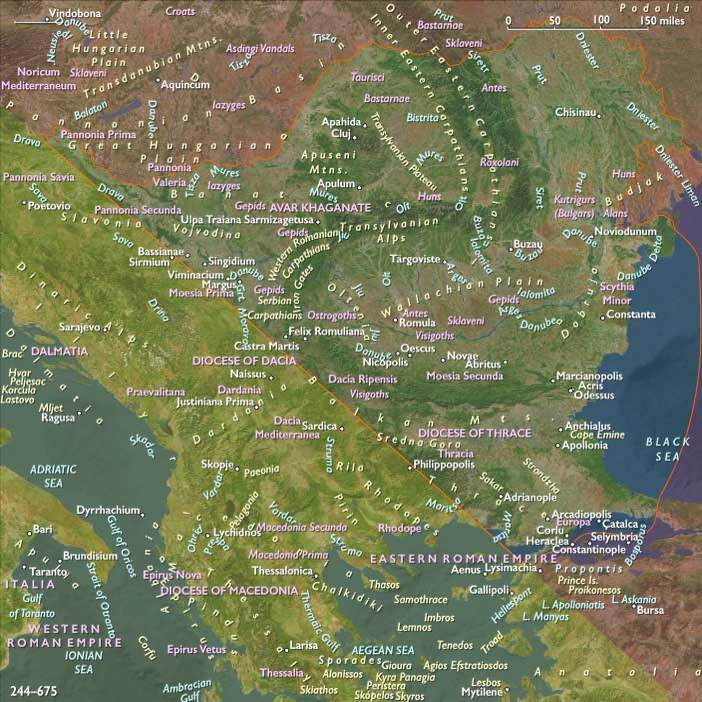
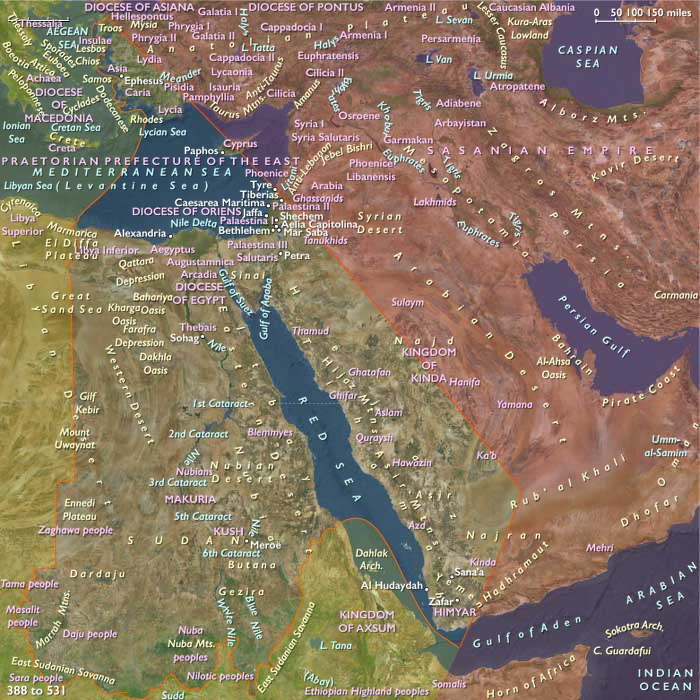
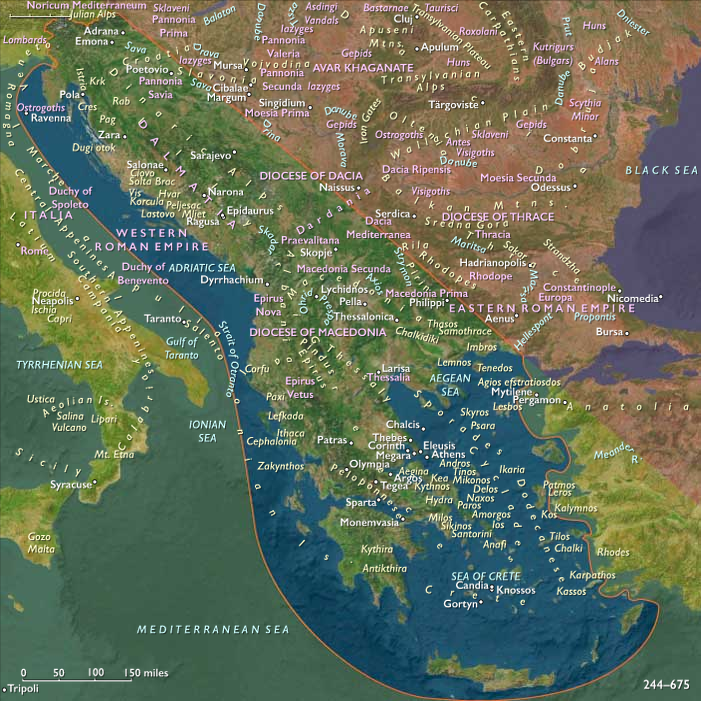
While imperial rule collapses in the West, the Eastern Roman Empire, centered in Constantinople ("New Rome"), continues to thrive. As the last remnants of Western Roman authority disappear, "Old Rome" transforms into a primarily ecclesiastical center, maintaining its spiritual prestige while losing many of its former imperial characteristics.
The Acacian Schism and the Struggle for Religious Unity
In 484 CE, the Acacian Schism erupts between the Eastern and Western Christian Churches, reflecting a deepening theological and political rift between the two halves of the former Roman Empire.
The dispute originates from tensions over the Council of Chalcedon (451 CE), which had defined Christ as possessing two natures (divine and human)—a doctrine rejected by many in the Eastern Christian world, particularly in Egypt and Syria, where Monophysitism gained influence.
Emperor Zeno’s Henotikon: A Failed Attempt at Reconciliation
- In 482 CE, Emperor Zeno issues the Henotikon, an imperial decree attempting to bridge the divide between:
- Chalcedonian Christians, who accepted the Council of Chalcedon’s ruling, and
- Monophysite Christians, who insisted on Christ’s single, unified nature.
- The Henotikon avoids explicitly endorsing Chalcedonian Christology, instead attempting to create a compromise formula.
Excommunication and Schism (484 CE)
- The compromise satisfies neither side. Chalcedonian Christians view it as a betrayal of orthodoxy, while Monophysites see it as insufficient.
- Pope Felix III in Rome rejects the Henotikon, excommunicating Patriarch Acacius of Constantinople, the leading proponent of the policy.
- In response, Acacius retaliates, severing ties with the Roman Papacy, thus beginning the Acacian Schism.
Thirty-Five Years of Religious Division (484–519 CE)
The schism endures for thirty-five years, symbolizing:
- The widening rift between Eastern and Western Christendom, a precursor to later divisions.
- The growing autonomy of the Eastern Roman Church, as emperors in Constantinople take an increasingly active role in theological disputes.
- The political and religious isolation of Rome, which now exists in a world dominated by Germanic rulers in the West and Byzantine emperors in the East.
Resolution Under Emperor Justin I (519 CE)
The schism finally ends in 519 CE, when Emperor Justin I—a staunch Chalcedonian—seeks to restore unity with Rome. The Henotikon is abandoned, and Patriarch John II of Constantinople formally reconciles with Pope Hormisdas, restoring communion between East and West.
Legacy of the Acacian Schism
Although the schism is healed, it highlights:
- The growing theological tensions that will later culminate in the Great Schism of 1054.
- The increasing political divergence between Rome and Constantinople, as the Eastern Roman (Byzantine) emperors continue to shape Christian doctrine through imperial intervention.
- The consolidation of Constantinople as the true center of Roman imperial power, as Old Rome declines into a city defined by religious, rather than political, authority.
This period marks a turning point in Christian history, reinforcing the notion that the Western and Eastern Churches are evolving along increasingly separate paths, despite their shared Roman heritage.
People
Groups
Topics
Subjects
Subregions
- Eastern Southeast Europe
- Middle East
- Near East
- Western Southeast Europe
- Mediterranean West Europe
- Mediterranean Southwest Europe
- Atlantic Southwest Europe
- Atlantic West Europe
Years: 484 - 495
People
Groups
Topics
Subjects
Subregions
- Eastern Southeast Europe
- Middle East
- Near East
- Western Southeast Europe
- Mediterranean West Europe
- Mediterranean Southwest Europe
- Atlantic Southwest Europe
- Atlantic West Europe