
The Frankish-Burgundian Wars …
Years: 520 - 531
The Frankish-Burgundian Wars and the Fall of Sigismund (523–524 CE)
Following the death of Gundobad, king of Burgundy, in 516 CE, the throne passes to his son, Sigismund, a convert to Catholic Christianity. His reign is marked by religious tensions and political conflicts, particularly with the Franks and the Ostrogoths.
Sigismund’s Anti-Arian Policies and Political Missteps
- Sigismund abandons Arianism, the traditional faith of the Burgundian aristocracy, and adopts Catholicism, creating tensions within his kingdom.
- His harsh suppression of Arianism culminates in the execution of his own son, Sigeric, in 522 CE.
- Sigeric was the grandson of Theoderic the Great, the powerful Ostrogothic king of Italy.
- This act alienates Theoderic, depriving Sigismund of potential Ostrogothic support.
- Sigismund also antagonizes the Franks, nearly provoking an invasion, but temporarily averts war by marrying his daughter to Theuderic I, king of Metz.
First Frankish Invasion (523 CE): Sigismund’s Downfall
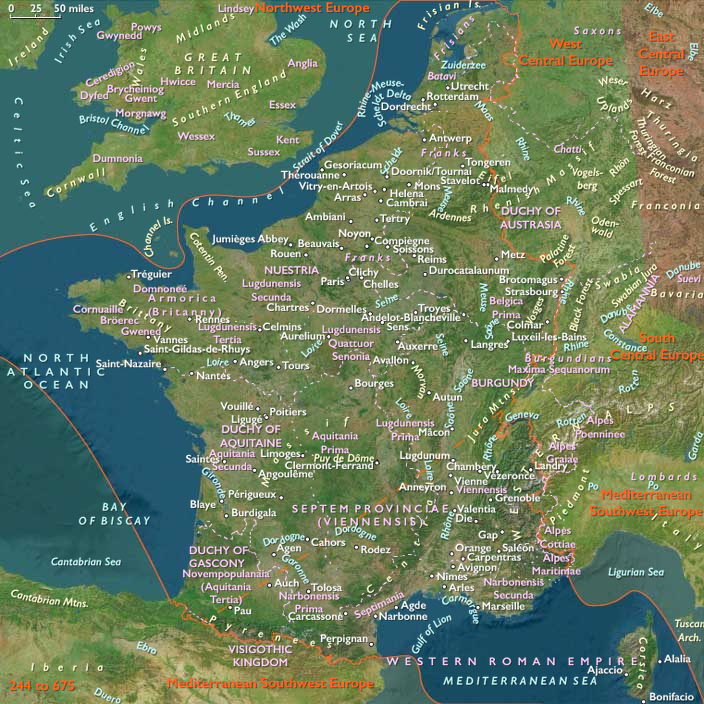
- Queen Clotilde, the widow of Clovis and a Burgundian princess, urges her sons Chlothar, Childebert, and Chlodomer to wage war against Sigismund to avenge their grandfather, Chilperic II of Burgundy, whom Gundobad had executed decades earlier.
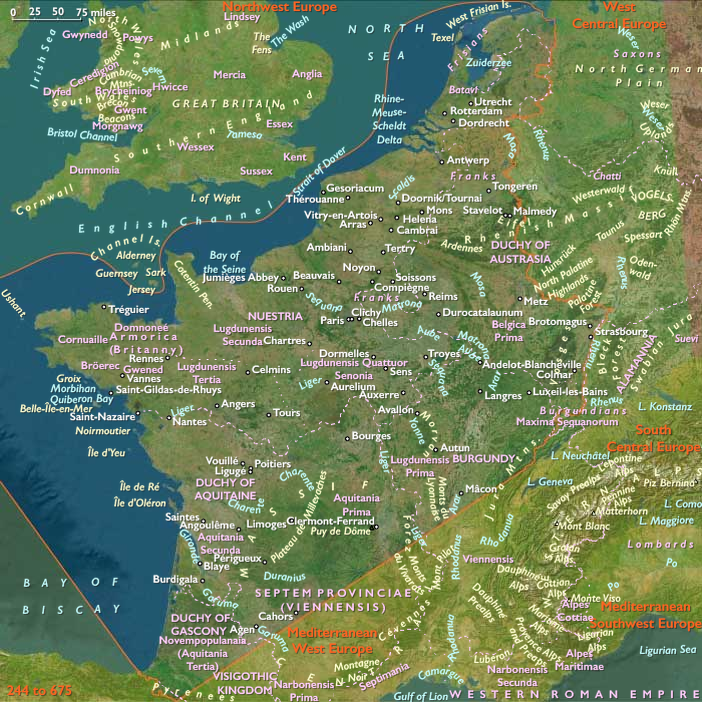
- The Frankish kings invade Burgundy in 523, crushing Sigismund’s forces.
- Sigismund is captured and executed, while his brother Godomar flees.
Burgundian Resistance and the Battle of Vézeronce (524 CE)
- With the support of the Burgundian aristocracy, Godomar returns and retakes the throne.
- The Franks launch a second invasion in 524, this time including Theuderic I alongside Chlothar, Childebert, and Chlodomer.
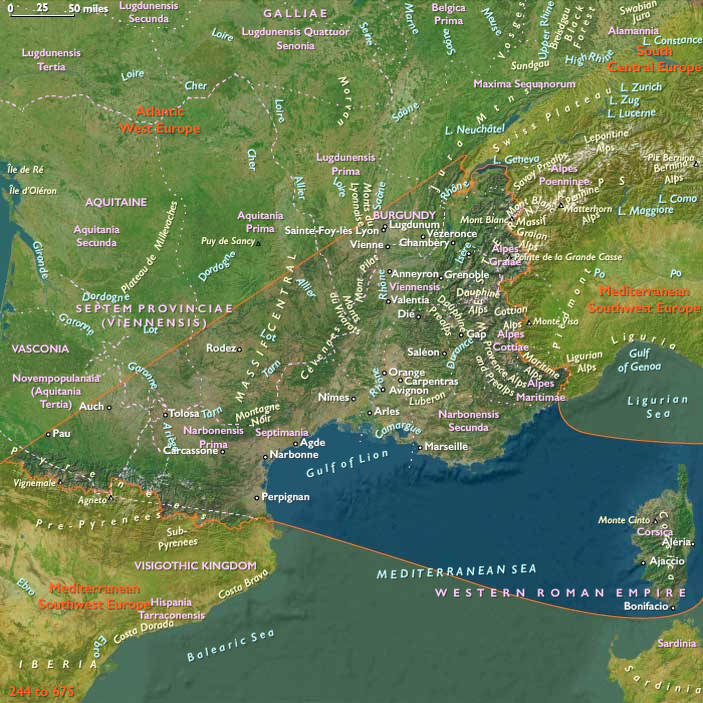
- They advance deep into the Isère Valley, but on June 25, 524, at the Battle of Vézeronce, the Frankish army suffers a severe defeat.
- Chlodomer is killed in battle, dealing a major blow to the Frankish campaign.
Aftermath and Consequences
- Following their defeat, the Franks retreat, allowing Godomar to reclaim the Burgundian throne.
- The conflict remains unresolved, as Burgundy resists full Frankish domination for the time being.
- The Franks eventually conquer Burgundy in 534 CE, incorporating it into the Frankish realm permanently.
This war marks one of the early major conflicts between the Franks and the Burgundians, setting the stage for Frankish expansion and the eventual absorption of Burgundy into the growing Merovingian empire.
People
Groups
Topics
Subjects
Regions
Subregions
Related Events
Filter results
Showing 10 events out of 58185 total
A rebellion against the Yamato court in 527 In Japan's Tsukushi Province (now nearby Ogori city in Fukuoka Prefecture) is named after its leader, Iwai, who is believed by historians to have been a powerful governor of Tsukushi.
Quelled by the Yamato court, the rebellion plays an important part in the consolidation of early Japan.
East Central Europe (520–531 CE): Gepid-Lombard Rivalry, Frankish Influence, and Regional Realignments
Between 520 and 531 CE, East Central Europe—including Poland, Czechia, Slovakia, Hungary, and those portions of Germany and Austria lying east of 10°E and north of a line stretching from roughly 48.2°N at 10°E southeastward to the Austro-Slovenian border near 46.7°N, 15.4°E—entered a period characterized by increasing rivalry and periodic conflict between the dominant Gepids and their expanding Lombard (Langobardi) neighbors. This era witnessed heightened external interest from the Frankish kingdom to the west and the Byzantine Empire to the southeast, influencing regional political dynamics. Amid these shifting alliances and rivalries, important regional settlements such as Augusta Vindelicorum (Augsburg) continued to grow, serving as strategic commercial and administrative centers. Concurrently, proto-Slavic communities maintained their cultural resilience and adaptive stability.
Political and Military Developments
Intensified Gepid-Lombard Rivalry
-
Rivalry between the Gepids and Lombards intensified notably during this period, frequently erupting into armed conflicts. This competition shaped territorial boundaries and influenced regional alliances, contributing to sustained geopolitical instability, especially around the central Carpathian Basin and adjacent regions.
Increasing Frankish and Byzantine Involvement
-
The growing strength of the Frankish kingdom to the west and strategic interests of the Byzantine Empire in the southeast became more prominent during this era, influencing the regional balance of power. Both powers sought diplomatic relationships with the Gepids and Lombards to advance their interests and counter each other's influence in East Central Europe.
Regional Realignments and Stabilization
-
Despite frequent conflicts, both Gepid and Lombard territories experienced internal consolidation, creating more clearly defined spheres of control. Territories such as modern eastern Austria, western Hungary, and Czechia came increasingly under Lombard influence, while central and eastern Hungary remained Gepid strongholds.
Economic and Technological Developments
Stability and Regional Trade Expansion
-
Increased political consolidation in both Gepid and Lombard territories allowed further expansion and stability of regional trade networks, notably linking centers such as Augusta Vindelicorum (Augsburg), Vindobona, Carnuntum, and Aquincum. Local economies experienced modest growth through stable agricultural production, livestock raising, and strengthened commercial exchanges.
Continued Infrastructure Maintenance
-
Infrastructure such as roads and fortifications continued receiving limited maintenance and improvements under Gepid and Lombard authority, primarily to ensure military mobility, communication, and regional trade.
Cultural and Artistic Developments
Gepid-Lombard Cultural Exchanges
-
Cultural and artistic expression reflected the intensified interactions between Gepid and Lombard communities. Material culture—particularly jewelry, weaponry, and pottery—showcased blended Germanic traditions, incorporating Gepid and Lombard styles along with subtle Frankish and Byzantine influences.
Proto-Slavic Cultural Resilience
-
Proto-Slavic communities maintained strong cultural continuity, carefully absorbing external influences while preserving traditional communal structures, religious practices, and craftsmanship.
Settlement and Urban Development
Growth of Augusta Vindelicorum (Augsburg)
-
Augusta Vindelicorum (Augsburg) continued thriving as a significant regional urban and commercial center, benefiting from increased stability, trade, and connectivity fostered by the region’s growing political coherence.
Continued Importance of Regional Settlements
-
Key settlements, including former Roman towns such as Carnuntum, Vindobona, and Aquincum, maintained their regional significance, providing vital administrative, military, and economic functions under stable Gepid and Lombard rule.
Social and Religious Developments
Strengthened Tribal Elites among Gepids and Lombards
-
Social structures among the Gepids and Lombards solidified further, revolving around powerful warrior elites whose legitimacy rested upon military success, effective diplomacy, and adherence to traditional Germanic religious and cultural practices.
Proto-Slavic Social Cohesion and Stability
-
Proto-Slavic societies maintained stable internal cohesion, emphasizing community solidarity and continuity in traditional social and religious practices, successfully navigating external geopolitical pressures and maintaining cultural identity.
Long-Term Consequences and Historical Significance
The era 520–531 CE marked an essential period of political competition and cultural interaction in East Central Europe. Intensified Gepid-Lombard rivalry and increased diplomatic involvement from the Franks and Byzantines contributed significantly to shaping the region's geopolitical landscape. Concurrently, the ongoing growth of urban centers, continued maintenance of regional infrastructure, and enduring resilience of proto-Slavic communities provided vital continuity, laying the foundations for the complex cultural and political dynamics characteristic of the region's early medieval period.
Eastern Southeast Europe (520–531 CE): Urban Development, Economic Continuity, and Administrative Efficiency
Settlement and Migration Patterns
Urban Development
From 520 to 531 CE, the Eastern Roman Empire’s urban centers in Southeast Europe exhibited a blend of stability and new initiatives under Emperor Justin I and the early reign of Justinian I. Constantinople remained a thriving metropolis, home to hundreds of thousands of inhabitants with continuous construction projects. Although the most renowned projects of Justinian, such as the Hagia Sophia, began slightly after this period, infrastructure like streets, forums, and aqueducts were meticulously maintained, preparing for future embellishments.
Provincial cities such as Philippopolis in Thrace and Serdica in Dacia Mediterranea also experienced sustained urban life, recovering from earlier invasions and benefiting from imperial fortification efforts. By the 520s, Philippopolis retained its ancient theater and forum, repurposed for contemporary use, alongside new church and basilica constructions, indicating thriving urban communities. Justinian’s early policies aimed at fortifying cities across the Balkans, especially in strategic regions such as Moesia and Scythia, underscoring a commitment to urban resilience and regional stability.
Emerging Migration Pressures
Despite urban stability, imperial defenses began to falter as Slavic groups intensified incursions across the Danube River, troubling Balkan provinces. These raids, beginning prominently in the 520s, marked early signs of significant demographic and security challenges.
Economic and Technological Developments
Economic Continuity
Despite conflicts on the empire’s frontiers, Eastern Southeast Europe maintained notable economic activity. Constantinople served as a vital economic nexus, sustaining agricultural provinces and regional trade networks through its enormous demand for grain, oil, and textiles. The capital’s strategic position ensured continued commerce via the Black Sea and Mediterranean routes.
Regional trade routes like the Via Diagonalis continued facilitating movement of goods and troops, supporting local economies in cities such as Philippopolis and Serdica. Monetary circulation persisted, evidenced by coinage from Emperors Justin I and Justinian, highlighting economic stability and continuity.
Technological and Defensive Enhancements
Technological progress primarily centered around military infrastructure, with ongoing enhancements to city walls, fortifications, and logistical frameworks. Such innovations safeguarded urban centers and critical economic activities, reflecting an adaptive approach to emerging threats.
Cultural and Artistic Developments
Artistic and Cultural Vitality
Cultural life flourished with artistic production continuing to integrate classical and Christian motifs. Public monuments, religious architecture, and decorative arts enriched the region’s cultural landscape, affirming regional identity and heritage.
Intellectual Preservation
Educational and scholarly institutions actively preserved classical and theological knowledge, maintaining intellectual vitality and adapting scholarship to contemporary contexts. This period’s educational continuity was pivotal for sustaining regional cultural and intellectual life.
Social and Religious Developments
Administrative Efficiency
The Eastern Roman administration operated efficiently through centralized bureaucracy and a network of provincial officials and military commanders. Cities played crucial administrative roles, with provincial capitals like Philippopolis housing governors and coordinating local governance and defense.
The efficient administrative structure, exemplified by Justinian’s early legal reforms leading to the first edition of the Corpus Juris Civilis (528–529 CE), facilitated effective governance, communication, and rapid response to regional challenges.
Expanding Christian Influence
Christianity deepened its societal integration, with ecclesiastical infrastructure expansion significantly shaping cultural and political dynamics. Bishops in cities like Serdica, Philippopolis, and Adrianople played vital roles, overseeing charitable activities, representing civic interests, and enhancing community cohesion.
Long-Term Consequences and Historical Significance
The period 520–531 CE laid critical groundwork for future regional growth, marked by urban stability, economic resilience, and administrative efficiency. These developments provided a robust platform for subsequent Byzantine prominence, despite looming challenges from emerging migration pressures and military threats.
Imperial defenses disintegrate: the Slavs are already crossing the Danube River and troubling the Balkan provinces, and Emperor Justin proves unable to repel them.
Slavs begin to raid and settle south of the Danube in the region of present Bulgaria.
These raids assume massive proportions beginning in the 520s.
The Middle East: 520–531 CE
Catastrophes and Renewed Conflict
The era from 520 to 531 CE in the Middle East is marked by significant natural and political upheavals. The devastating 526 Antioch earthquake profoundly impacts the Eastern Roman Empire, striking Antioch and surrounding regions in late May and resulting in approximately 250,000 deaths. This catastrophic event coincides with Ascension Day, significantly amplifying the casualties as many visitors from the countryside are in the city for celebrations. The earthquake causes considerable geological changes, including an estimated uplift of 0.7–0.8 meters in the port of Seleucia Pieria, rendering the harbor unusable due to subsequent silting. A destructive fire follows, raging for days and obliterating much of what the earthquake left standing. The region endures eighteen months of aftershocks, severely hindering recovery efforts.
The Iberian War and Diplomatic Outcomes
Concurrently, renewed geopolitical tensions between the Eastern Roman Empire and the Sassanid Persian Empire ignite the Iberian War (526–532 CE), centered around the strategically important eastern Georgian kingdom of Iberia. This conflict highlights ongoing Roman–Persian rivalry in the Caucasus region, with neither side securing an absolute victory. Eventually, both empires agree to the Treaty of Eternal Peace, which stipulates substantial concessions: the Roman Empire agrees to an annual tribute of eleven thousand pounds (approximately five thousand kilograms) of gold to Persia, reinforcing Persian dominion over Iberia while Rome acquires control over the coastal kingdom of Lazica.
Continuing Religious and Cultural Dynamics
Amid these disruptions, the period maintains its characteristic intellectual and religious vibrancy. The Eastern Roman Empire continues grappling with doctrinal controversies and internal religious tensions, exacerbated by disasters and external threats. Nonetheless, cities like Alexandria and Antioch remain significant centers of theological scholarship, contributing to ongoing religious discourse despite the era's adversities.
Thus, from 520 to 531 CE, the Middle East experiences profound turbulence marked by catastrophic natural events, intense geopolitical rivalries, and persistent religious divisions, shaping a landscape of resilience and diplomatic realignment in the early sixth century.
The Eastern Roman Empire and the Sassanid Empire fight the Iberian War from 526 to 532 over the eastern Georgian kingdom of Iberia; the result is the Treaty of Eternal Peace, by which the Roman Empire agrees to pay to Persia an annual tribute of eleven thousand pounds (five thousand kilograms) of gold.
The Sassanid Empire retains Iberia; the Roman Empire receives Lazica.
The 526 Antioch earthquake in the Imperial province of Syria strikes Antioch and surrounding regions in late May, killing approximately two hundred and fifty thousand people.
It has been suggested that the very high number of casualties was a result of there being a large number of visitors in the city from the surrounding countryside, there to celebrate Ascension Day.
In the port of Seleucia Pieria an uplift of 0.7–0.8 m has been estimated, and the subsequent silting up of the harbor leaves it unusable.
The earthquake is followed by a fire that rages for days and destroys most of the buildings left standing by the earthquake.
The maximum intensity in Antioch is estimated to be between VIII (destructive) and IX (violent) on the Mercalli intensity scale.
It is followed by eighteen months of aftershocks.
The Himyarite kingdom of pre-Islamic southwestern Arabia is ruled in the sixth century by a king who proclaims himself a Jew, but it is uncertain to what extent the Jewish faith penetrates to the aristocracy or the common people.
Mediterranean Southwest Europe (520–531 CE): Stabilization, Cultural Flourishing, and Regional Prosperity
The era 520–531 CE in Mediterranean Southwest Europe is marked by stabilization, consolidation, and cultural renewal following significant political upheavals. The Visigothic Kingdom, now centered firmly in Iberia under King Amalaric (r. 511–531 CE), achieves internal reorganization, while in Italy, the Ostrogothic Kingdom under Theodoric the Great (r. 493–526 CE) reaches its cultural and economic zenith.
Visigothic Consolidation in Iberia
Following the severe territorial losses after the Battle of Vouillé (507 CE), Amalaric effectively stabilizes the Visigothic realm, consolidating its authority primarily within the Iberian Peninsula. The Visigoths solidify their administrative structures, blending Roman governance traditions with Gothic leadership, fostering internal stability despite external pressures from Frankish neighbors to the north.
Peak of Ostrogothic Prosperity under Theodoric
In Italy, Theodoric the Great continues to preside over a period of significant peace and prosperity. Under his governance, Italy experiences renewed economic growth, supported by efficient administrative reforms, a revitalized agricultural sector, and expanded trade networks across the Mediterranean. Theodoric's rule is distinguished by his tolerance and balanced policy toward both Gothic and Roman populations, fostering societal cohesion.
Cultural Flourishing in Ravenna and Italy
Theodoric's court in Ravenna emerges as a premier cultural center, producing remarkable artistic and architectural achievements. Iconic structures such as the Basilica of Sant’Apollinare Nuovo and Theodoric’s Mausoleum, both constructed around this time, showcase the synthesis of classical Roman techniques and emerging medieval aesthetics. These edifices, celebrated for their exceptional mosaics and innovative architecture, symbolize the cultural vibrancy of Ostrogothic Italy.
Economic Continuity and Regional Prosperity
Throughout the region, local economies demonstrate resilience and adaptability. Trade and agriculture remain robust, benefiting from the period of relative stability. Continued infrastructure improvements initiated by Theodoric, including road restorations and public works, further facilitate economic prosperity, reinforcing urban vitality and regional interconnectivity.
Christian Ecclesiastical Influence and Continuity
Christianity remains central to social, cultural, and educational life. The Church, deeply integrated into local governance structures, continues to provide stability and continuity amid changing political landscapes. Bishops and ecclesiastical leaders wield significant influence, fostering a cohesive community identity and sustaining Roman cultural traditions.
Legacy of Stability and Cultural Integration
The era 520–531 CE represents a significant period of stability, reorganization, and cultural integration within Mediterranean Southwest Europe. The Visigothic and Ostrogothic kingdoms establish enduring political and cultural legacies, laying essential foundations for the medieval societies that will follow.
Years: 520 - 531
People
Groups
Topics
Subjects
Regions
Subregions