
Illyrian culture is believed to have evolved …
Years: 2061BCE - 1918BCE
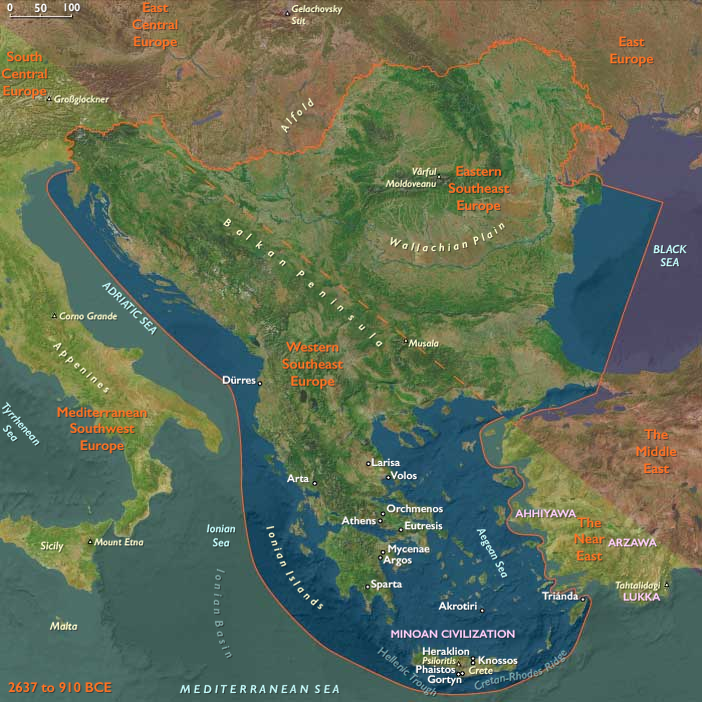
Illyrian culture is believed to have evolved from the Stone Age and to have manifested itself in the territory of Albania in the middle of the Bronze Age.
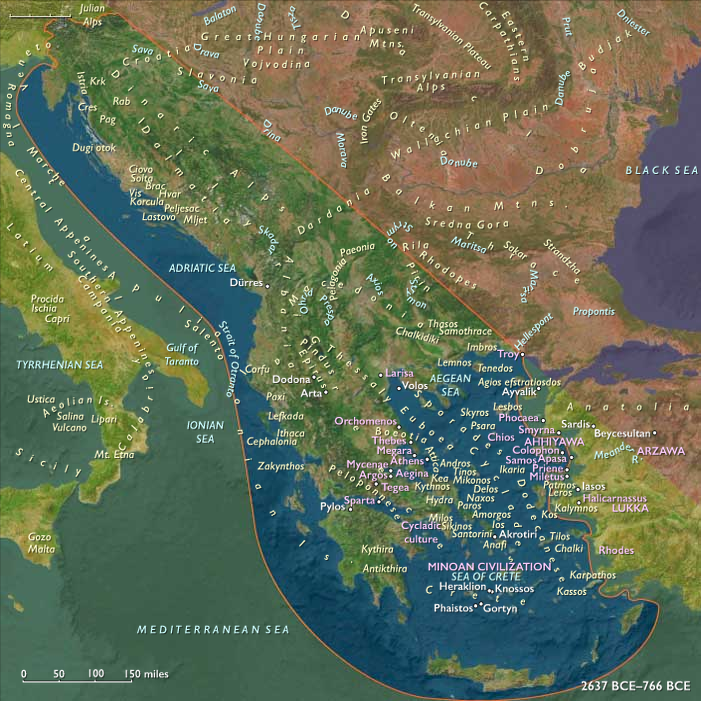
The Illyrians are not a uniform body of people but a conglomeration of many tribes that inhabit the western part of the Balkans, from what is now Slovenia in the northwest to (and including) the region of Epirus, which extends about halfway down the mainland of modern Greece.
The name of Illyrians as applied by the ancient Greeks to their northern neighbors may have referred to a broad, ill-defined group of peoples, and it is today unclear to what extent they were linguistically and culturally homogeneous.
The Illyrian tribes never collectively regard themselves as 'Illyrians'; the term Illyrioi may originally have designated only a single people who came to be widely known to the Greeks due to proximity.
This had occurred during the Bronze Age, when Greek tribes were neighboring the Illyrii proprie dicti, the southernmost Illyrian tribe of that time, in the Zeta plain, Montenegro.
Indeed, such a people known as the Illyrioi will occupy a small and well-defined part of the south Adriatic coast, around Skadar Lake astride the modern frontier between Albania and Montenegro.
The name may then have expanded and come to be applied to ethnically different peoples such as the Liburni, Delmatae, Iapodes, or the Pannonii.
In any case, most modern scholars are certain that the Illyrians constituted a heterogeneous entity.
Locations
Groups
Topics
Subjects
Regions
Subregions
Years: 2061BCE - 1918BCE
Locations
Groups
Topics
Subjects
Regions
Subregions