
Pope Benedict XIV has improved the finances …
Years: 1758 - 1758
May
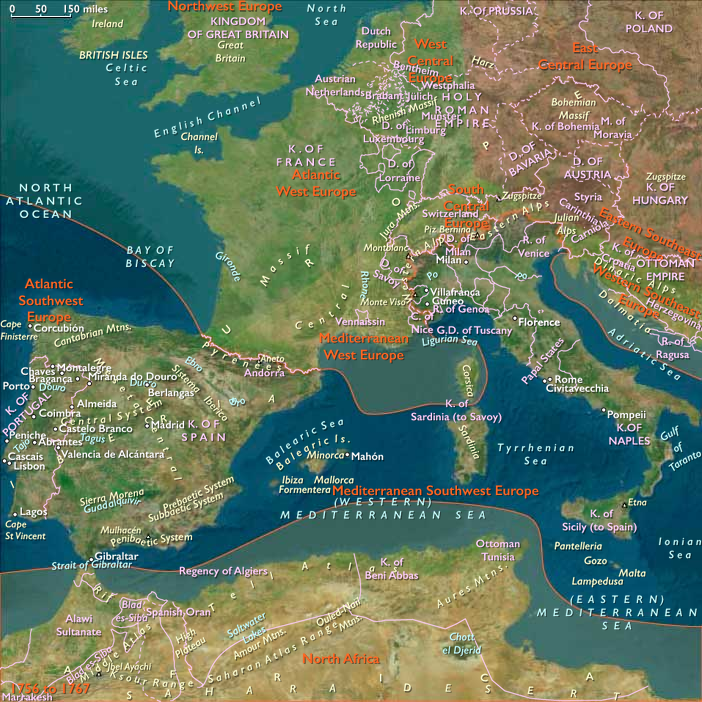
Pope Benedict XIV has improved the finances of the Papal States, reduced taxes, encouraged agriculture and free trade and drastically cut the military budget, but has been unable to completely reform the administration, still corrupt from previous papacies.
At the University of Bologna he has revived the practice of anatomical studies and established a chair of surgery.
He has a clear view of ecclesiastical problems, has respect for differing opinions and an ability to distinguish between dogma and theory.
Benedict's health worsens in 1758 and after a battle with gout, he dies on May 3, 1758 at the age of eighty-three.
His final words to those surrounding him on his deathbed are, "I leave you in the hands of God."
Following his funeral, he is interred in Saint Peter's Basilica and a large catafalque will be erected in his honor.
Benedict had commissioned a team of architects led by Nicola Salvi and Luigi Vanvitelli to design a large palace that is to be 'more complex and with greater baroque style than the box of a palace Vanvitelli designed in Caserta'.
The palace was to be built south of St. Peter's Basilica, but will never be built, as the plans will be quietly ignored by Benedict's successor, Clement XIII.
They will be brought up once more by Pius VI late in his papacy, but will be stopped due to the possibility of invasion.
At the University of Bologna he has revived the practice of anatomical studies and established a chair of surgery.
He has a clear view of ecclesiastical problems, has respect for differing opinions and an ability to distinguish between dogma and theory.
Benedict's health worsens in 1758 and after a battle with gout, he dies on May 3, 1758 at the age of eighty-three.
His final words to those surrounding him on his deathbed are, "I leave you in the hands of God."
Following his funeral, he is interred in Saint Peter's Basilica and a large catafalque will be erected in his honor.
Benedict had commissioned a team of architects led by Nicola Salvi and Luigi Vanvitelli to design a large palace that is to be 'more complex and with greater baroque style than the box of a palace Vanvitelli designed in Caserta'.
The palace was to be built south of St. Peter's Basilica, but will never be built, as the plans will be quietly ignored by Benedict's successor, Clement XIII.
They will be brought up once more by Pius VI late in his papacy, but will be stopped due to the possibility of invasion.
Locations
People
Groups
Subjects
Regions
Subregions
Related Events
Showing 10 events out of 26586 total
Years: 1758 - 1758
May
Locations
People
Groups
Subjects
Regions
Subregions