
Hussain Shah, the ruler of the weakened …
Years: 1486 - 1486
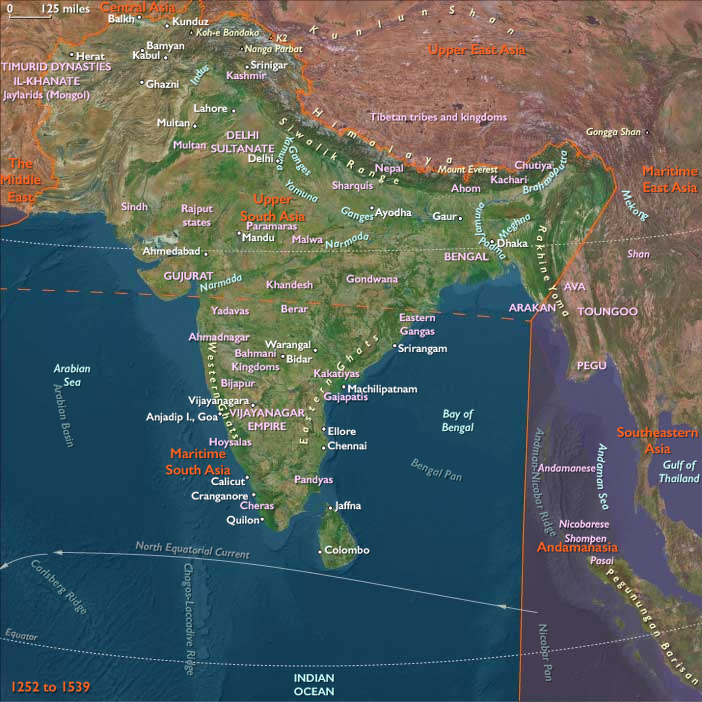
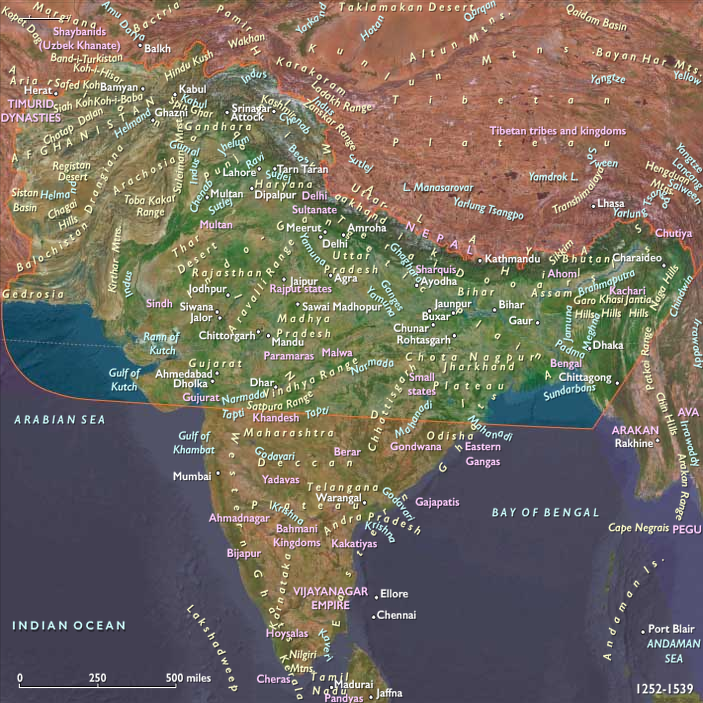
Hussain Shah, the ruler of the weakened sultanate of Jaunpur, after suffering successive defeats by the Delhi Sultanate in the battles of Senha, Rapri and Raigaon Khaga, had finally been defeated on the banks of the Rahab.
He had fled to Bengal, where he had been granted asylum by sultan Alauddin Husain Shah and passed his last days there.
Bahlul Lodi in 1486 places his eldest surviving son, Barbak Shah Lodi, on the throne of Jaunpur.
Locations
People
Groups
Topics
Commodoties
Subjects
Regions
Subregions
Related Events
Showing 10 events out of 40482 total
Years: 1486 - 1486
Locations
People
Groups
Topics
Commodoties
Subjects
Regions
Subregions