
Many regions of Northern Africa are well …
Years: 49293BCE - 28558BCE
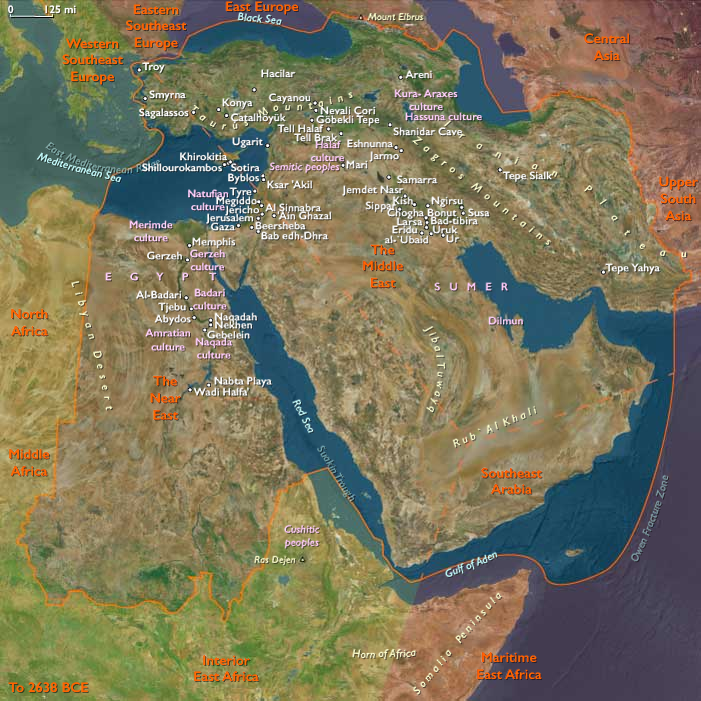
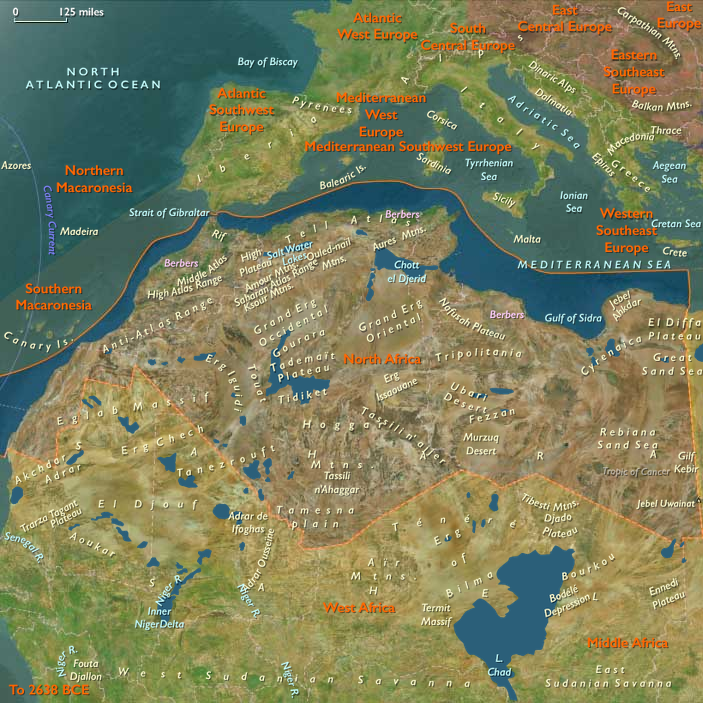
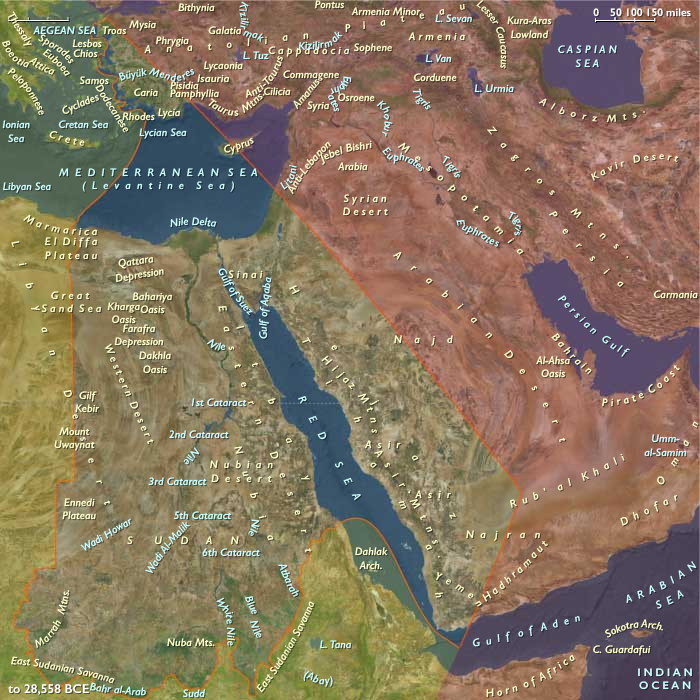
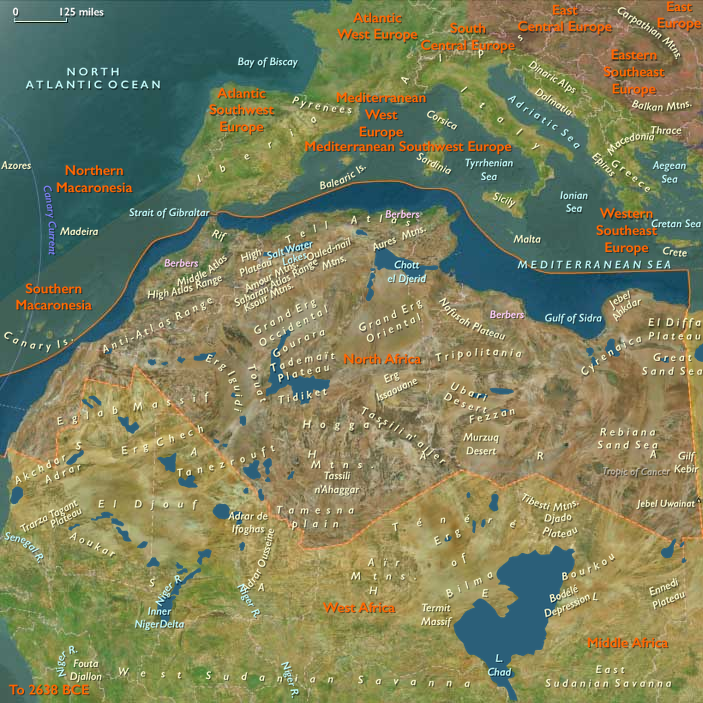
Many regions of Northern Africa are well watered, bearing lakes, swamps, and river systems during an extended wet and rainy period in the climate history of North Africa from around fifty thousand to around thirty thousand years before the present called the Mousterian Pluvial.
What is now the Sahara desert supports typical African wildlife of grassland and woodland environments: herbivores from gazelle to giraffe to ostrich, predators from lion to jackal, even hippopotamus and crocodile, as well as extinct forms like the Pleistocene camel.
The Mousterian Pluvial resembles the earlier Abbassia Pluvial in these respects; the later Neolithic Subpluvial is a weaker reiteration of the same pattern.
Groups
Topics
Commodoties
Subjects
Regions
Subregions
Related Events
Showing 10 events out of 69706 total
Years: 49293BCE - 28558BCE
Groups
Topics
Commodoties
Subjects
Regions
Subregions