
Hugh replaces Boso of Tuscany with his …
Years: 936 - 936
Hugh replaces Boso of Tuscany with his own son Hubert in 936.
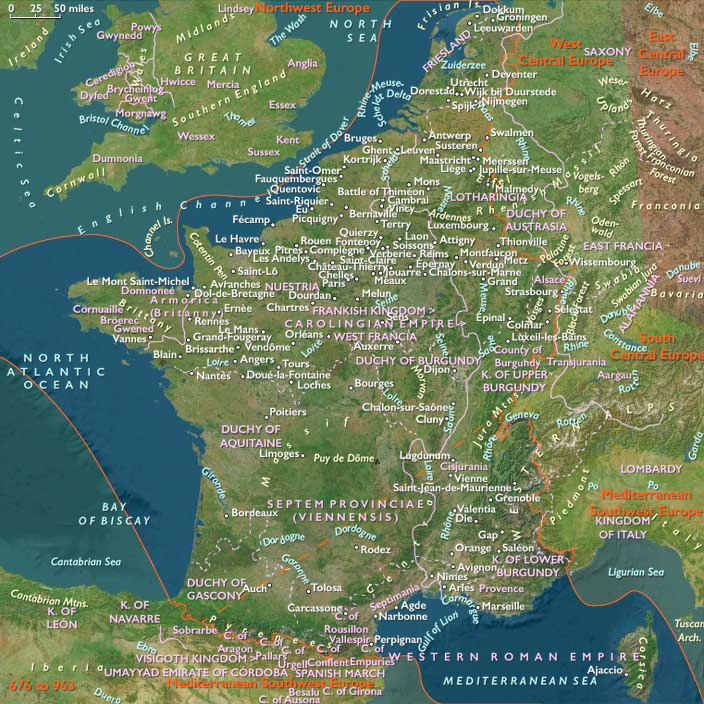
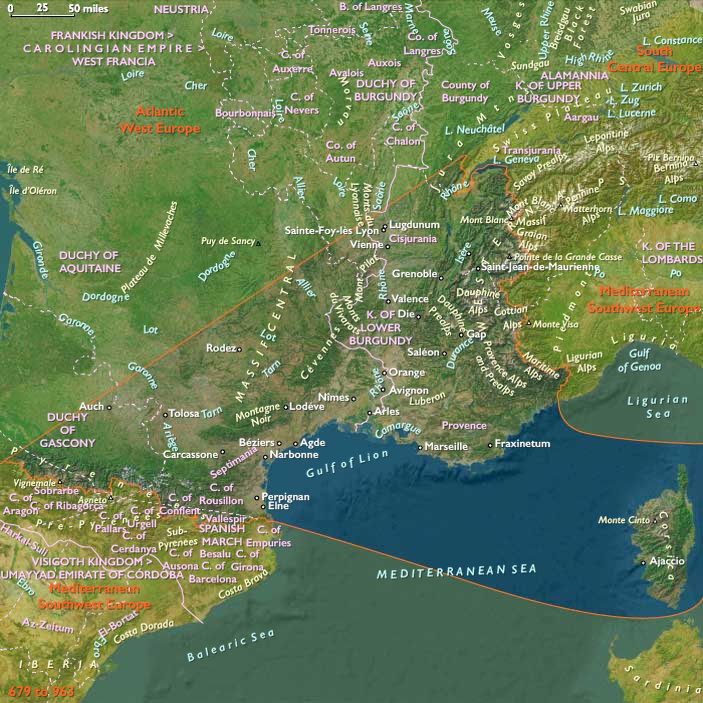
He grants Octavion in the Viennois to Hugh Taillefer and patches up his relations with Charles-Constantine in a final effort to save influence in Provence.
Locations
People
- Boso
- Charles-Constantine of Vienne
- Herbert II
- Hubert
- Hugh of Italy
- Lambert
- Pope John XI
- Rudolph II of Burgundy
Groups
- Christianity, Chalcedonian
- Italy, Carolingian Kingdom of
- Francia Occidentalis (West Francia, or France), Kingdom of
- Tuscany, Margravate of
- Burgundy, Upper, Kingdom of
- Burgundy, Lower, Kingdom of
- Arles, Kingdom of, or Second Kingdom of Burgundy
Topics
Commodoties
Subjects
Regions
Subregions
Related Events
Showing 10 events out of 53113 total
Years: 936 - 936
Locations
People
- Boso
- Charles-Constantine of Vienne
- Herbert II
- Hubert
- Hugh of Italy
- Lambert
- Pope John XI
- Rudolph II of Burgundy
Groups
- Christianity, Chalcedonian
- Italy, Carolingian Kingdom of
- Francia Occidentalis (West Francia, or France), Kingdom of
- Tuscany, Margravate of
- Burgundy, Upper, Kingdom of
- Burgundy, Lower, Kingdom of
- Arles, Kingdom of, or Second Kingdom of Burgundy
Topics
Commodoties
Subjects
Regions
Subregions