The Marital Affairs of Robert II of France: Dynastic Strategy and Papal Opposition (989–1001)
As the Capetian dynasty sought to establish its legitimacy and secure powerful alliances, Robert II of France was repeatedly entangled in politically driven marriages, often encountering papal resistance. His early marriages reflect the complex diplomatic maneuvering of the period, as well as the growing influence of the papacy over royal unions.
First Marriage: Rozala-Susanna of Italy (989–996)
- Around 989, Hugh Capet, having failed to secure an imperial bride from Constantinople for his son, arranged for Robert to marry Rozala (Susanna), the daughter of Berengar II of Italy.
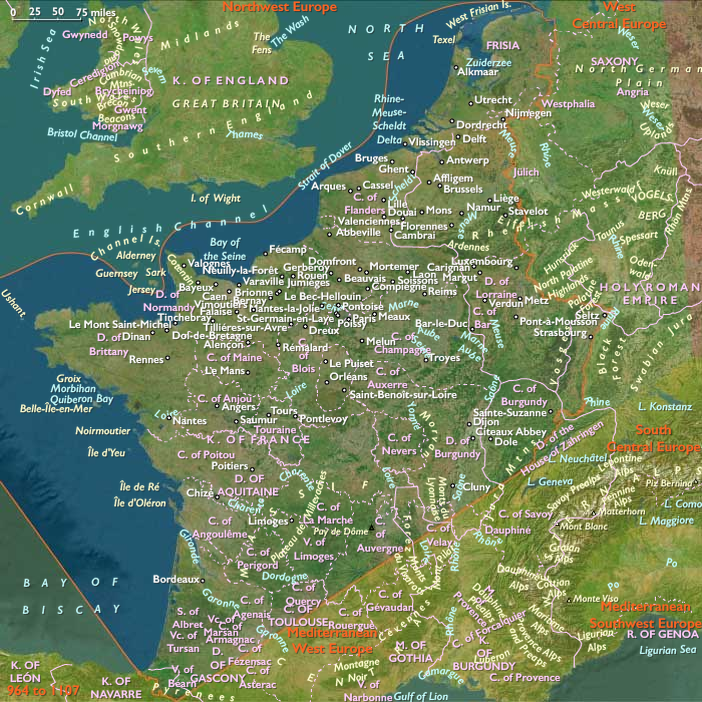
- Rozala, already a widow of Arnulf II of Flanders, was many years older than Robert and brought with her substantial Flemish territories, strengthening Capetian control in the north.
- However, this union was short-lived. After Hugh Capet’s death in 996, Robert divorced Rozala, discarding the Flemish alliance in favor of a Burgundian connection.
Second Marriage: Bertha of Burgundy and Papal Excommunication (996–1000)
- Robert then pursued Bertha of Burgundy, daughter of Conrad of Burgundy and widow of Odo I of Blois.
- This match was politically advantageous, reinforcing Capetian claims in Burgundy and countering the power of the House of Blois.
- However, Bertha was Robert’s cousin, and Pope Gregory V refused to sanction the marriage on grounds of consanguinity.
- Despite this, Robert persisted in the union, leading to his excommunication by the pope.
- The excommunication weakened his position, forcing him into lengthy negotiations with Gregory’s successor, Sylvester II, who eventually annulled the marriage.
Final and Lasting Marriage: Constance of Arles (1001)
- In 1001, Robert entered into his final and longest-lasting marriage with Constance of Arles, the daughter of William I of Provence.
- This union cemented Capetian ties with southern France, an increasingly wealthy and influential region.
- Constance proved to be a strong-willed and politically assertive queen, often at odds with Robert’s courtiers but ultimately securing her family’s influence at court.
Impact and Legacy
- Robert’s turbulent marital history highlights the Capetians’ struggle to consolidate power while navigating the growing influence of the papacy.
- His excommunication and forced annulment demonstrated the Church’s increasing authority over royal marriages, a conflict that would later resurface in French history.
- Ultimately, his union with Constance of Arles produced several heirs, securing the Capetian dynasty’s future stability.
Robert’s marital missteps illustrate the fragile balance of dynastic ambition, papal authority, and feudal politics in the early Capetian era, as France slowly transformed into a more centralized medieval monarchy.