
Hugh Capet and the Founding of the …
Years: 988 - 988
Hugh Capet and the Founding of the Capetian Dynasty (987)
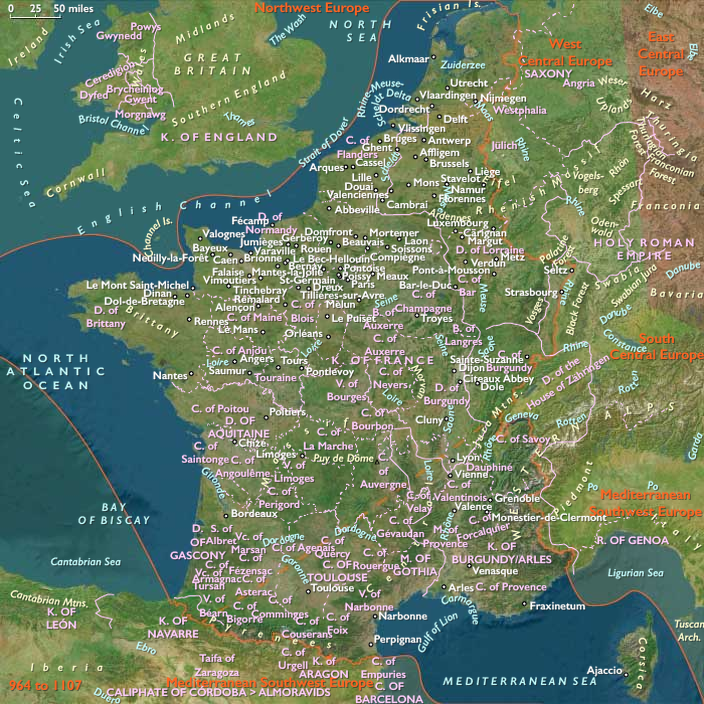
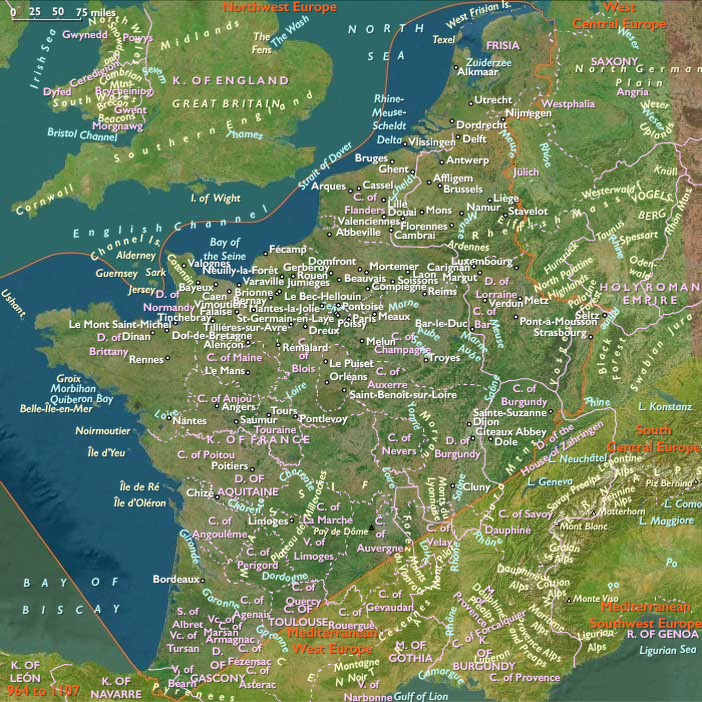
By 986, Hugh Capet had become king in all but name, having carefully positioned himself as the dominant noble in West Francia through strategic alliances with the Holy Roman Empire and the Archbishop of Reims. His rise marked the end of Carolingian rule and the beginning of the Capetian dynasty, a lineage that would shape the course of French history for centuries.
The Path to the Throne
From 977 to 986, Hugh allied himself with:
- Emperor Otto II and later Otto III, supporting their efforts to keep Lotharingia under imperial control.
- Archbishop Adalberon of Reims, one of the most powerful churchmen in France, who favored the Capetian claim over the declining Carolingians.
- Gerbert of Aurillac (the future Pope Sylvester II), a key intellectual figure who opposed Carolingian attempts to seize Lorraine from the empire.
By the time King Lothair and his son, Louis V, died in early 987, Hugh had already consolidated enough support to secure the throne.
Election and Coronation (July 3, 987)
Following the deaths of Lothair and Louis V, Adalberon and Gerbert convened an assembly of nobles, ensuring that Hugh Capet was elected and crowned Rex Francorum (King of the Franks) at Noyon in Picardy on July 3, 987. His crowning by the Archbishop of Reims was a decisive moment, marking the formal end of the Carolingian dynasty and the beginning of Capetian rule.
The Coronation of Robert II (December 25, 987)
Hugh quickly sought to secure his dynasty, pressing for the coronation of his son, Robert II, later known as Robert the Pious.
- Hugh justified this by citing his planned expedition to aid Borrel II of Barcelona against Moorish incursions—an invasion that ultimately never took place.
- He argued that two kings were necessary to ensure stability should he perish on campaign.
- Robert II was crowned co-king on December 25, 987, establishing the Capetian tradition of hereditary succession, which helped ensure dynastic stability.
The Birth of a Dynasty
Hugh’s reign marked the beginning of modern France, as he centered royal power in Paris, his base as Count of Paris. Though his early rule was limited in scope, the Capetians would gradually consolidate control over France, transforming the feudal patchwork into a centralized monarchy.
The House of Capet (987–1328) would rule directly for over three centuries, with its Valois (1328–1589) and Bourbon (1589–1792, 1814–1830) cadet branches continuing to rule thereafter. Even today, Capetian bloodlines remain on European thrones:
- Spain, through the House of Bourbon (King Juan Carlos I and his successors).
- Luxembourg, through the House of Nassau-Weilburg, another Capetian branch.
With the Capetians establishing a dynasty that endured for over a thousand years, Hugh Capet’s coronation in 987remains one of the most significant turning points in French and European history.
Locations
People
Groups
- Barcelona, County of
- Lorraine (Lotharingia), Lower, (first) Duchy of
- German, or Ottonian (Roman) Empire
- France, (Capetian) Kingdom of
Subjects
Regions
Subregions
Years: 988 - 988
Locations
People
Groups
- Barcelona, County of
- Lorraine (Lotharingia), Lower, (first) Duchy of
- German, or Ottonian (Roman) Empire
- France, (Capetian) Kingdom of
Subjects
Regions
Subregions