
Hugh Capet’s Rise to the French Throne …
Years: 987 - 987
Hugh Capet’s Rise to the French Throne and the End of the Carolingians (987)
In 987, the death of Louis V, the last Carolingian king of West Francia, ushered in a dynastic shift that would shape France for centuries. The French magnates, wary of continuing Carolingian rule, elected Hugh Capet, Count of Paris and Duke of the Franks, as king, formally marking the end of the Carolingian dynasty and the beginning of Capetian rule.
The Decline of Carolingian Power and the Rise of Hugh Capet
Hugh Capet had been a powerful noble for years, but his influence was limited by the fragmentation of the Capetian family’s holdings:
- He had already lost control of Anjou and Blois, key sections of the Capetian domain, to increasingly independent subordinate counts.
- Throughout the reign of Lothair (954–986), Capet had persistently intrigued against the Carolingian king, weakening royal authority.
When Lothair died in 986, his son, Louis V, inherited an already diminished and politically unstable realm. His sudden death in 987, without an heir, left the Carolingian succession in crisis.
Capet’s Election and the Carolingian Threat
Rather than recognizing the legitimate Carolingian claimant, Charles, Duke of Lower Lorraine (Lothair’s brother), the French nobles instead elected Hugh Capet as king in July 987. The decision reflected:
- The nobility’s distrust of Charles, who had sworn allegiance to the Holy Roman Emperor, making him an unacceptable candidate.
- The shift in power toward the great territorial lords, who saw Capet as a weaker, more manageable ruler than the independent-minded Carolingians.
Charles, however, did not concede defeat and contested Capet’s rule. His claim to the throne remained a serious challenge in the early years of Capetian rule.
The Capetian Nucleus: Île-de-France and the Struggle for Control
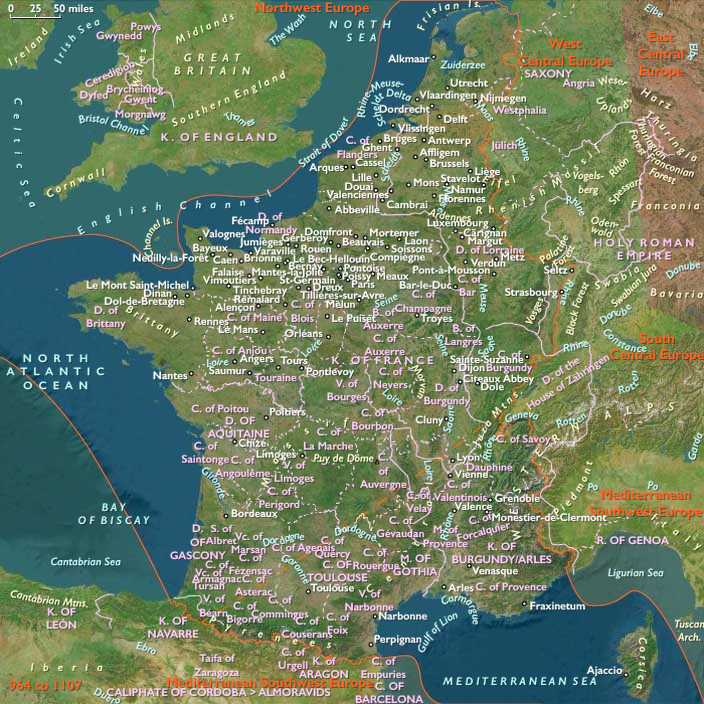
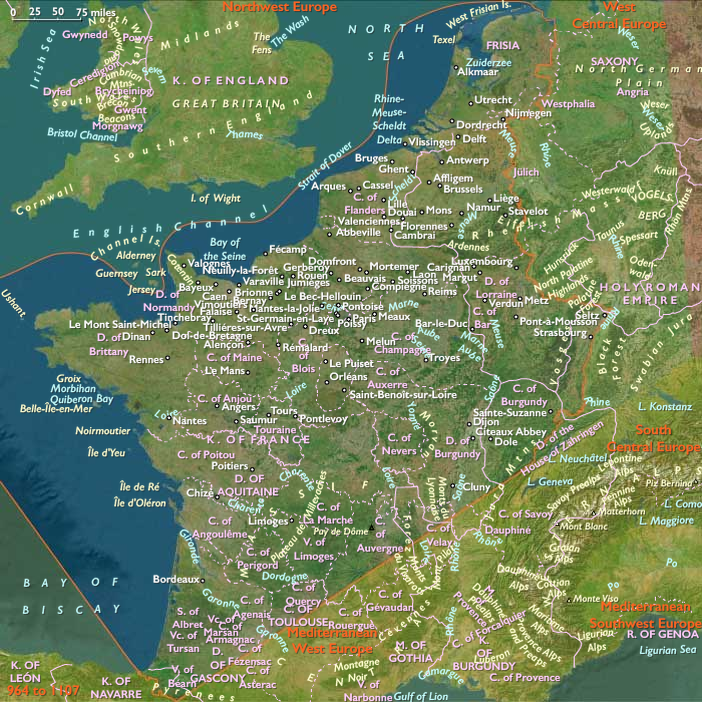
As king, Hugh Capet ruled over a shrunken French state, with his direct authority largely confined to Île-de-France, the small duchy centered on Paris, also called Francia.
- Unlike the Carolingians, who had ruled vast territories (even if indirectly), Hugh Capet’s power was limited by the autonomy of the great dukes and counts.
- His early reign was preoccupied with consolidating control over his immediate domain, laying the groundwork for what would eventually become the Kingdom of France.
Legacy: The Foundations of Capetian Rule
Despite its modest beginnings, Capetian rule would prove enduring, as the dynasty eventually extended its power beyond Île-de-France. The Capetian line maintained an unbroken succession for centuries, ensuring France’s gradual unification into a powerful medieval kingdom.
Hugh Capet’s election in 987 thus marked a decisive turning point in French history, as Carolingian legitimacy gave way to feudal kingship, with Paris as the political heart of the emerging French state.
Locations
People
Groups
- Francia Occidentalis (West Francia, or France), Kingdom of
- Anjou, County of
- Blois, County of
- Lorraine (Lotharingia), Lower, (first) Duchy of
Subjects
Regions
Subregions
Years: 987 - 987
Locations
People
Groups
- Francia Occidentalis (West Francia, or France), Kingdom of
- Anjou, County of
- Blois, County of
- Lorraine (Lotharingia), Lower, (first) Duchy of
Subjects
Regions
Subregions