
Hōnen, the religious reformer and founder of …
Years: 1207 - 1207
August
Hōnen, the religious reformer and founder of the first independent branch of Japanese Pure Land Buddhism, had become a monk of the Tendai sect at an early age, but grew disaffected, and sought an approach to Buddhism that anyone could follow, even during the perceived Age of Dharma Decline.
After discovering the writings of Chinese Buddhist Shan-tao, he had undertaken the teaching of rebirth in the Pure Land of Amitabha through reciting the Buddha's name, or nembutsu.
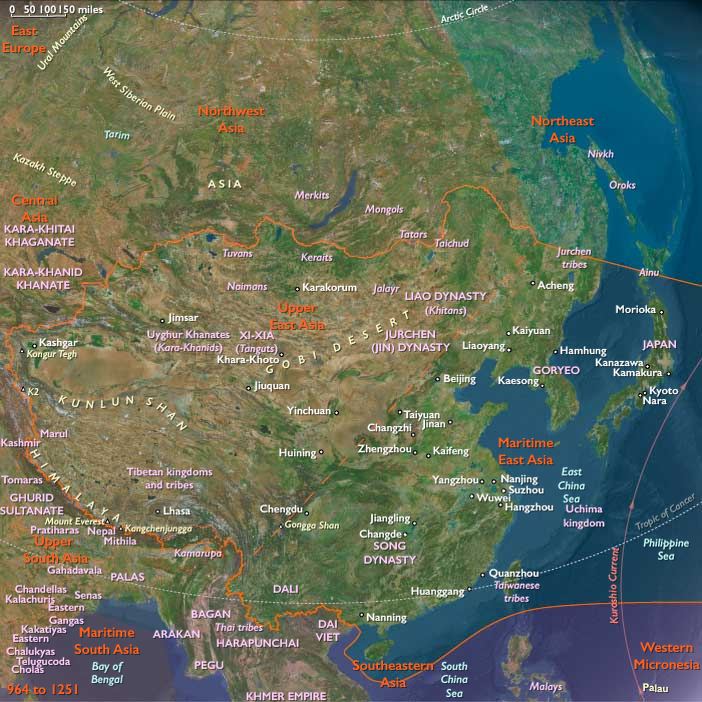
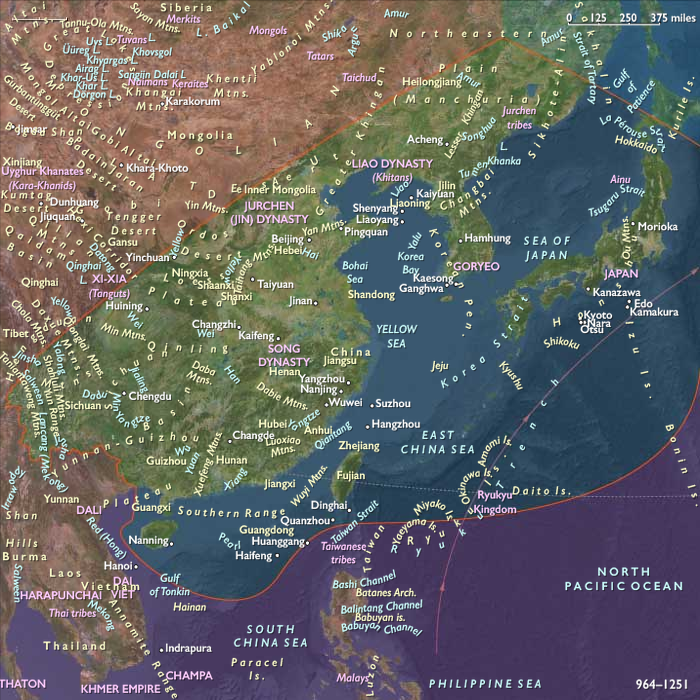
Hōnen had relocated to the district of Ōtani in Kyoto where he started addressing crowds of men and women, establishing a considerable following and attracting fortune-tellers, ex-robbers, samurai and other elements of society normally excluded from Buddhist practice.
Many priests and nobleman ally with him, and visit him for spiritual advice.
Among them is an imperial regent named Kujō Kanezane.
The increasing popularity of his teachings draws criticism from noted contemporaries as Myōe and Jōkei among others, who argue against Hōnen's sole reliance on the nembutsu as a means of rebirth in the Pure Land.
Additionally, some disciples interpret Hōnen's teachings in unexpected ways, leading to disreputable behavior, criticism of other sects, or other forms of antinomianism.
The monks at Mt.
Hiei had in 1205 implored the head priest to ban the teachings of exclusive nembutsu and to banish any adherents from their principality.
The temple of Kōfuku-ji, located in Nara, had in 1205 implored the Emperor Go-Toba to sanction Hōnen and his followers, providing the emperor with nine charges alleging unappeasable differences with the so-called eight schools.
Hōnen's detractors cite examples of Hōnen's followers, such as Gyoku and Kōsai who committed vandalism against Buddhist temples, intentionally broke the Buddhist precepts, or caused others to intentionally turn away from established Buddhist teachings.
In response, Hōnen censures Kōsai's single-nembutsu teaching, and his followers agree to sign the Shichikajo kishomon ("Seven Article Pledge"), which calls for restraint in moral conduct and in interactions with other Buddhist sects.
The controversy surrounding Hōnen's teachings had dissipated for a time until 1207, when Go-Toba implements a ban against exclusive nembutsu, stemming form an incident where two of his ladies in waiting had converted to Jōdo Shū while the emperor was away.
As part of the ban, Hōnen and some of his disciples are exiled, while the priests responsible for the conversion, Juren and Anrakubo, are executed.
Hōnen is exiled to Tosa, but the movement in Kyoto has not completely gone away.
Locations
People
Groups
Subjects
Regions
Subregions
Years: 1207 - 1207
August
Locations
People
Groups
Subjects
Regions
Subregions