
Homo gautengensis is, as of May 2010, …
Years: 2350989BCE - 2102158BCE
Homo gautengensis is, as of May 2010, the earliest recognized species in the genus Homo.
While earlier fossils belong to the genus Homo, none have yet been classified in any species.
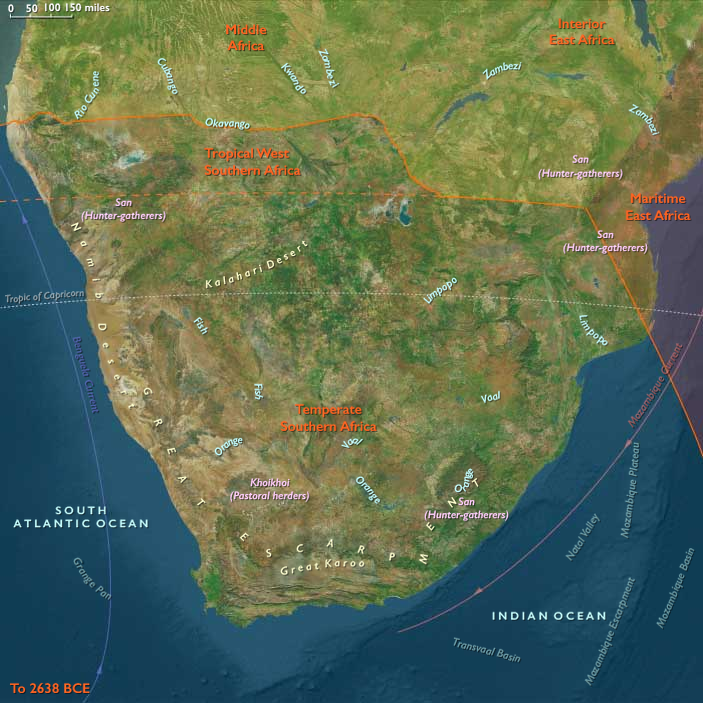
Analysis announced in May 2010 of a partial skull found decades earlier in South Africa's Sterkfontein Caves near Johannesburg identified the species, named Homo gautengensis by anthropologist Dr Darren Curnoe of the UNSW School of Biological, Earth and Environmental Sciences.
While earlier fossils belong to the genus Homo, none have yet been classified in any species.
The species' first remains were originally discovered in 1977 but had been left largely ignored.
They had been catalogued Stw 53 and were noted as being anomalous.
Identification of H. gautengensis was based on partial skulls, several jaws, teeth and other bones found at various times at the Caves.
It emerged over two million years ago and died out approximately six hundred thousand years years ago, and is believed to have arisen earlier than Homo habilis.
According to Curnoe, who led the research project, Homo gautengensis had big teeth suitable for chewing plant material.
It was "small-brained" and "large-toothed," and was "probably an ecological specialist, consuming more vegetable matter than Homo erectus, Homo sapiens, and probably even Homo habilis."
It apparently produced and used stone tools and may even have made fire, as there is evidence for burnt animal bones associated with H. gautengensis' remains.
Curnoe and South African paleoanthropologist colleague Phillip Tobias believe H. gautengensis stood just over three feet tall and weighed about one hundred and ten pounds.
It walked on two feet when on the ground, "but probably spent considerable time in trees, perhaps feeding, sleeping and escaping predators," Curnoe said.
The researchers believe it lacked speech and language skills.
Due to its anatomy and geological age, researchers think that it was a close relative of Homo sapiens but not necessarily a direct ancestor.
Locations
Subjects
Regions
Subregions
Related Events
Showing 10 events out of 69788 total
Years: 2350989BCE - 2102158BCE
Locations
Subjects
Regions
Subregions