
Homo erectus (from the Latin ērĭgĕre, …
Years: 2102157BCE - 1853326BCE
Homo erectus (from the Latin ērĭgĕre, "to put up, set upright”) originated in Africa at the end of the Pliocene epoch and spread as far as China and Java to the later Pleistocene, about one point eight to one point three million years ago.
There is still disagreement on the subject of the classification, ancestry, and progeny of H. erectus, with two major alternative hypotheses: erectus may be another name for Homo ergaster, and therefore the direct ancestor of later hominids such as Homo heidelbergensis, Homo neanderthalensis, and Homo sapiens; or it may be an Asian species distinct from African ergaster.
Homo erectus is the only hominid species found in fossil records for much of the Pleistocene.
The phenomena called the Saharan pump has been used to date four waves of human migration from Africa of which H. erectus is the first, migrating from Africa around two million years ago into Southeast and East Asia.
This species will migrate through much of the Old World, giving rise to many variations of humans, notably Homo ergaster, widely accepted to be the direct ancestor of later hominids such as Homo heidelbergensis, Homo sapiens, and Homo neanderthalensis rather than Asian Homo erectus.
Related Events
Filter results
Showing 10 events out of 69787 total
Homo habilis (“Handy-man") lives from approximately two point three to one point four million years ago at the beginning of the Pleistocene period.
With a cranial capacity slightly less than half of the size of modern humans, standing no more than one point three meters meters four feet three inches) tall, and with disproportionately long arms compared to modern humans, it has a less protruding face than the australopithecines from which it is thought to have descended.
Despite the ape-like morphology of the bodies, primitive stone tools often accompany H. habilis remains.
Homo habilis has often been thought to be the ancestor of the more gracile and sophisticated Homo ergaster, which in turn gives rise to the more human-appearing species, Homo erectus.
Some experts propose excluding H. habilis from the genus Homo, and renaming as "Australopithecus habilis.” Debates continue over whether H. habilis is a direct human ancestor, and whether all of the known fossils are properly attributed to the species.
New findings in 2007, however, suggest that the two species coexisted and may be separate lineages from a common ancestor instead of H. erectus being descended from H. habilis.
The Great Crossroads, one of the twelve divisions of the globe, is centered on Eurasia, with its northernmost extent meeting Northern Oceania and The Atlantic World at the North Pole. This vast region excludes the eastern, western, and southern extremities of the Eurasian landmass, which spans a significant portion of the Earth's surface.
The Ural Mountains, running approximately north to south, serve as the traditional boundary between Europe and Asia, as well as between Russia proper and Siberia.
For the purposes of this framework, The Great Crossroads includes Mongolia; western China, including Xinjiang and the Tibetan Plateau; the northern half of the Indian subcontinent; Afghanistan; the Iranian Plateau; Mesopotamia; eastern Arabia; the northern Levant; northeastern Cyprus; western and southwestern Anatolia; the Caucasus; Eastern Europe; Siberia; the Eastern Balkans; Eastern Scandinavia; the Baltic Sea basin; and Middle Europe.
- The southwestern boundary runs diagonally from south-central Germany, through the eastern Alps, the Balkans, and western Asia, terminating in the southern third of the Arabian Peninsula in the vast desert known as the Rub’ al Khali.
- The southern boundary divides South India from North India, following the generally recognized demarcation that includes the Narmada River, and separates the Indian Ocean-facing southeastern Arabian coast from the Persian Gulf-focused eastern Arabia.
- The southeastern boundary runs diagonally from the Bay of Bengal, following India’s border with Myanmar, marking the division between South Asia and both Southeast Asia and Eastern Asia.
Narrow results by searching for a word or phrase or select from one or more of a dozen filters.
Homo georgicus is a species of Homo that was suggested in 2002 to describe fossil skulls and jaws found in Dmanisi, Georgia in 1999 and 2001, which seem intermediate between Homo habilis and H. erectus.
A partial skeleton was discovered in 2001.
The fossils are about one million eight hundred thousand years old.
The remains were first discovered in 1991 by Georgian scientist, David Lordkipanidze, accompanied by an international team which unearthed the remains.
Implements and animal bones were found alongside the ancient human remains.
Scientists thought at first that they had found mandibles and skulls belonging to Homo ergaster, but size differences led them to name a new species, Homo georgicus, which would be the descendant of Homo habilis and ancestor of Asian Homo erectus.
Homo rudolfensis is a fossil human species discovered by Bernard Ngeneo, a member of a team led by anthropologist Richard Leakey and zoologist Meave Leakey in 1972, at Koobi Fora on the east side of Lake Rudolf (now Lake Turkana) in Kenya.
Originally thought to be a member of the species Homo habilis, the fossil was the center of much debate concerning its species.
The skull was at first incorrectly dated at nearly three million years old.
The differences in this skull, when compared to others of the Homo habilis species, are too pronounced, leading to the presumption of a Homo rudolfensis species, contemporary with Homo habilis.
It is not certain if H. rudolfensis was ancestral to the later species in Homo, or if H. habilis was, or if some third species yet to be discovered was.
Homo erectus (from the Latin ērĭgĕre, "to put up, set upright") is an extinct species of hominid that originated in Africa—and spread as far as China and Java—from the end of the Pliocene epoch to the later Pleistocene, about 1.8 to 1.3 million years ago.
There is still disagreement on the subject of the classification, ancestry, and progeny of H. erectus, with two major alternative hypotheses: erectus may be another name for Homo ergaster, and therefore the direct ancestor of later hominids such as Homo heidelbergensis, Homo neanderthalensis, and Homo sapiens; or it may be an Asian species distinct from African ergaster
H. erectus originally migrated from Africa during the Early Pleistocene, possibly as a result of the operation of the Saharan pump, around two million years ago, and dispersed throughout much of the Old World.
Fossilized remains one million eight hundred thousand to one million years old have been found in Africa (e.g., Lake Turkana and Olduvai Gorge), Europe (Georgia, Spain), Indonesia (e.g., Sangiran and Trinil), Vietnam, and China (e.g., Shaanxi).
The Far East, one of the twelve divisions of the Earth, encompasses northern Australia, the entire Indonesian archipelago (excluding Aceh and Sumatra), the Philippines, the island of New Guinea, mainland Southeast Asia, the Malay Peninsula, eastern and southern China (China proper), Taiwan, the Korean Peninsula, the southern portion of the Russian Far East, and most of the Japanese archipelago, except for Hokkaido.
The southeastern boundary runs through Micronesia and Melanesia, dividing these regions into eastern and western subregions.
The northwestern boundary follows a line that separates Mongolia from China and delineates the division between Xinjiang and Tibet from China proper. It extends from its northernmost point, just beyond the northern arc of the Amur River—which marks China’s border with Russia—to its westernmost point, at the tri-border junction of Burma, India, and the Bay of Bengal.
The northeastern boundary distinguishes the extreme southern portion of the Russian Far East from the rest of the district and separates most of Hokkaido from Honshu, Kyushu, and Shikoku.
The southwestern boundary encompasses nearly all of Southeast Asia, with the exception of Aceh, which juts into the Indian Ocean and forms the southern shore of the Strait of Malacca, historically the key maritime gateway to the East.
HistoryAtlas contains 4,553 entries for The Far East from the Paleolithic period to 1899.
Narrow results by searching for a word or phrase or select from one or more of a dozen filters.
Homo erectus inhabited what is now China more than a million years ago.
Xiaochangliang, the site of some of the earliest Paleolithic remains in East Asia, located in the Nihewan Basin in Yangyuan County, Hebei, is most famous for the stone tools discovered there, including side and end scrapers, notches, burins, and disc cores.
Although it is generally more difficult to date Asian sites than African sites because Asian sites typically lack volcanic materials that can be dated isotropically, the age of the tools has been magnetostratigraphically dated as 1.36 million years.
This method is more accurate than carbon dating since it uses the data of changes caused by earth's magnetic field.
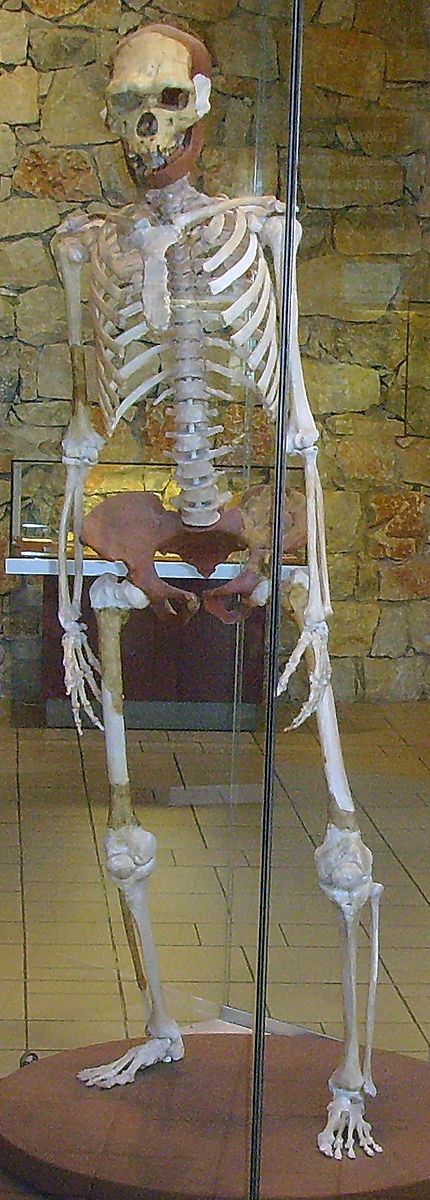
Turkana Boy is the common name of fossil KNM-WT 15000, a nearly complete skeleton of a hominid that died in the early Pleistocene.
This specimen is the most complete early human skeleton ever found.
It is one and a half million years old.
Turkana Boy is classified as either Homo erectus or Homo ergaster.
His age has been estimated from as old as fifteen years to as young as seven years six months.
The most recent scientific review suggests eight years of age.
It was initially suggested that he would have grown into 1.85 meters tall adult but the most recent analysis argues for the much shorter stature of 1.63 meters.
The reason for this shift has been research showing that his growth maturation differed from that of modern humans in that he would have had a shorter and smaller adolescent growth spurt.
The skeleton was discovered in 1984 by Kamoya Kimeu, a member of a team led by Richard Leakey, at Nariokotome near Lake Turkana in Kenya.
The KNM-WT 15000 skeleton still had features (such as a low sloping forehead, strong brow ridges, and the absence of a chin) not seen in H. sapiens.
The arms were slightly longer.
Turkana Boy seems to have had a projecting nose rather than the open flat nose seen in apes.
His thoracic vertebrae are narrower than in Homo sapiens.
This would have allowed him less motor control over the thoracic muscles that are used in modern humans to modify respiration to enable the sequencing upon single out breaths of complex vocalizations.
The Atlantic World, a pentagonal region encompassing one twelfth of the Earth, includes the Azores, Madeira, northwestern Europe (including western Denmark and western Norway), the British Isles, the Orkney Islands, the Shetland Islands, the Faroe Islands, Iceland, Greenland, Newfoundland, eastern and central North America, the northern section of Hispaniola, and several smaller island groups, notably Bermuda, the Bahamas, and the Turks and Caicos.
The eastern boundary, marked at 10° east longitude, divides Scandinavia into Eastern and Western sections, with Western Scandinavia oriented toward the North Atlantic and Eastern Scandinavia centered on the Baltic Sea Basin. This boundary also aligns with the historical eastern border of West Germany (1949–1990), before terminating in south-central Germany at its junction with the neighboring region to the southeast.
The western boundary, at 110° west longitude, cuts through Canada, separating the northern districts of Nunavut and the Northwest Territories from Alberta and Saskatchewan, approximately 75 miles south of the Alberta-Saskatchewan-Montana junction (48.1896851°N)—the northernmost point of the neighboring world to the southwest.
The southwestern boundary follows the division between the upper and lower Mississippi River Basin, then extends eastward into the Atlantic Ocean just south of Jacksonville, Florida, before terminating in northwestern Hispaniola.
HistoryAtlas contains 18,139 entries for The Atlantic World from the Paleolithic period to 1899.Narrow results by searching for a word or phrase or select from one or more of a dozen filters.
The archaeological site of Xihoudu in Shanxi Province is the earliest recorded use of fire by Homo erectus, which is dated 1.27 million years ago.
The excavations at Yuanmou and later Lantian show early habitation.
Homo antecessor is an extinct human species (or subspecies) that lived between 1.2 million and 800,000 years ago. It was first identified by Eudald Carbonell, Juan Luis Arsuaga, and J. M. Bermúdez de Castro.
One of the earliest known human species in Europe, H. antecessor is thought to have followed a developmental trajectory similar to Homo sapiens, based on tooth eruption patterns—though likely at a faster pace.
Distinctive anatomical features of H. antecessor include:
- A protruding occipital bun,
- A low forehead, and
- The absence of a strong chin.
Some of its skeletal remains are almost indistinguishable from those of the 1.5-million-year-old Turkana Boy, a fossil attributed to Homo ergaster.
To date, the only known fossils of H. antecessor have been discovered at two sites in the Sierra de Atapuerca region of northern Spain: Gran Dolina and Sima del Elefante.
