
Homo antecessor is an extinct …
Years: 1355661BCE - 1106830BCE
Homo antecessor is an extinct human species (or subspecies) that lived between 1.2 million and 800,000 years ago. It was first identified by Eudald Carbonell, Juan Luis Arsuaga, and J. M. Bermúdez de Castro.
One of the earliest known human species in Europe, H. antecessor is thought to have followed a developmental trajectory similar to Homo sapiens, based on tooth eruption patterns—though likely at a faster pace.
Distinctive anatomical features of H. antecessor include:
- A protruding occipital bun,
- A low forehead, and
- The absence of a strong chin.
Some of its skeletal remains are almost indistinguishable from those of the 1.5-million-year-old Turkana Boy, a fossil attributed to Homo ergaster.
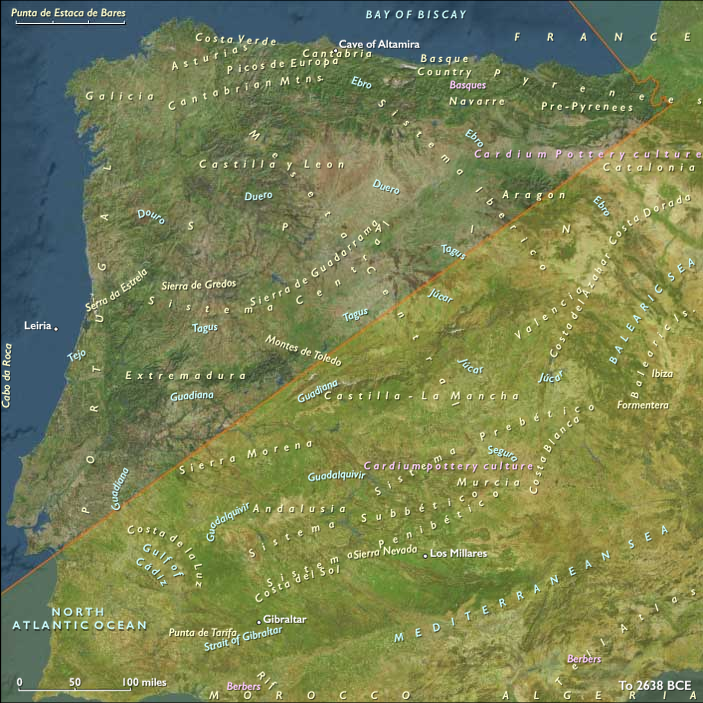
To date, the only known fossils of H. antecessor have been discovered at two sites in the Sierra de Atapuerca region of northern Spain: Gran Dolina and Sima del Elefante.
Locations
Groups
Topics
Subjects
Regions

Subregions
Years: 1355661BCE - 1106830BCE
Locations
Groups
Topics
Subjects
Regions
Subregions