
Hisham has been able to stem the …
Years: 735 - 735
Hisham has been able to stem the Umayyad decline temporarily.
As the empire is reaching the limits of expansion, frontier defenses, manned by Syrian troops, are organized to meet the challenge of Turks in Central Asia and Berbers in North Africa.
In the aftermath of the Battle of the Defile and other similar disasters, the need to reinforce the buckling frontiers is stretching the military and financial resources of the Caliphate.
This is especially the case with the powerful Syrian army (the ahl al-Sham), the main pillar of the Umayyad regime, which is parceled out to distant provinces.
Eventually, this weakening of the Syrian army will be the major factor in the fall of the Umayyad dynasty during the civil wars of the 740s and the Abbasid Revolution that follows them.
Like his late brother al-Walid I, Hisham is a great patron of the arts, and he has again encouraged arts in the empire.
He has also encouraged the growth of education by building more schools, and perhaps most importantly, by overseeing the translation of numerous literary and scientific masterpieces into Arabic.
He has returned to a stricter interpretation of the Sharia as Umar had, and enforced it, even upon his own family.
His ability to stand up to the Umayyad clan may be an important factor in his success, and may point to why his brother Yazid had been ineffective.
Locations
People
Groups
- Arab people
- Berber people (also called Amazigh people or Imazighen, "free men", singular Amazigh)
- Transoxiana
- Oghuz Turks
- Umayyad Caliphate (Damascus)
- Syrian people
Topics
- Arab-Byzantine Wars
- Arab-Khazar Wars
- Muslim conquest of Transoxiana
- Marwan ibn Muhammad's invasion of Georgia
Commodoties
Subjects
- Commerce
- Writing
- Engineering
- Labor and Service
- Conflict
- Mayhem
- Faith
- Government
- Scholarship
- Custom and Law
- Technology
Regions
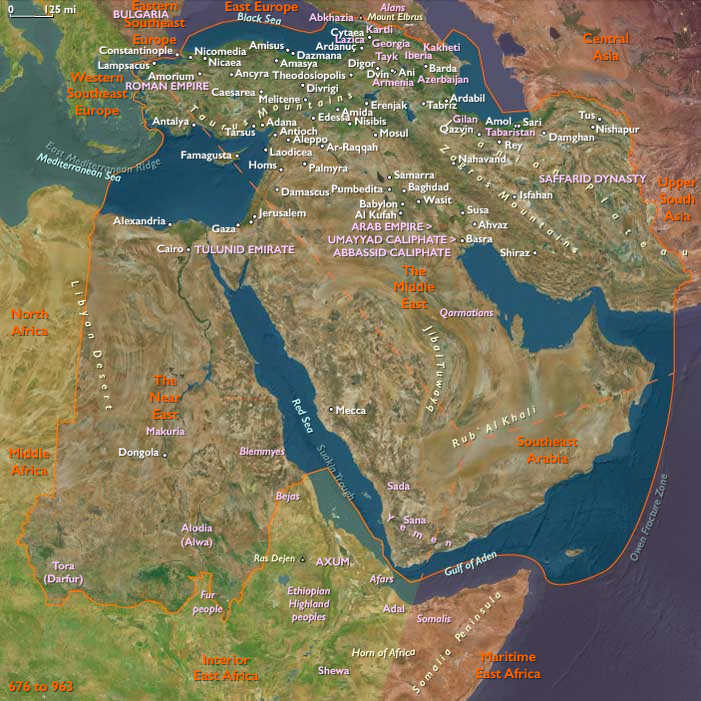
Subregions
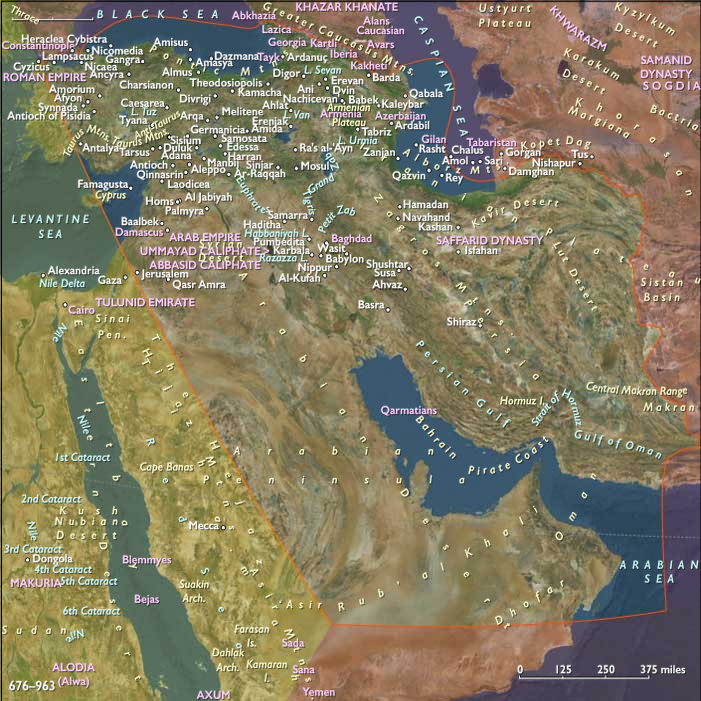
Years: 735 - 735
Locations
People
Groups
- Arab people
- Berber people (also called Amazigh people or Imazighen, "free men", singular Amazigh)
- Transoxiana
- Oghuz Turks
- Umayyad Caliphate (Damascus)
- Syrian people
Topics
- Arab-Byzantine Wars
- Arab-Khazar Wars
- Muslim conquest of Transoxiana
- Marwan ibn Muhammad's invasion of Georgia
Commodoties
Subjects
- Commerce
- Writing
- Engineering
- Labor and Service
- Conflict
- Mayhem
- Faith
- Government
- Scholarship
- Custom and Law
- Technology
Regions
Subregions