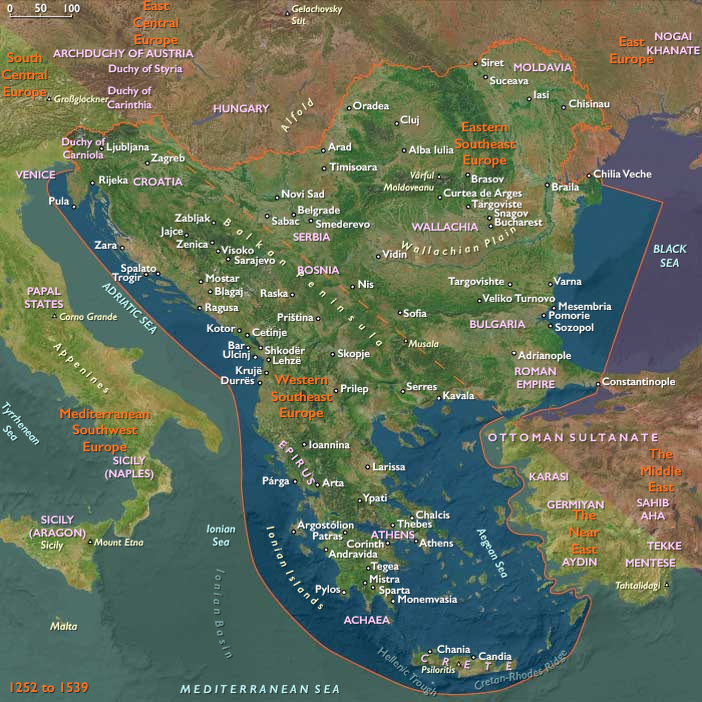
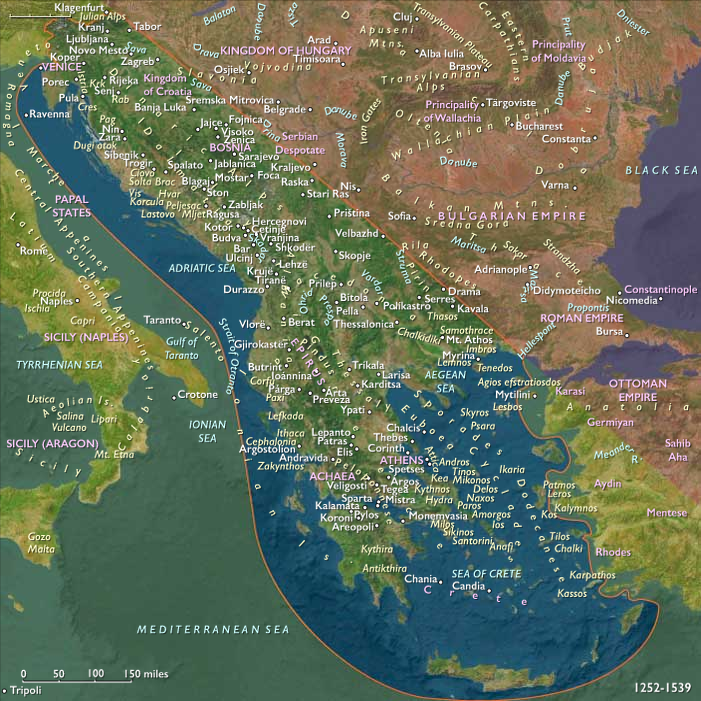
The conquest of Constantinople and its transformation into the Ottoman capital of Istanbul marks an important new stage in Ottoman history.
Internally, it means the end of power and influence for the old Turkish nobility, whose leaders are executed or exiled to Anatolia and whose European properties are confiscated, and the triumph of the devshirme and their supporters in Istanbul and the West.
Externally, the conquest makes Mehmed II the most famous ruler in the Muslim world, even though the lands of the old caliphate remain in the hands of the Mamluks of Egypt and Timur's successors in Iran.
Moreover, the possession of Constantinople stimulates in Mehmed a desire to place under his dominion not merely the Islamic and Turkic worlds but also a recreated Eastern Roman Empire and, perhaps, the entire world of Christendom.
To pursue these objectives, Mehmed develops various bases of power.
Domestically, his primary objective is to restore Istanbul, which he had spared from devastation during the conquest, as the political, economic, and social center of the area that it formerly had dominated.
He works to repopulate the city not only with its former inhabitants but also with elements of all the conquered peoples of the empire, whose residence and intermingling there will provide a model for a powerful and integrated empire.
Special attention is paid to restoring Istanbul's industry and trade, with substantial tax concessions made to attract merchants and artisans.
While thousands of Christians and Muslims are brought to the city, Greeks and Armenians are disinclined to accept Muslim Ottoman rule and seek to secure new European crusades.
Mehmed thus gives special attention to attracting Jews from central and western Europe, where they are being subjected to increasing persecution.
The loyalty of these Jews to the Ottomans is induced by that of their coreligionists in Constantinople, who had supported and assisted the Ottoman conquests after the long-standing persecution to which they had been subjected by the Greek Orthodox church and its followers.