
Hernán Cortés, born to low Spanish nobility …
Years: 1518 - 1518
April
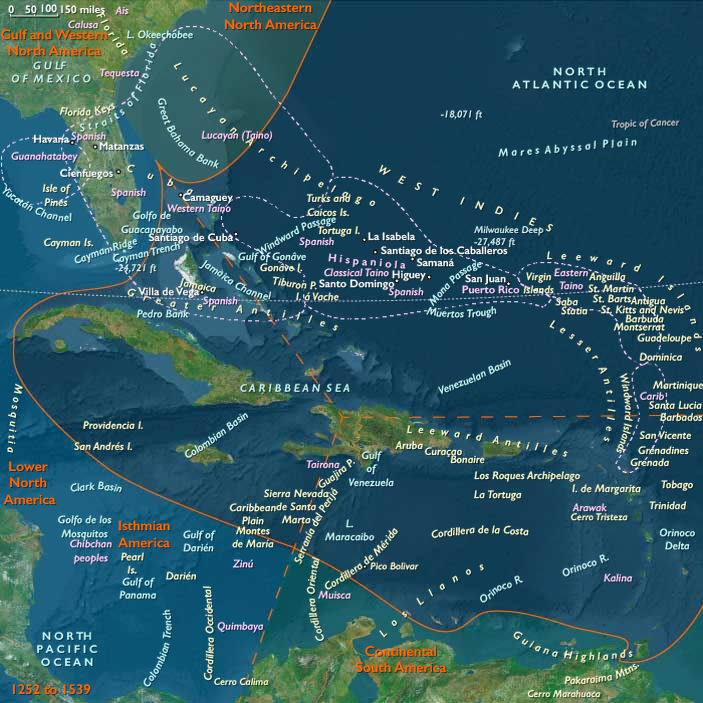
Hernán Cortés, born to low Spanish nobility in Medellin, Extremadura, had attended the University of Salamanca at age fourteen, abandoned his studies after two years, and, after a few years of wandering, sailed in 1504 at nineteen to Santo Domingo to seek his fortune in the New World.
Cortés had reached Hispaniola in a ship commanded by Alonso Quintero, who tried to deceive his superiors and reach the New World before them in order to secure personal advantages.
Quintero's mutinous conduct may have served as a model for Cortés in his subsequent career.
The history of the conquistadores is rife with accounts of rivalry, jockeying for positions, mutiny, and betrayal.
Upon his arrival in Santo Domingo, the capital of Hispaniola, the eighteen-year-old Cortés had registered as a citizen, which entitled him to a building plot and land to farm.
Soon afterwards, Nicolás de Ovando, still the governor, gave him an encomienda and made him a notary of the town of Azua de Compostela.
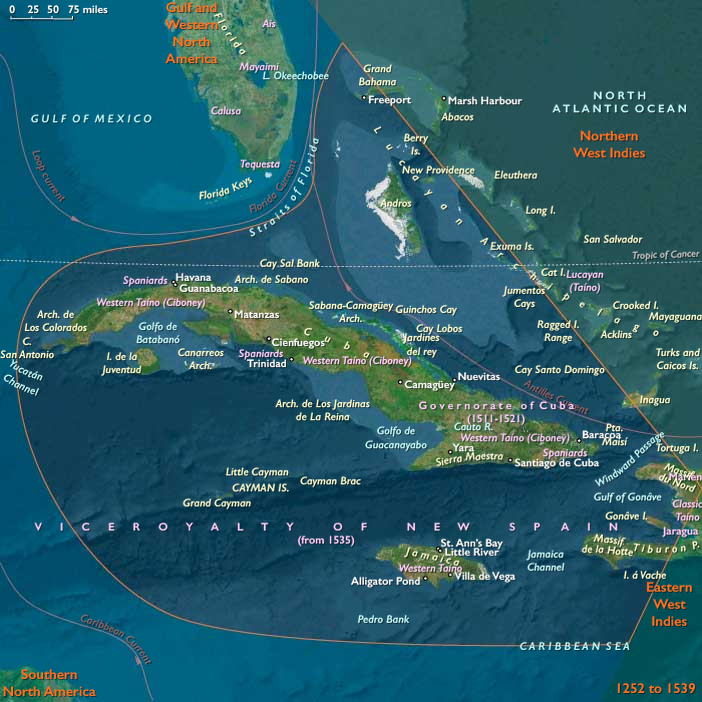
His next five years seemed to help establish him in the colony; in 1506, Cortés had taken part in the conquest of Hispaniola and Cuba, receiving a large estate of land and Indian slaves for his efforts from the leader of the expedition.
In 1511, Cortés had accompanied Diego Velázquez de Cuéllar, an aide of the Governor of Hispaniola, in his expedition to conquer Cuba.
Velázquez had been appointed as governor.
Cortés, then twenty-six, had been made clerk to the treasurer with the responsibility of ensuring that the Crown received the quinto, or customary one fifth of the profits from the expedition.
Velázquez, was so impressed with Cortés that he secured a high political position for him in the colony.
He became secretary for Velázquez and was twice appointed municipal magistrate (alcalde) of Santiago.
In Cuba, Cortés had become a man of substance with an encomienda to provide Indian labor for his mines and cattle.
This new position of power had also made him the new source of leadership, to which opposing forces in the colony could now turn.
In 1514, Cortés had led a group that demanded that more Indians be assigned to the settlers.
Cortés also finds time to become romantically involved with Catalina Xuárez (or Juárez), the sister-in-law of Governor Velázquez.
Part of Velázquez's displeasure seems to have been based on a belief that Cortés was trifling with Catalina's affections.
Cortés is temporarily distracted by one of Catalina's sisters but finally marries Catalina, reluctantly, under pressure from Governor Velázquez.
However, by doing so, he hopes to secure the good will of both her family and that of Velázquez.
It is not until he has been almost fifteen years in the Indies that Cortés begins to look beyond his substantial status as mayor of the capital of Cuba and as a man of affairs in the thriving colony.
He has missed the first two expeditions, under the orders of Francisco Hernández de Córdoba and then Juan de Grijalva, sent by Diego Velázquez to Mexico in 1517 and 1518, respectively.
Locations
People
Groups
Topics
Commodoties
Subjects
Regions
Subregions
Related Events
Showing 10 events out of 12 total
Years: 1518 - 1518
April
Locations
People
Groups
Topics
Commodoties
Subjects
Regions
Subregions