
The Death of Geoffrey II of Brittany …
Years: 1186 - 1186
August
The Death of Geoffrey II of Brittany and the Anglo-French Conflict (1186 CE)
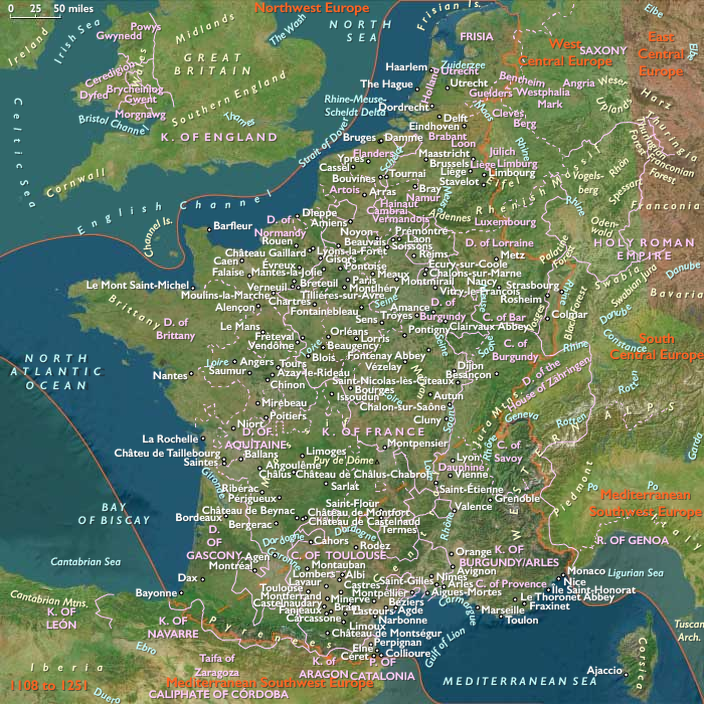
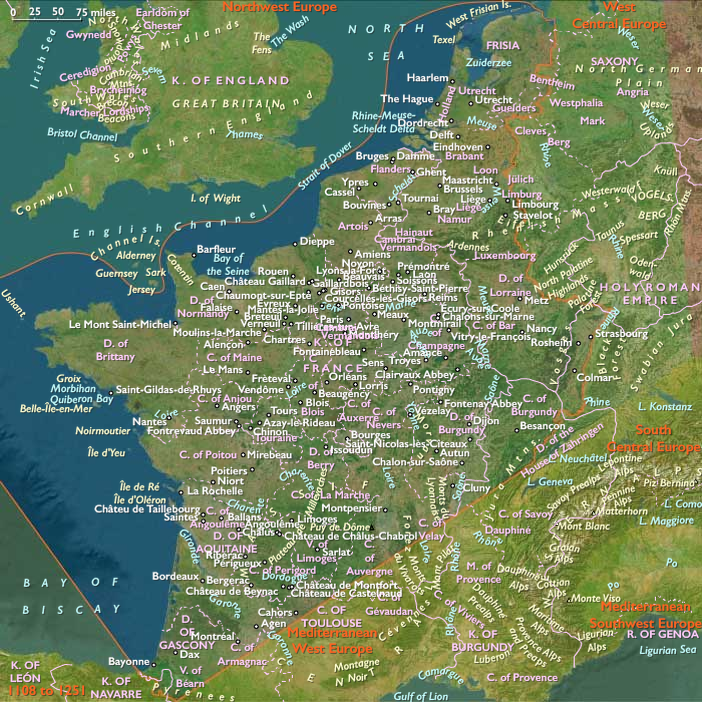
Geoffrey II, Duke of Brittany, the fourth son of Henry II of England, was a close ally of Philip II of France and a persistent adversary of his own father. By 1186, Geoffrey had spent much of his time at Philip’s court in Paris, where Philip had even appointed him seneschal of France. Evidence suggests that Geoffrey was planning another rebellion against Henry II with Philip’s support when he died suddenly in Paris on August 19 or August 21, 1186, at the age of twenty-seven.
Geoffrey’s Reputation and Rebellion
- Known for his treachery, Geoffrey had taken part in multiple rebellions against Henry II, including the uprisings of 1173 and 1183.
- He had frequently allied with Philip II, working against Henry’s authority in Normandy and Brittany.
- Geoffrey had also developed a reputation for attacking monasteries and churches to finance his campaigns, earning him the ire of the Church.
- His lack of religious piety meant that many medieval chroniclers, who were often monks or clerics, painted him in an unflattering light.
The Mysterious Death of Geoffrey II (August 1186)
There are two competing accounts of Geoffrey’s death:
-
The Tournament Theory (Most Common Version)
- According to Roger of Hoveden, Geoffrey was trampled to death in a jousting tournament.
- At his funeral, Philip II was reportedly so grief-stricken that he attempted to jump into Geoffrey’s coffin—a dramatic scene recorded by Gerald of Wales.
-
The Divine Punishment Theory (French Royal Chronicle by Rigord)
- According to Rigord, Geoffrey died suddenly from acute chest pain, immediately after boasting to Philip that he would lay waste to Normandy.
- This version suggests divine retribution, portraying Geoffrey as a rebellious and impious son struck down by God.
- Some historians believe this was a fabricated moral lesson by chroniclers hostile to Geoffrey.
A third possibility is that Philip and Geoffrey were conspiring against Henry II, and Philip covered up Geoffrey’s death with the tournament story to avoid Henry discovering their plot.
The Succession Crisis in Brittany
- Geoffrey’s death created a power struggle over the guardianship of Brittany, as his wife, Constance of Brittany, was pregnant with his son, the future Arthur I of Brittany.
- Henry II claimed the right to rule Brittany as guardian of his unborn grandson, but Philip II, as Henry’s overlord, insisted that he should be the guardian.
Henry attempted to secure his hold on Brittany by arranging for Constance to marry Ranulf, Earl of Chester, who briefly became Duke of Brittany jure uxoris (by right of his wife) before the marriage was annulled.
Philip II’s Response and Renewed Conflict (1186–1188)
- Using Geoffrey’s death and the Brittany succession dispute as leverage, Philip raised another grievance—the long-delayed betrothal of his sister Alys, Countess of the Vexin, to Richard the Lionheart.
- These tensions escalated into two years of conflict (1186–1188) between Henry II and Philip II, continuing their long-standing territorial and dynastic struggles.
Conclusion: Geoffrey’s Death and Its Political Fallout
- Geoffrey’s premature death disrupted Henry II’s plans and gave Philip II an opportunity to challenge Plantagenet control.
- The succession crisis in Brittany and Philip’s demands over Alys’s marriage set the stage for further hostilities between the Capetians and Plantagenets.
- His death also removed a key figure from the ongoing struggle for control of the Angevin Empire, leaving Richard and John as Henry’s surviving heirs.
Although Geoffrey never became King, his alliances, betrayals, and untimely death played a crucial role in the larger power struggle between England and France, ultimately paving the way for the final rebellion against Henry II in 1189.
Locations
People
- Constance
- Geoffrey II, Duke of Brittany
- Henry II of England
- Margaret of France
- Philip I, Count of Flanders
- Philip II of France
- Richard I of England
Groups
- Flemish people
- Flanders, County of
- Anjou, County of
- Normandy, Duchy of
- Brittanny, Duchy of
- Cologne, Electorate of
- French people (Latins)
- Aquitaine, (Angevin) Duchy of
- France, (Capetian) Kingdom of
- Hungary, Kingdom of
- Christians, Roman Catholic
- England, (Plantagenet, Angevin) Kingdom of
- Angevin Empire
- Brabant, Duchy of
Topics
Commodoties
Subjects
Regions
Subregions
Related Events
Showing 10 events out of 37 total
Years: 1186 - 1186
August
Locations
People
- Constance
- Geoffrey II, Duke of Brittany
- Henry II of England
- Margaret of France
- Philip I, Count of Flanders
- Philip II of France
- Richard I of England
Groups
- Flemish people
- Flanders, County of
- Anjou, County of
- Normandy, Duchy of
- Brittanny, Duchy of
- Cologne, Electorate of
- French people (Latins)
- Aquitaine, (Angevin) Duchy of
- France, (Capetian) Kingdom of
- Hungary, Kingdom of
- Christians, Roman Catholic
- England, (Plantagenet, Angevin) Kingdom of
- Angevin Empire
- Brabant, Duchy of
Topics
Commodoties
Subjects
Regions
Subregions