
Henry’s denunciation of the Peace of Poznań …
Years: 1007 - 1007
Henry’s denunciation of the Peace of Poznań in 1007 causes Boleslaw's attack on the Archbishopric of Magdeburg as well as …
Locations
People
Groups
- Polytheism (“paganism”)
- Prussians, Old, or Baltic (Western Balts)
- Hungarian people
- Polabian Slavs (West Slavs)
- Christianity, Chalcedonian
- Papal States (Republic of St. Peter)
- Lusatia, Margraviate of
- German, or Ottonian (Roman) Empire
- Poland, Principality of
- Lutici (West Slavic Polabian tribe)
- Poles (West Slavs)
- Meissen, March of
- Magdeburg, Archbishopric of
- Hungary, Kingdom of
Topics
Commodoties
Subjects
Regions
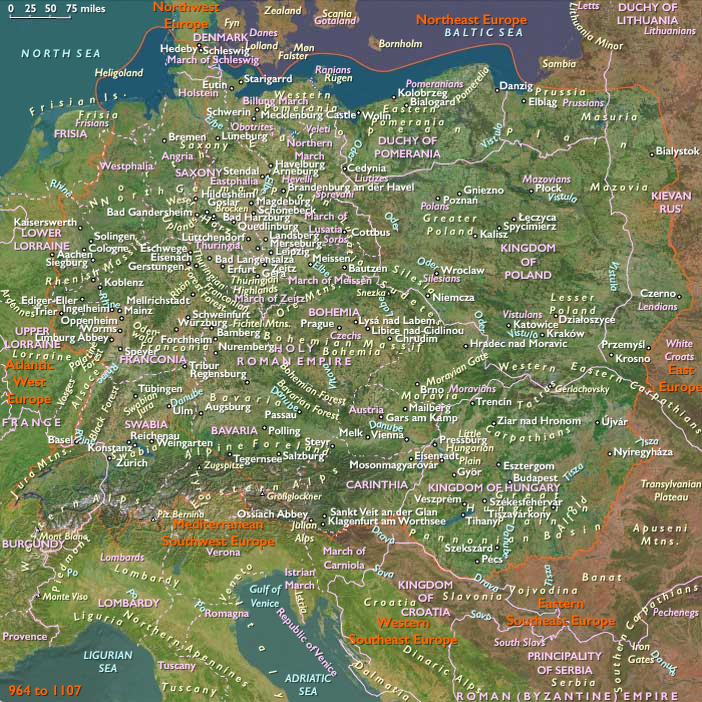
Subregions
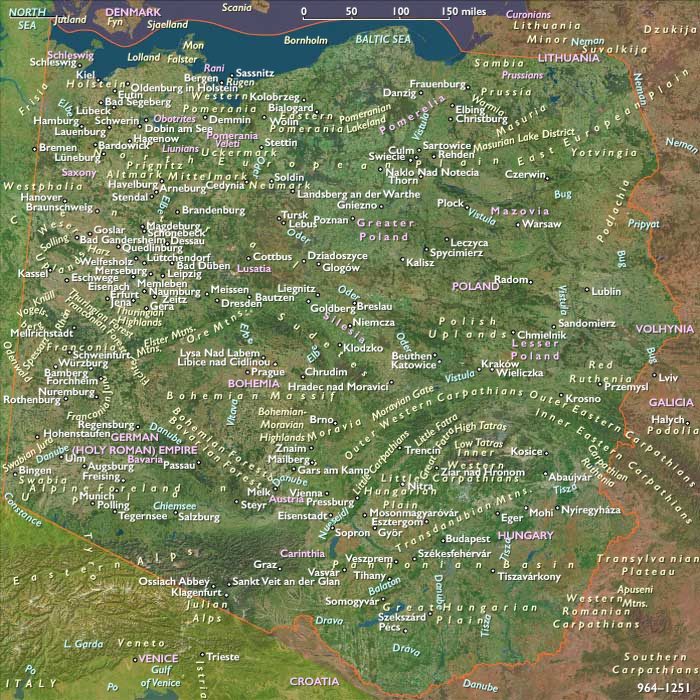
Related Events
Showing 10 events out of 51894 total
Years: 1007 - 1007
Locations
People
Groups
- Polytheism (“paganism”)
- Prussians, Old, or Baltic (Western Balts)
- Hungarian people
- Polabian Slavs (West Slavs)
- Christianity, Chalcedonian
- Papal States (Republic of St. Peter)
- Lusatia, Margraviate of
- German, or Ottonian (Roman) Empire
- Poland, Principality of
- Lutici (West Slavic Polabian tribe)
- Poles (West Slavs)
- Meissen, March of
- Magdeburg, Archbishopric of
- Hungary, Kingdom of
Topics
Commodoties
Subjects
Regions
Subregions