
Henry VII’s Campaign and the Siege of …
Years: 1491 - 1491
Henry VII’s Campaign and the Siege of Boulogne (1490–1492)
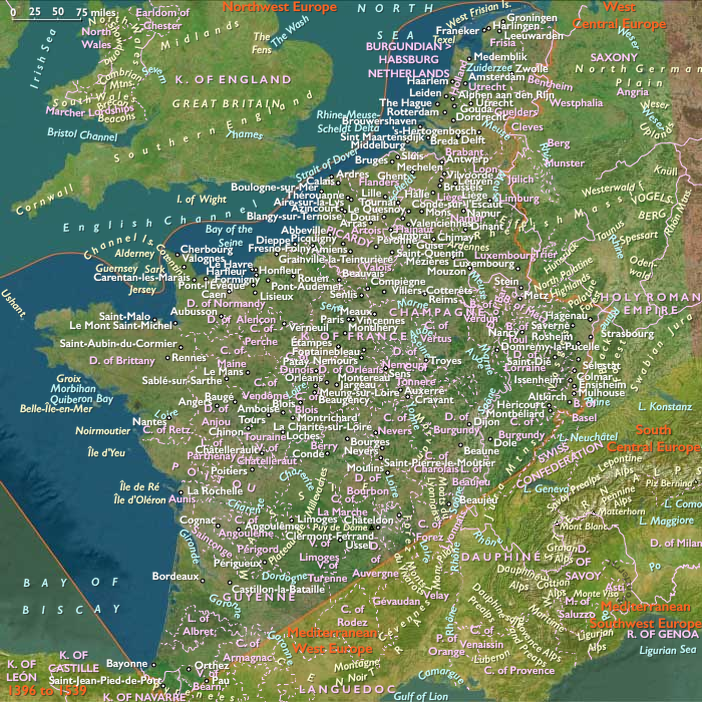
By 1490, King Henry VII of England saw his diplomatic efforts to protect English interests in Brittany frustrated by the shifting political landscape, especially France’s assertive move to annex the duchy and Spain’s secret diplomatic rapprochement with the French crown. Faced with diminishing options and the failure of diplomatic channels, Henry turned to military force in an attempt to pressure France into concessions, launching an invasion of northern France.
Background: Diplomatic Frustration and Breton Crisis
Henry VII’s primary objective was to prevent French domination of Brittany, maintaining it as an independent buffer against French expansion across the Channel. However, his strategy had unraveled following the Treaty of Laval (1491), in which the Breton duchess, Anne, succumbed to French pressure and married King Charles VIII, thus bringing Brittany directly under French control. Henry’s diplomatic isolation was compounded when Ferdinand II of Aragon, previously an ally against France, entered into secret negotiations with Charles VIII.
English Military Intervention: Siege of Boulogne (1491–1492)
In response to this diplomatic setback, Henry mobilized a substantial English expeditionary force in late 1490, personally sailing across the Channel to invade French territory. By 1491, Henry had laid siege to Boulogne, a fortified and strategically significant port city, intending to apply military pressure on Charles VIII and secure a stronger bargaining position.
The siege was part of a larger, calculated strategy: Henry hoped that direct military pressure would force Charles VIII into concessions, thereby reasserting English influence on the continent. However, the siege was plagued by logistical challenges, insufficient supplies, and limited support from Henry’s continental allies, especially after Spain’s diplomatic realignment.
Diplomatic Resolution: Treaty of Étaples (1492)
The English siege of Boulogne, despite demonstrating England’s willingness to employ military force, did not yield immediate strategic gains. Ultimately, facing domestic pressures, military expenses, and the impending winter, Henry negotiated a settlement. The resulting Treaty of Étaples (November 1492) ended hostilities, with Charles VIII agreeing to pay a substantial financial compensation—known as the "French pension"—in exchange for Henry’s withdrawal from France.
While the treaty did not restore Brittany’s independence, it provided Henry VII with financial security and diplomatic recognition, satisfying immediate political and fiscal objectives. This compromise underscored the pragmatic nature of Henry’s foreign policy.
Long-Term Historical Significance
The Siege of Boulogne (1491–1492) and subsequent Treaty of Étaples highlighted both the limitations and adaptability of English diplomacy under Henry VII. Although Henry failed to preserve Brittany’s independence, his actions secured a financially advantageous peace, which supported his broader goal of stabilizing the Tudor regime and consolidating royal authority domestically.
Furthermore, the episode clarified the shifting nature of European alliances, with Spain’s secret diplomacy marking a new era of competitive statecraft. It also foreshadowed England’s future continental engagements, which oscillated between ambitious intervention and cautious diplomacy over the ensuing centuries.
In essence, Henry VII’s campaign at Boulogne represented a critical moment in late medieval geopolitics in Atlantic West Europe, illustrating the challenges of balancing military ambition, diplomatic reality, and economic prudence at a pivotal moment in the early history of Tudor England.
Locations
People
Groups
- Brittanny, Duchy of
- Aragon, Crown of
- Castile, Crown of
- France, (Valois) Kingdom of
- England, (Tudor) Kingdom of
Topics
Commodoties
Subjects
Regions

Subregions
Years: 1491 - 1491
Locations
People
Groups
- Brittanny, Duchy of
- Aragon, Crown of
- Castile, Crown of
- France, (Valois) Kingdom of
- England, (Tudor) Kingdom of
Topics
Commodoties
Subjects
Regions
Subregions