
Henry the Strong is the son of …
Years: 1002 - 1002
Henry the Strong is the son of Leopold I, the first Margrave of Austria, and Richardis of Sualafeldgau.
At the time of Henry's investiture in 996, the land between the Bisamberg and the March river had not yet been settled by Germans.
The name Ostarrîchi, from which the modern German name of Austria—Österreich—develops, is first mentioned in a preserved document from 996.
Henry faces his most significant threat from the north.
Following the death of Duke Boleslaus II of Bohemia in 999, the area north of the Eastern March had become unstable due to the brutality of his successor, Duke Boleslaus III the Red.
Locations
People
Groups
- Germans
- Christianity, Chalcedonian
- Bohemia, Duchy of
- German, or Ottonian (Roman) Empire
- Poland, Principality of
- Eastern March
- Austria, Margravate of
- Czechs [formerly Bohemians] (West Slavs)
- Hungary, Kingdom of
Topics
Commodoties
Subjects
Regions
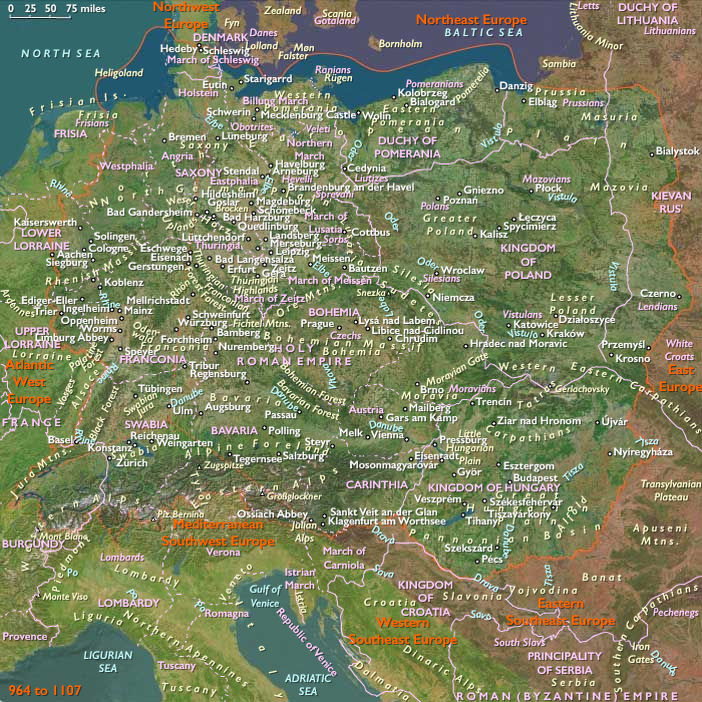
Subregions
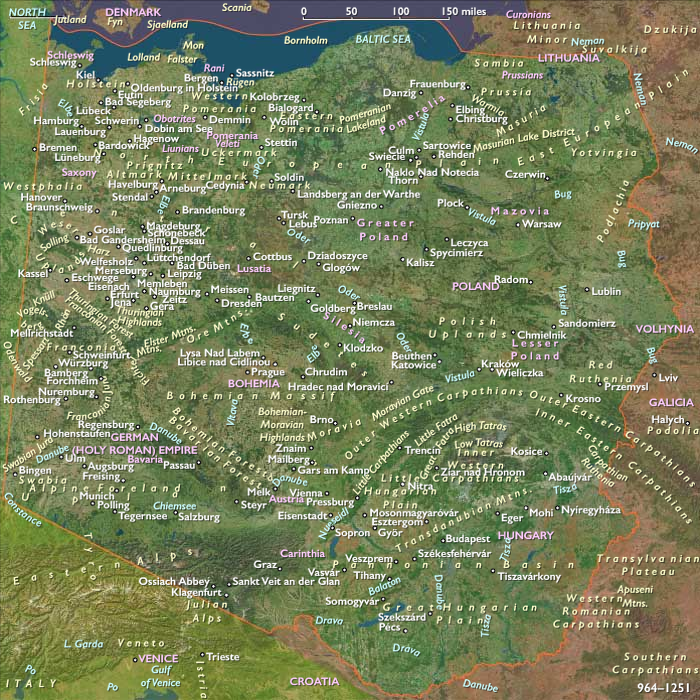
Related Events
Showing 10 events out of 51969 total
Years: 1002 - 1002
Locations
People
Groups
- Germans
- Christianity, Chalcedonian
- Bohemia, Duchy of
- German, or Ottonian (Roman) Empire
- Poland, Principality of
- Eastern March
- Austria, Margravate of
- Czechs [formerly Bohemians] (West Slavs)
- Hungary, Kingdom of
Topics
Commodoties
Subjects
Regions
Subregions