
Henry II and Louis VII: The War …
Years: 1167 - 1167
Henry II and Louis VII: The War of 1167 and the Struggle for Dominance in France
By the mid-1160s, tensions between Henry II of England and Louis VII of France had reached a breaking point. Henry’s territorial ambitions and growing influence in southern France deeply angered the French king, while Louis’s attempts to counter Henry’s expansion through alliances and military action only escalated their rivalry. These tensions culminated in open war in 1167, triggered by a seemingly minor dispute over the collection of funds for the Crusader states in the Levant.
Henry’s Expansionist Policies and the Road to War
-
Henry’s Attempt to Seize the Auvergne
- Henry sought to expand his control in central France, attempting to seize the Auvergne, a move that infuriated Louis VII.
- The region was strategically important, serving as a buffer zone between Henry’s territories in Aquitaine and the Capetian royal domain.
-
Pressuring Raymond V of Toulouse (1161–1165)
- Henry had long sought to extend his authority over the County of Toulouse, a region traditionally under Capetian influence.
- His efforts included:
- Personally campaigning in Toulouse in 1161.
- Sending the Archbishop of Bordeaux against Raymond in 1164.
- Encouraging Alfonso II of Aragon to attack Toulouse from the south, using pressure from multiple fronts.
- In 1165, Raymond divorced Louis VII’s sister, severing his ties with the Capetian dynasty, and attempted to align himself with Henry instead.
-
Tensions Escalate into Open War (1167)
- The final spark was a trivial disagreement over how funds for the Crusader states should be collected, leading to outright conflict.
- Louis VII formed an anti-Henry coalition, allying with:
- The Welsh and Scots, encouraging uprisings in Britain.
- The Bretons, who remained resentful of Henry’s seizure of their duchy.
- Louis launched an attack on Normandy, attempting to strike at the heart of Henry’s continental possessions.
Henry’s Response: The Burning of Chaumont-sur-Epte and the Collapse of Louis’s Alliance
- In retaliation, Henry struck at Chaumont-sur-Epte, where Louis VII kept his primary military arsenal.
- He burned the town to the ground, dealing a major blow to Louis’s war effort.
- With his military resources severely weakened, Louis was forced to abandon his allies and agree to a private truce with Henry.
Henry’s Next Move: Suppressing Rebellion in Brittany
- With Louis effectively neutralized, Henry turned his attention back to Brittany, where local barons still resisted his rule.
- His forced seizure of the duchy and arranged betrothal of Geoffrey to Constance of Brittany had sparked resentment among the Breton nobility.
- Now free from conflict with France, Henry prepared to crush the remaining opposition and fully consolidate his control over Brittany.
Conclusion: The Balance of Power in 1167
- Henry’s decisive military response left Louis politically weakened, unable to effectively challenge Angevin power.
- However, Henry’s aggressive expansionism continued to fuel Capetian resistance, ensuring that Anglo-French tensions remained high.
- The conflict of 1167 was yet another chapter in the long struggle between the Angevins and Capetians, setting the stage for further wars and territorial disputes in the years to come.
Locations
People
- Alfonso II of Aragon
- Conan IV
- Constance
- Geoffrey II, Duke of Brittany
- Henry II of England
- Louis VII of France
- Margaret of France
- Odo II
- Raymond V
Groups
- Flanders, County of
- Normandy, Duchy of
- Brittanny, Duchy of
- Champagne, County of
- France, (Capetian) Kingdom of
- Burgundy, Duchy of
- England, (Plantagenet, Angevin) Kingdom of
Topics
Commodoties
Subjects
Regions
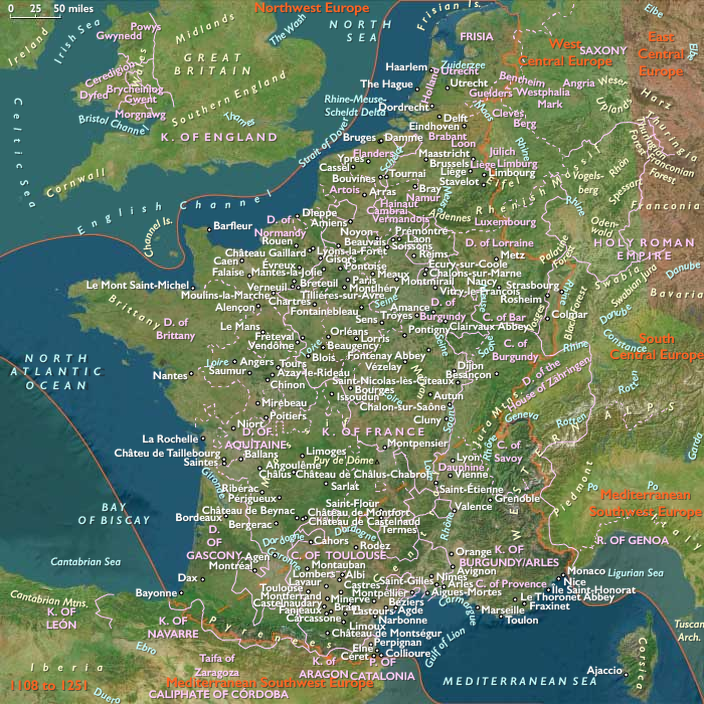
Subregions
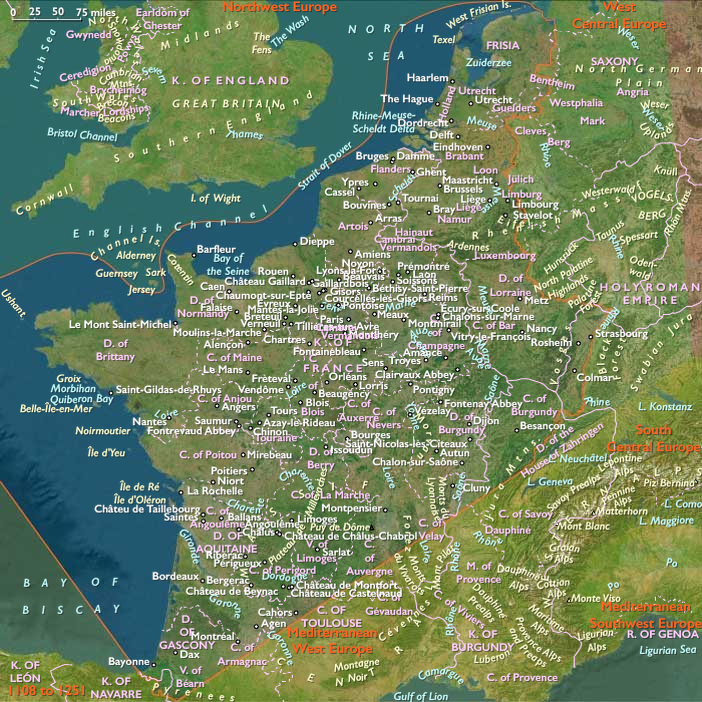
Related Events
Showing 10 events out of 48444 total
Years: 1167 - 1167
Locations
People
- Alfonso II of Aragon
- Conan IV
- Constance
- Geoffrey II, Duke of Brittany
- Henry II of England
- Louis VII of France
- Margaret of France
- Odo II
- Raymond V
Groups
- Flanders, County of
- Normandy, Duchy of
- Brittanny, Duchy of
- Champagne, County of
- France, (Capetian) Kingdom of
- Burgundy, Duchy of
- England, (Plantagenet, Angevin) Kingdom of
Topics
Commodoties
Subjects
Regions
Subregions