
Henry II promulgates the Edict of Châteaubriant …
Years: 1551 - 1551
June
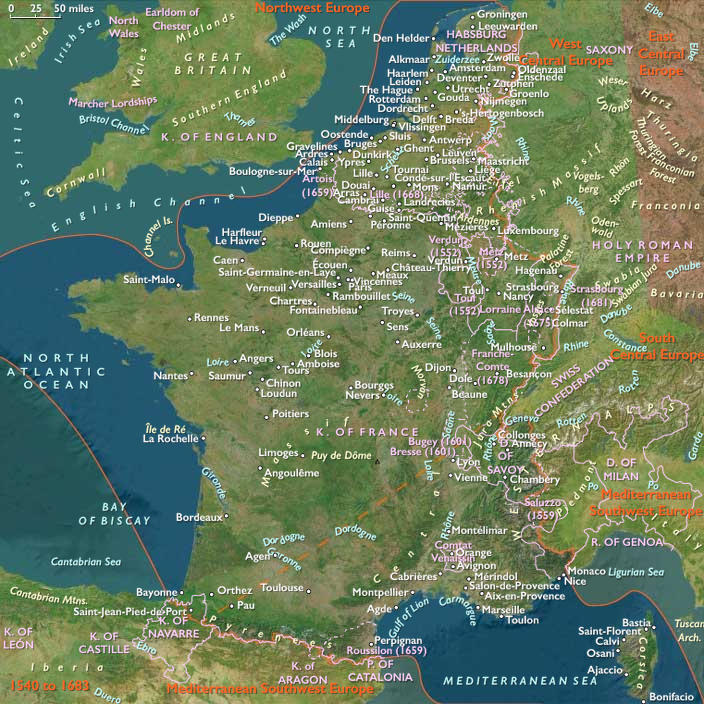
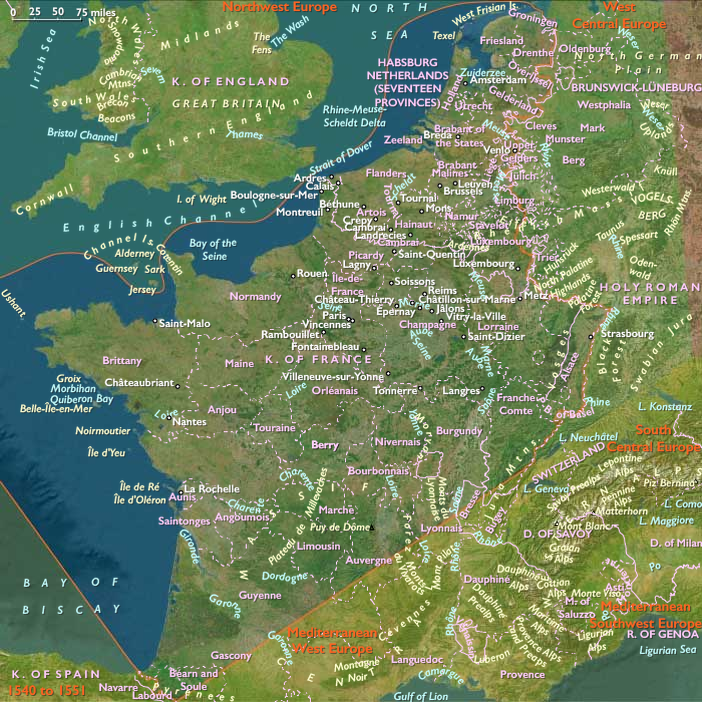
Henry II promulgates the Edict of Châteaubriant, issued from the seat of Anne, duc de Montmorency in Brittany, on June 27, 1551.
The Edict is one of an increasingly severe series of measures taken by Henry II against Protestants, whom he regards as heretics.
In the preamble, the Edict frankly reports that previous measures against heresy in the kingdom have proved ineffectual.
"Heretics,” the Edict reports, meet in conventicles, infect schools, invade the judicial bench and force toleration upon judges.
To ensure more rigorous judgments, Henry had in 1547 already created a special judicial chamber drawn from members of the parlements, solely to judge cases of heresy, (called by Protestants the Chambre Ardente (the "Burning Chamber").
The Edict contains quite detailed provisions, calling upon the civil and ecclesiastical courts to detect and punish all heretics.
It places severe restrictions on Protestants, including loss of one-third of property granted to informers, who are also granted immunity and confiscations of property both moveable and immovable belonging to those who had fled to Geneva, with whom the king's subjects are forbidden to correspond or to send money.
Fourteen of its forty-six articles are concerned with censorship; its terms strictly regulate the press by prohibiting the sale, importation or printing of any book unapproved by the Faculty of Theology at the University of Paris, then or, now it is implied, in the future.
Booksellers are to display a copy of the Faculty's printed list of prohibited books alongside a list of books for sale.
Delegates of the Faculty are to make visits twice a year to each bookseller to ensure that the provisions are complied with.
Since 1542, it has been a requirement that any shipment of books into France be opened and unpacked in the presence of delegates from the Faculty of Theology, which now, according to Roger Doucet, "assumed the intellectual direction of the kingdom."
Though the Edict goes so far as to forbid the discussion of religious topics at work, in the fields, or over meals, it will prove insufficient to stem the rising tide of reform in religion.
Sterner measures will be taken in the next edict of the series, the Edict of Compiègne, 1557, which applies the death penalty for all convictions of heresy.
Locations
People
Groups
Topics
- Protestant Reformation
- Counter-Reformation (also Catholic Reformation or Catholic Revival)
- Italian War of 1551–1559, or Habsburg-Valois War
Commodoties
Subjects
Regions
Subregions
Years: 1551 - 1551
June
Locations
People
Groups
Topics
- Protestant Reformation
- Counter-Reformation (also Catholic Reformation or Catholic Revival)
- Italian War of 1551–1559, or Habsburg-Valois War
Commodoties
Subjects
Regions
Subregions