
Filters:
The Death of Henry II and the …
Years: 1189 - 1189
July
The Death of Henry II and the Accession of Richard I (July 6, 1189)
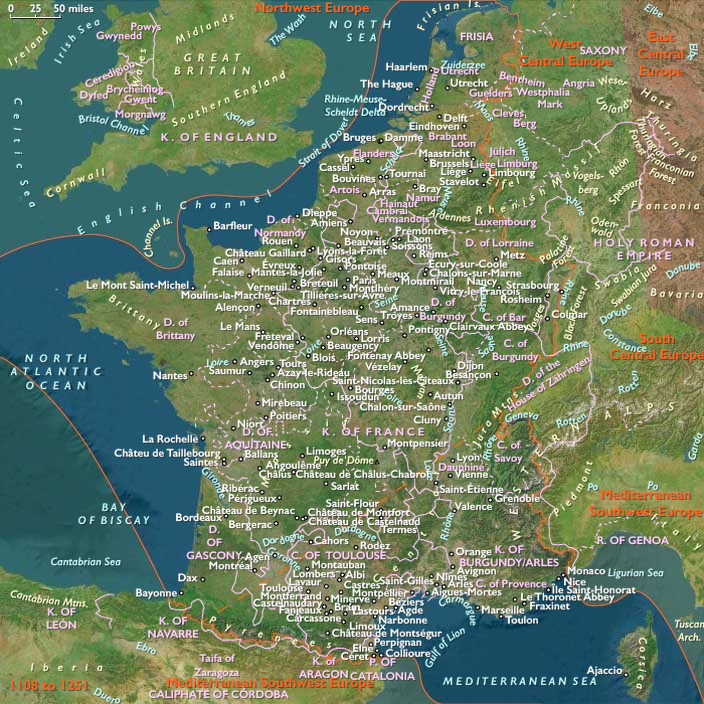
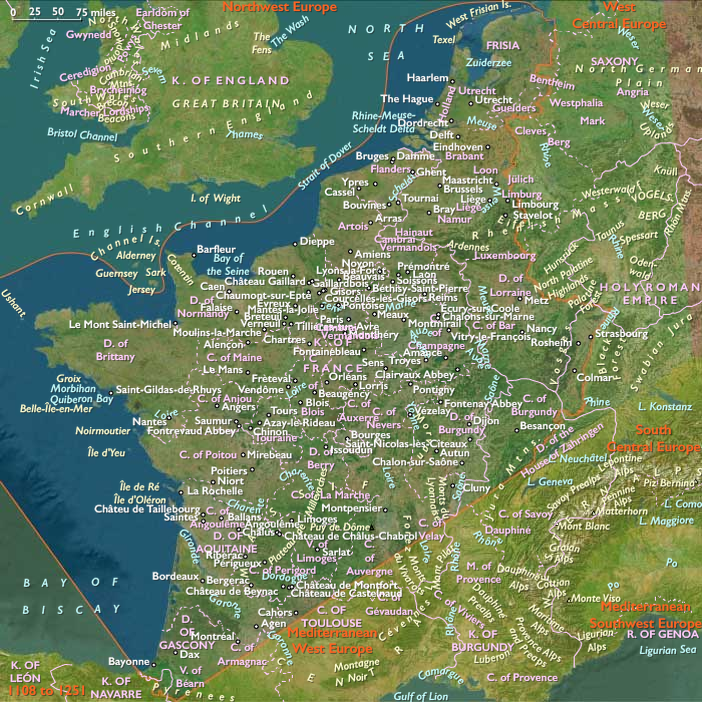
Two days after his humiliating submission at the Treaty of Azay-le-Rideau (July 4, 1189), Henry II died on July 6, 1189, at Chinon, a key Angevin stronghold in Anjou. His death marked the end of a tumultuous reign and the rise of his eldest surviving son, Richard I (the Lionheart), as King of England, Duke of Normandy, and Count of Anjou.
Henry II’s Final Days at Chinon
- Already ill and exhausted from his bitter defeat at the hands of Philip II of France and his own son Richard, Henry retreated to Chinon, where he succumbed to fever.
- Betrayal by his favorite son, John, was said to have deeply wounded him, as John had joined Richard in rebellion against their father.
- According to chroniclers, his final words, spoken in anguish and resentment, were:
"Shame, shame on a conquered king."
Richard I’s Accession and the Bleeding Corpse Legend
- Upon Henry’s death, Richard I immediately succeeded him as:
- King of England.
- Duke of Normandy.
- Count of Anjou, inheriting the Angevin Empire.
- Roger of Hoveden, a contemporary chronicler, recorded a gruesome detail:
- Henry’s corpse supposedly bled from the nose in Richard’s presence.
- This was interpreted as a supernatural sign that Richard had caused his father’s death, reinforcing the medieval belief that the bodies of murder victims bled in the presence of their killers.
The Aftermath of Henry II’s Death
- Richard, now King, focused on securing his vast territories, but his attention quickly shifted to the Third Crusade.
- Philip II of France, having successfully weakened the Angevin Empire, remained a constant rival, waiting for future opportunities to exploit Richard’s absence.
- Henry II’s death symbolized the collapse of his once-mighty empire, as his sons' rebellions and Philip II’s cunning diplomacy paved the way for Capetian dominance in France.
Despite his great legal and administrative achievements, Henry II’s final years were consumed by family strife, and his death at Chinon marked the end of an era for the Plantagenets.
Locations
People
- Constance
- Geoffrey II, Duke of Brittany
- Henry II of England
- Margaret of France
- Philip I, Count of Flanders
- Philip II of France
- Richard I of England
Groups
- Flemish people
- Flanders, County of
- Anjou, County of
- Normandy, Duchy of
- Brittanny, Duchy of
- Cologne, Electorate of
- French people (Latins)
- Aquitaine, (Angevin) Duchy of
- France, (Capetian) Kingdom of
- Christians, Roman Catholic
- England, (Plantagenet, Angevin) Kingdom of
- Angevin Empire
- Brabant, Duchy of
Topics
Commodoties
Subjects
Regions
Subregions
Years: 1189 - 1189
July
Locations
People
- Constance
- Geoffrey II, Duke of Brittany
- Henry II of England
- Margaret of France
- Philip I, Count of Flanders
- Philip II of France
- Richard I of England
Groups
- Flemish people
- Flanders, County of
- Anjou, County of
- Normandy, Duchy of
- Brittanny, Duchy of
- Cologne, Electorate of
- French people (Latins)
- Aquitaine, (Angevin) Duchy of
- France, (Capetian) Kingdom of
- Christians, Roman Catholic
- England, (Plantagenet, Angevin) Kingdom of
- Angevin Empire
- Brabant, Duchy of
Topics
Commodoties
Subjects
Regions
Subregions