
Henry II, a sincerely religious ruler, encourages …
Years: 1020 - 1020
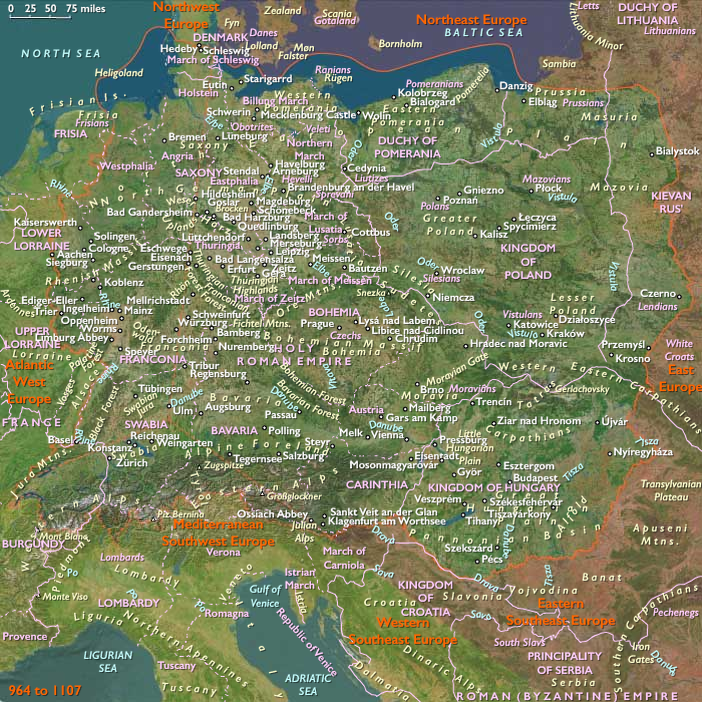
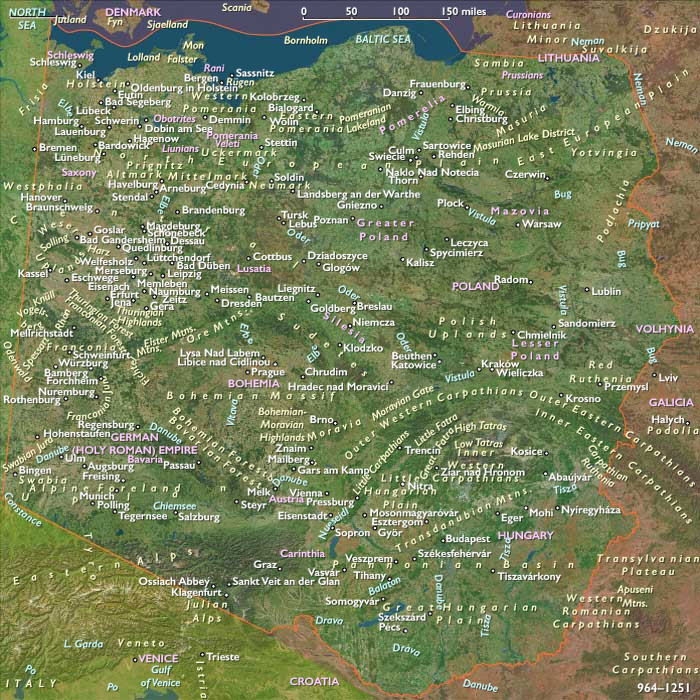
Henry II, a sincerely religious ruler, encourages monastic reform, founding and richly endowing the bishopric of Bamberg in 1007 and personally appointing most of the German princes.
Pope Benedict VIII visits him in at Bamberg 1020 and consecrates his new cathedral here.
After settling some controversies with the bishops of Mainz and Würzburg, the pope persuades the emperor to return to Italy for a third (and final) campaign to counter the growing power of the Constantinople in the south, where the Lombard princes have made submission to the Greeks.
Locations
People
Groups
- Lombards (West Germanic tribe)
- Germans
- Christianity, Chalcedonian
- Greeks, Medieval (Byzantines)
- Papal States (Republic of St. Peter)
- Salerno, Lombard Principality of
- Roman Empire, Eastern: Macedonian dynasty
- German, or Ottonian (Roman) Empire
- Italy, Catepanate of
- Capua, Lombard Principality of
Commodoties
Subjects
Regions
Subregions
Related Events
Showing 10 events out of 51684 total
Years: 1020 - 1020
Locations
People
Groups
- Lombards (West Germanic tribe)
- Germans
- Christianity, Chalcedonian
- Greeks, Medieval (Byzantines)
- Papal States (Republic of St. Peter)
- Salerno, Lombard Principality of
- Roman Empire, Eastern: Macedonian dynasty
- German, or Ottonian (Roman) Empire
- Italy, Catepanate of
- Capua, Lombard Principality of
Commodoties
Subjects
Regions
Subregions