
Henry, his offices declared vacant and all …
Years: 1076 - 1076
January
Henry, his offices declared vacant and all his all feudal vassals released from their oaths of fealty, is rapidly losing popular support, and the situation has become extremely critical for the king.
As a result of the agitation, which is zealously fostered by the papal legate Bishop Altmann of Passau, the princes meet in October at Trebur to elect a new German ruler.
Henry, who is stationed at Oppenheim on the left bank of the Rhine, is only saved from the loss of his throne by the failure of the assembled princes to agree on the question of his successor.
Their dissension, however, merely induces them to postpone the verdict.
Henry, they declare, must make reparation to Gregory and pledge himself to obedience; and they decide that, if, on the anniversary of his excommunication, he still lies under the ban, the throne should be considered vacant.
At the same time, they decide to invite Gregory to Augsburg to decide the conflict.
These arrangements show Henry the course to be pursued.
It is imperative under any circumstances and at any price to secure his absolution from Gregory before the period named, otherwise he can scarcely foil his opponents in their intention to pursue their attack against him and justify their measures by an appeal to his excommunication.
At first he attempts to attain his ends by an embassy, but when Gregory rejects his overtures he takes the celebrated step of going to Italy in person.
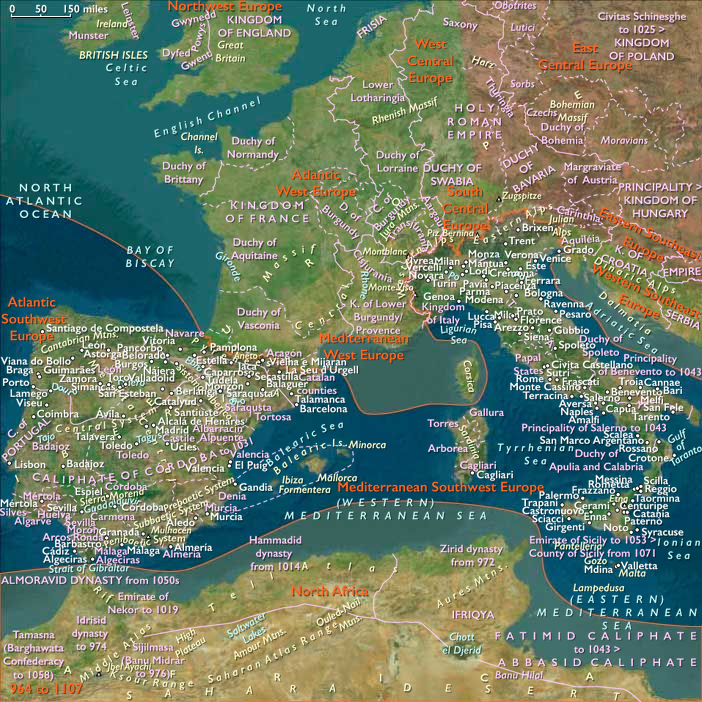
Gregory VII has already left Rome and had intimated to the German princes that he would expect their escort for his journey on January 8 to Mantua.
But this escort has not appeared when he receives the news of the Henry's arrival.
Henry, who has traveled through Burgundy, has been greeted with enthusiasm by the Lombards, but resists the temptation to employ force against Gregory.
He chooses the unexpected course of forcing Gregory to grant him absolution by doing penance before him at Canossa, where he has taken refuge.
The Walk to Canossa soon becomes legendary.
The reconciliation is only effected after prolonged negotiations and definite pledges on the part of Henry, and it is with reluctance that Gregory at length gives way, considering the political implications.
If Gregory grants absolution, the diet of princes in Augsburg in which he might reasonably hope to act as arbitrator will either become useless, or, if it meets at all, will change completely in character.
It is impossible, however, to deny the insincere but shrewd penitent reentrance into the Church, and Gregory's religious obligations override his political interests.
The removal of the ban does not imply a genuine reconciliation, and no basis is gained for a settlement of the main question that divides Henry and Gregory: that of investiture.
A new conflict is inevitable from the very fact that Henry considers the sentence of deposition repealed along with that of excommunication.
Gregory, on the other hand, is intent on reserving his freedom of action and gives no hint on the subject at Canossa.
Locations
People
Groups
- Lombards (West Germanic tribe)
- Papal States (Republic of St. Peter)
- Tuscany, Margravate of
- German, or Ottonian (Roman) Empire
- Italy, Kingdom of (Holy Roman Empire)
- Christians, Roman Catholic
Topics
Subjects
Regions
Subregions
Years: 1076 - 1076
January
Locations
People
Groups
- Lombards (West Germanic tribe)
- Papal States (Republic of St. Peter)
- Tuscany, Margravate of
- German, or Ottonian (Roman) Empire
- Italy, Kingdom of (Holy Roman Empire)
- Christians, Roman Catholic
Topics
Subjects
Regions
Subregions