
Filters:
Henry Expands His Power in Normandy with …
Years: 1094 - 1094
Henry Expands His Power in Normandy with Support from William Rufus (1092–1094)
By 1094, Henry had successfully rebuilt his power base in western Normandy, operating as if he were the Duke, distributing lands and castles to his followers. With William Rufus now backing him financially, Henry strengthened his position against their mutual rival, Duke Robert Curthose. As William Rufus launched a new campaign into Normandy, Henry’s role became increasingly important, though ambiguous, as he maneuvered between Norman and English politics.
Henry's Growing Authority in Western Normandy (1092–1094)
- Over the past two years, Henry had reestablished a network of supporters, particularly in western Normandy.
- By 1094, he was granting lands and castles to his followers like a ruling duke, despite Robert Curthose still being the nominal Duke of Normandy.
- William Rufus saw Henry as a useful counterbalance to Robert and began supporting him financially, helping fuel Henry’s military expansion.
- Henry used part of this financial backing to build a strong castle at Domfront, further securing his territorial hold.
William Rufus’ 1094 Invasion of Normandy and Henry’s Role
- In 1094, William Rufus crossed into Normandy, taking the war directly to Robert Curthose.
- As the campaign stalled, William called upon Henry for assistance.
- However, instead of joining the main front, Henry traveled to London—possibly at the king’s request.
- Shortly after, William abandoned the campaign and returned to England, leaving Robert’s position temporarily intact.
Henry’s Continued Rise in Normandy (1094–1096)
- Over the next few years, Henry strengthened his influence in western Normandy, maintaining his own faction within the duchy.
- He continued to visit England, attending William Rufus’ court occasionally, ensuring he remained in the king’s favor.
- His dual position—as a rising force in Normandy and a recognized noble in England—placed him in a powerful intermediary role between his feuding brothers.
Consequences and Long-Term Impact
- Henry’s increasing autonomy in Normandy set the stage for his eventual claim to power, as he continued building his influence despite not officially being duke.
- His ties to William Rufus gave him resources, but also showed his pragmatism, as he navigated between Norman and English politics.
- Robert’s inability to suppress Henry’s rise further demonstrated his weakness as Duke, foreshadowing the eventual loss of Normandy to Henry in 1106.
By 1094, Henry had transitioned from exile to power broker, and while his path to the ducal throne was not yet clear, he had firmly entrenched himself as a force to be reckoned with in both Normandy and England.
Locations
People
- Alan IV
- Constance of Normandy
- Henry I of England
- Hugh V
- Hugh d'Avranches
- Lanfranc
- Odo
- Philip I of France
- Robert Curthose
- Robert I, Count of Flanders
- William II of England
- William the Conqueror
Groups
- Breton people
- Anglo-Saxons
- Maine, County of
- Flanders, County of
- Anjou, County of
- Normandy, Duchy of
- Brittanny, Duchy of
- Normans
- France, (Capetian) Kingdom of
Commodoties
Subjects
Regions
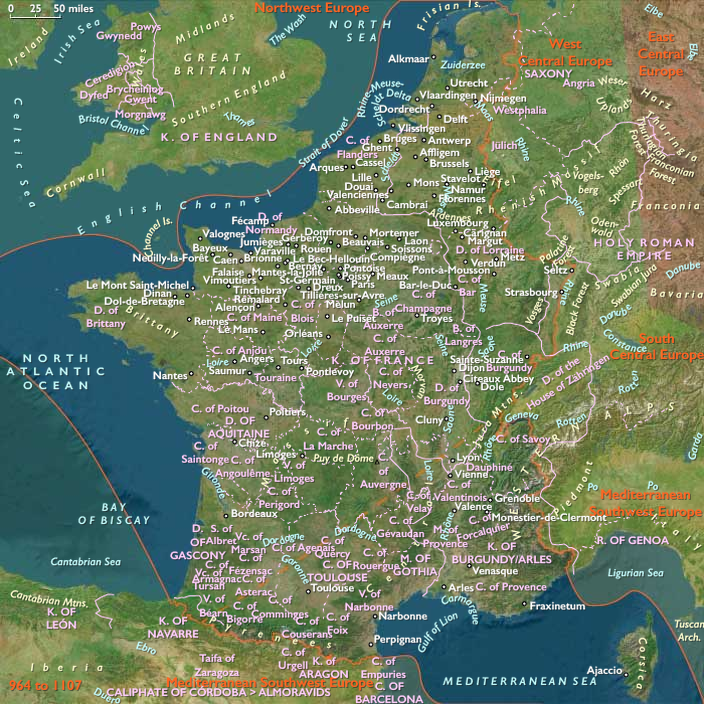
Subregions
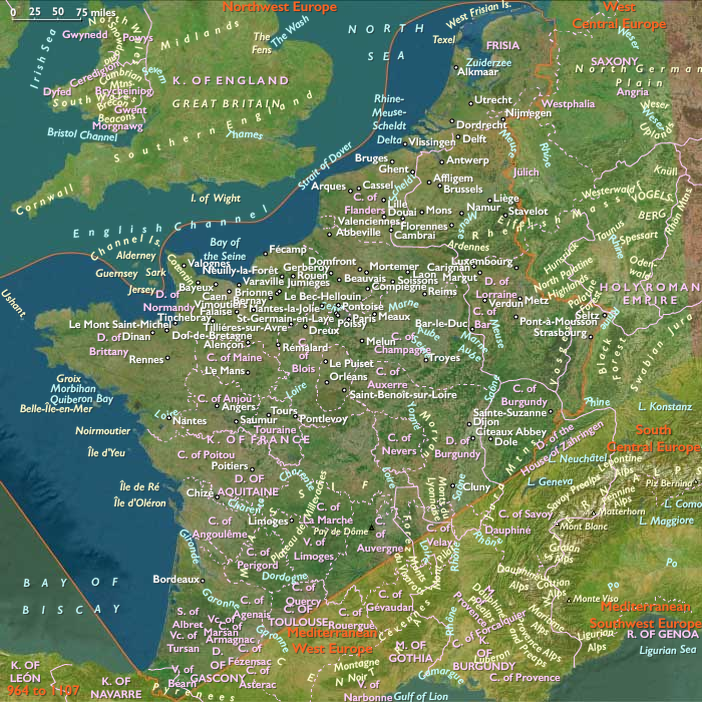
Years: 1094 - 1094
Locations
People
- Alan IV
- Constance of Normandy
- Henry I of England
- Hugh V
- Hugh d'Avranches
- Lanfranc
- Odo
- Philip I of France
- Robert Curthose
- Robert I, Count of Flanders
- William II of England
- William the Conqueror
Groups
- Breton people
- Anglo-Saxons
- Maine, County of
- Flanders, County of
- Anjou, County of
- Normandy, Duchy of
- Brittanny, Duchy of
- Normans
- France, (Capetian) Kingdom of
Commodoties
Subjects
Regions
Subregions