
The Macartney Embassy returns to London without …
Years: 1794 - 1794
The Macartney Embassy returns to London without obtaining any concession from China, but the mission can be termed a success because it brings back detailed observations of a great empire.
The painter William Alexander, who accompanied the embassy, publishes numerous engravings based on his watercolors.
Sir George Staunton is charged with producing the official account of the expedition after their return.
This multi-volume work, which will be published in 1797, is taken chiefly from the papers of Lord Macartney and from the papers of Sir Erasmus Gower, who had been Commander of the expedition.
Sir Joseph Banks is responsible for selecting and arranging engraving of the illustrations in this official record.
The painter William Alexander, who accompanied the embassy, publishes numerous engravings based on his watercolors.
Sir George Staunton is charged with producing the official account of the expedition after their return.
This multi-volume work, which will be published in 1797, is taken chiefly from the papers of Lord Macartney and from the papers of Sir Erasmus Gower, who had been Commander of the expedition.
Sir Joseph Banks is responsible for selecting and arranging engraving of the illustrations in this official record.
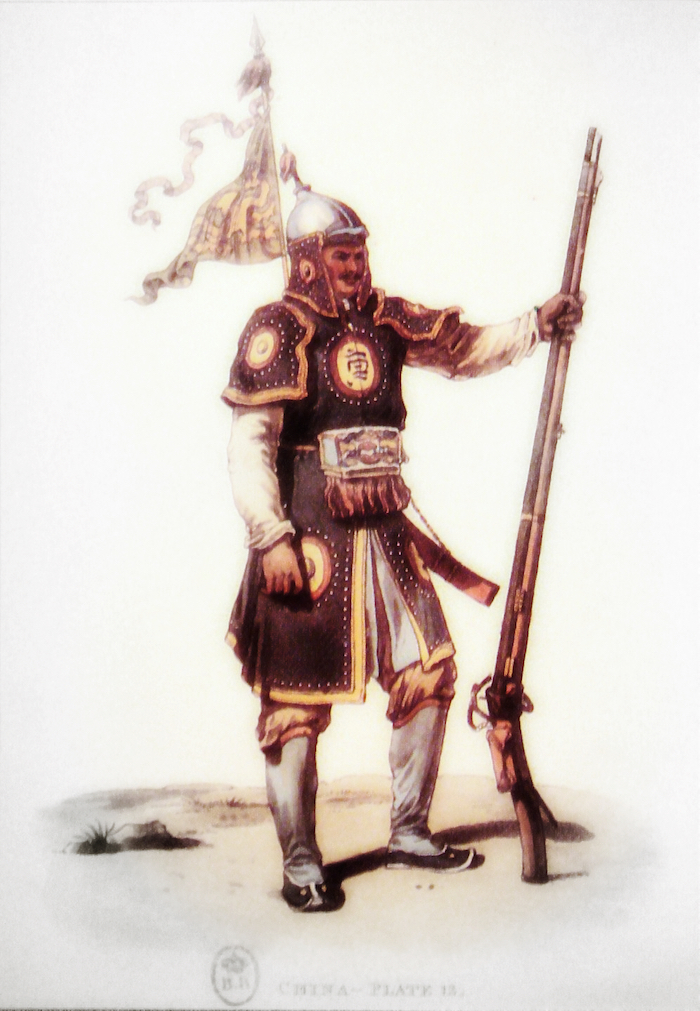
William Alexander: Chinese Soldier (1793). Reproduction in "Images de l'Empire Immobile", Alain Peyreffite.
Locations
People
- George Macartney, 1st Earl Macartney
- Henry Dundas, 1st Viscount Melville
- James Dinwiddie
- John Barrow, 1st Baronet
- Joseph Banks
- Qianlong Emperor
- Sir George Leonard Staunton
- Sir George Staunton, 2nd Baronet
- Thomas Hickey
- William Alexander
- William Grenville, 1st Baron Grenville
- William Pitt the Younger
Groups
- Chinese Empire, Qing (Manchu) Dynasty
- Britain, Kingdom of Great
- East India Company, British (United Company of Merchants of England Trading to the East Indies)
Topics
Commodoties
Subjects
Regions
Subregions
Related Events
Showing 10 events out of 23492 total
Years: 1794 - 1794
William Alexander: Chinese Soldier (1793). Reproduction in "Images de l'Empire Immobile", Alain Peyreffite.
Locations
People
- George Macartney, 1st Earl Macartney
- Henry Dundas, 1st Viscount Melville
- James Dinwiddie
- John Barrow, 1st Baronet
- Joseph Banks
- Qianlong Emperor
- Sir George Leonard Staunton
- Sir George Staunton, 2nd Baronet
- Thomas Hickey
- William Alexander
- William Grenville, 1st Baron Grenville
- William Pitt the Younger
Groups
- Chinese Empire, Qing (Manchu) Dynasty
- Britain, Kingdom of Great
- East India Company, British (United Company of Merchants of England Trading to the East Indies)
Topics
Commodoties
Subjects
Regions
Subregions