
Henry appoints Adalbert archbishop of Bremen and …
Years: 1045 - 1045
Henry appoints Adalbert archbishop of Bremen and summons Widger, Archbishop of Ravenna, to a trial.
The right of a German court to try an Italian bishop is very controversial and presages the Investiture Controversy that are to characterize the reigns of Henry's son and grandson.
Locations
People
- Eckard II
- Godfrey III, Duke of Lower Lorraine
- Henry I of France
- Henry III, Holy Roman Emperor
- Henry VII of Bavaria
- Peter, King of Hungary
Groups
- Germans
- Hungarian people
- Flanders, County of
- Swabia, Duchy of
- Bavaria, Ottonian Duchy of
- German, or Ottonian (Roman) Empire
- Meissen, March of
- Lorraine, (second) Duchy of
- Lorraine (Lothier), Lower, (second) Duchy of
Commodoties
Subjects
Regions
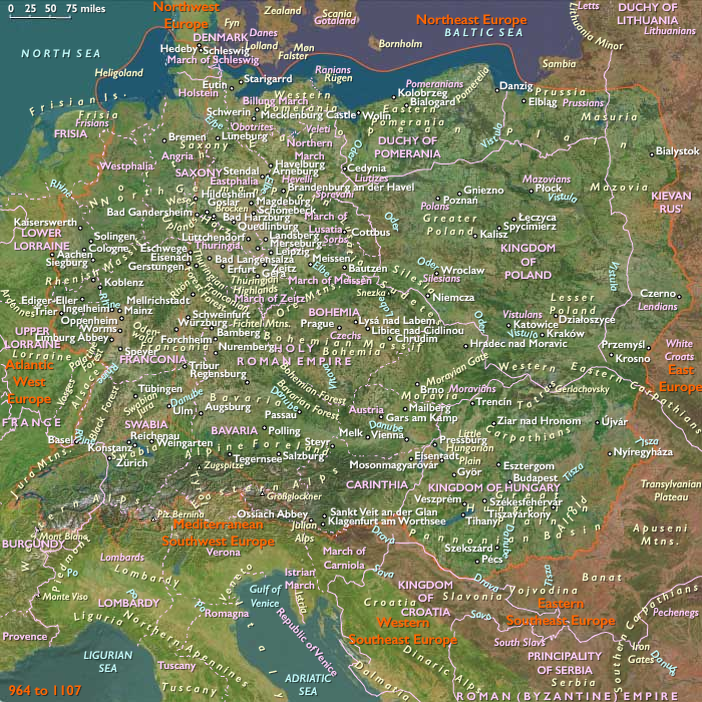
Subregions
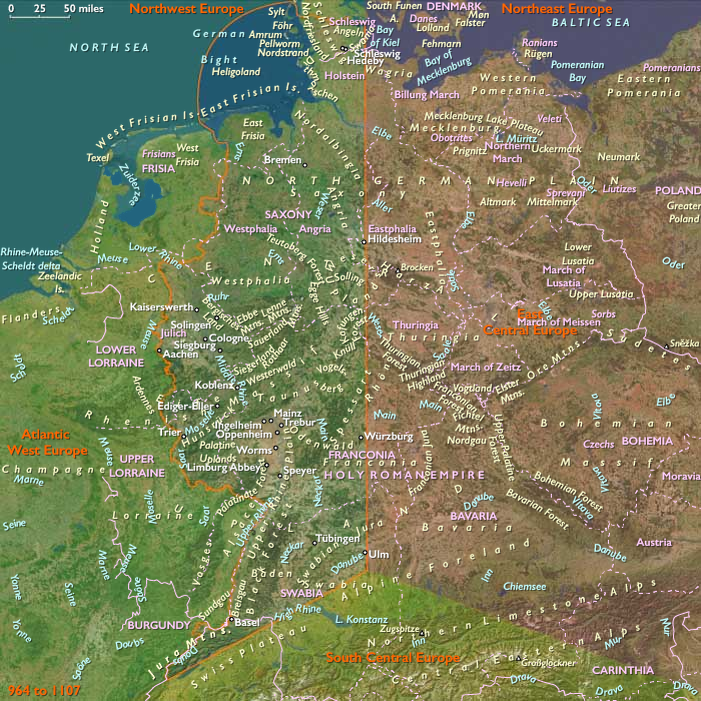
Related Events
Showing 10 events out of 51316 total
Years: 1045 - 1045
Locations
People
- Eckard II
- Godfrey III, Duke of Lower Lorraine
- Henry I of France
- Henry III, Holy Roman Emperor
- Henry VII of Bavaria
- Peter, King of Hungary
Groups
- Germans
- Hungarian people
- Flanders, County of
- Swabia, Duchy of
- Bavaria, Ottonian Duchy of
- German, or Ottonian (Roman) Empire
- Meissen, March of
- Lorraine, (second) Duchy of
- Lorraine (Lothier), Lower, (second) Duchy of
Commodoties
Subjects
Regions
Subregions