
Helike, located in Achaea, northern Peloponnesos, two …
Years: 373BCE - 373BCE
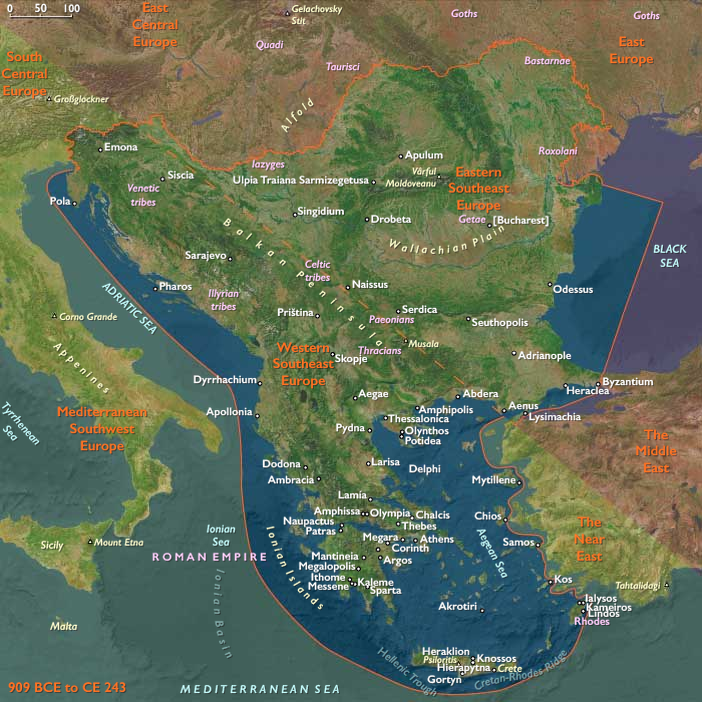
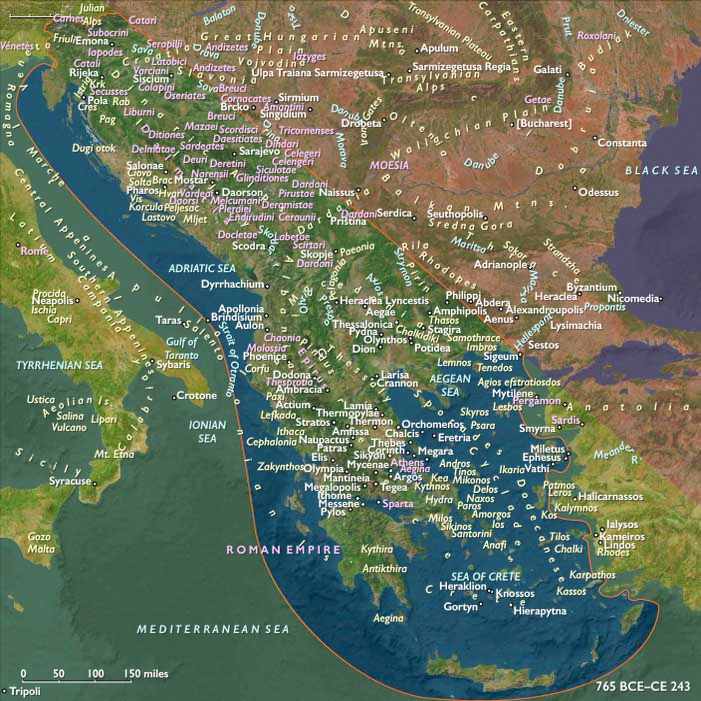
Helike, located in Achaea, northern Peloponnesos, two kilometers (twelve stadia) from the Corinthian Gulf and near the city of Boura, like it a member of the Achaean League, had been founded in the Bronze Age, becoming the principal city of Achaea.
The poet Homer states that the city of Eliki participated in the Trojan War with one ship.
Later, following its fall to the Achaeans, Eliki led the Achaean League, an association that joined twelve neighboring cities in an area including today's town of Aigion.
Also known as Dodekapolis (from the Greek words dodeka, meaning twelve, and polis, meaning city), Eliki became a cultural and religious center with its own coinage.
Finds from ancient Eliki are limited to two fifth century copper coins, now housed in the Staatliches Museum, Berlin.
The obverse shows the head of Poseidon, the city's patron, and the reverse his trident.
There was a temple dedicated to the Helikonian Poseidon.
Helike had founded colonies including Priene in Asia Minor and Sybaris in South Italy.
Its panhellenic temple and sanctuary of Helikonian Poseidon are known throughout the Classical world, and second only in religious importance to Delphi.
The city is destroyed in 373 BCE, two years before the Battle of Leuctra, during a winter night.
Several events are construed in retrospect as having warned of the disaster: some "immense columns of flame" appeared, and five days previously, all animals and vermin had fled the city, going toward Keryneia.
The city and a space of twelve stadia below it sink into the earth and are covered over by the sea.
All the inhabitants perish without a trace, except for a few building fragments projecting from the sea.
Ten Spartan ships anchored in the harbor are dragged down with it.
An attempt involving two thousand men to recover bodies is unsuccessful.
Aegium takes possession of its territory.
The city was thought to be legend until 2001, when it was rediscovered in the Helike delta.
Modern research attributes the catastrophe to an earthquake and accompanying tsunami, which destroyed and submerged the city.
Locations
Groups
Topics
Subjects
Regions
Subregions
Related Events
Showing 10 events out of 64805 total
Years: 373BCE - 373BCE
Locations
Groups
Topics
Subjects
Regions
Subregions