
The Middle East: 1876–1887 CE Ottoman …
Years: 1876 - 1887
The Middle East: 1876–1887 CE
Ottoman Decline and International Competition
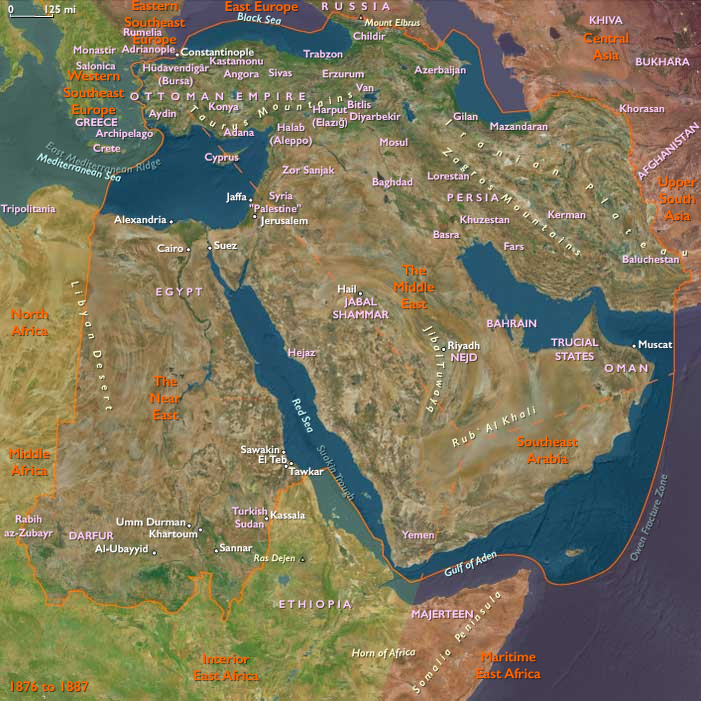
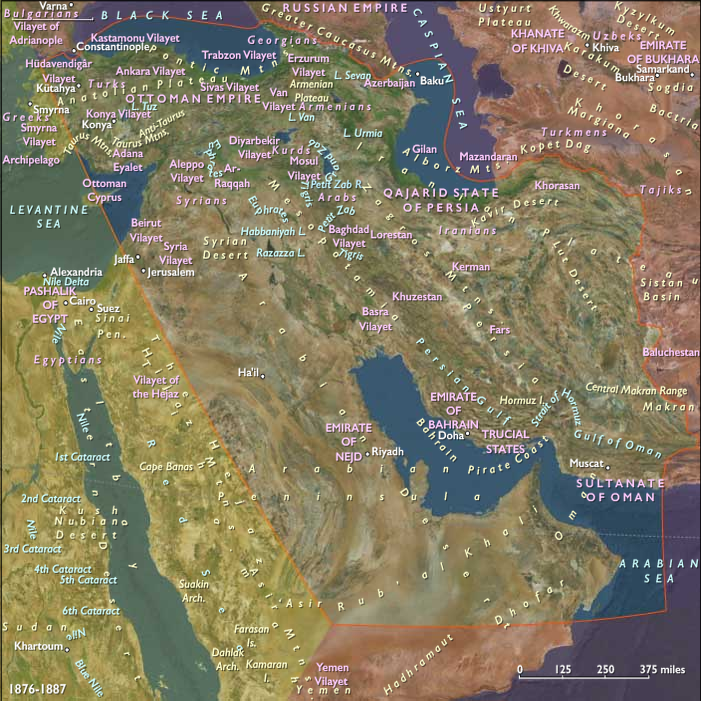
Between 1876 and 1887, the Ottoman Empire faces intensified internal strife and international pressure. The death of reformer Sultan Abdülaziz in 1876 is followed by short-lived reigns, ultimately bringing Abdul Hamid II to power. Abdul Hamid initially promises constitutional reform and establishes a parliament in 1876; however, he suspends it in 1878, inaugurating an era of increased centralization and autocratic governance. Internationally, the empire endures significant territorial losses following the Russo-Turkish War (1877–1878), finalized by the Treaty of Berlin (1878), diminishing its European territories and influence. The treaty cedes the territories of Ardahan, Batum, and Kars to Russia, while the sultan guarantees increased security for Christian subjects.
Reforms, Unrest, and Intellectual Growth in Lebanon
Lebanon continues to benefit from relative stability under the Mutasarrifate system. Nonetheless, religious and political tensions beneath the surface remain sensitive to external influences, particularly French and British interference. Educational and cultural institutions founded previously flourish significantly, highlighted by the founding of the American University of Beirut (1866) and St. Joseph’s University (1875), which become central to Lebanon's intellectual renaissance. An intellectual guild stimulates a revival of Arabic literature, fostering numerous publications and an active press. The harsh rule of Abdul Hamid II prompts increased clandestine political activity among both Christian and Muslim Arab nationalists in Beirut and Damascus. This period sees the crystallization of differing political visions: some Maronites advocate secession fearing pan-Islamic policies; Greek Orthodox Christians support an independent Syria with Lebanon as an autonomous province; Sunni Muslims generally prefer maintaining ties with the Ottoman caliphate; while Druze and Shia groups tend toward independence or status quo.
Internal Struggles in the Al Saud Domain
In Arabia, continued internal strife among the Al Saud family weakens central authority after the death of Faisal ibn Turki. Conflicts among Faisal’s sons—Abd Allah, Abd ar Rahman, and Saud—lead to intermittent control and further instability in Riyadh. These internal divisions challenge consistent authority, though alliances such as those with the influential Al Rashid family in Jabal Shammar remain crucial.
Qajar Iran: Concessions and Foreign Domination
Persia (Iran) under Naser ad-Din Shah further cedes sovereignty due to escalating pressure from British and Russian interests. Russian territorial gains in Central Asia solidify, and Britain extends its economic dominance. Increasingly unpopular economic concessions to foreigners provoke internal discontent. Reformist Persian officials like Malkam Khan and Prime Minister Mirza Hosain Khan Moshir od Dowleh advocate administrative, educational, and infrastructural reforms, emphasizing learning from advanced European states. However, resistance from bureaucratic and clerical factions hampers significant progress, laying foundations for later nationalist movements.
British Dominance and Maritime Prosperity in Oman
Under British oversight, Oman enjoys stability and maritime prosperity. The division between Muscat and Oman and Zanzibar functions effectively under British protection, facilitating regional commerce. Maritime truces significantly reduce piracy, ensuring the Persian Gulf remains a crucial and safe commercial route connecting Asia, Africa, and Europe.
Consolidation and Growth in the Persian Gulf
Qatar and Abu Dhabi solidify their respective positions under the rule of the Al Thani and Al Nahyan families, supported by continued British maritime protections. Qatar’s alignment with Wahhabi ideology distinguishes it from neighboring emirates. Economic prosperity from pearling and trade reinforces local autonomy, laying groundwork for future nation-building.
Modernization and Socioeconomic Shifts in Iraq
In Iraq, Ottoman reforms initiated by Midhat Pasha continue despite his removal. Infrastructure projects, including expanded telegraph networks, improved roads, and river transportation, integrate Iraq deeper into the global economy. The TAPU land laws foster an empowered class of wealthy sheikhs and landlords, significantly shifting tribal dynamics. Urban centers benefit from an influential educated class, which grows as secular education replaces traditional Islamic schooling. Increased Western presence, marked by the establishment of consulates and commercial advancements like steamboats and the Suez Canal, further integrates Iraq economically with Europe.
Rising National Consciousness in the Caucasus
Under Russian control, Armenia and Georgia experience intensified nationalist movements. Armenians develop robust national identity through educational and cultural revitalization, despite harsher Ottoman rule in Anatolian territories. Armenian appeals at the Congress of Berlin (1878) internationalize the "Armenian question," attracting attention from Russia and Britain. Georgian society faces intensified Russification, triggering nationalist resistance. The declining Georgian nobility leads to increased economic power for the Armenian merchant class, reshaping societal dynamics.
Legacy of the Era
From 1876 to 1887, the Middle East encounters profound transformations marked by Ottoman decline, Persian vulnerability, and increased British and Russian influence. Lebanon thrives culturally despite political tensions; the Al Saud face ongoing internal challenges; Oman and Persian Gulf emirates prosper under British oversight; Iraq modernizes economically and socially; and the Caucasus continues its path toward strengthened national identities. These shifts significantly influence the region’s subsequent political, cultural, and economic developments.
People
- Abdul Hamid II
- Abdul Rahman bin Faisal
- Abdullah bin Faisal Al Saud (1831–1889)
- Abdülaziz
- Faisal bin Turki
- Midhat Pasha
- Mirza Hosein Khan Sepahsalar
- Naser al-Din Shah Qajar
Groups
- Georgians
- Arab people
- Armenian people
- Christians, Maronite
- Muslims, Sunni
- Muslims, Shi'a
- Druze, or Druse, the
- Christians, Eastern Orthodox
- Ottoman Empire
- Thani, House of
- Al Nahayan family
- Prussia, Kingdom of
- Russian Empire
- United States of America (US, USA) (Washington DC)
- Georgia within the Russian Empire
- Britain (United Kingdom of Great Britain and Ireland)
- Armenia, Russian
- Muscat and Oman
- Mount Lebanon Mutasarrifate
- Zanzibar, Omani Sultanate of
Topics
Subjects
Regions
Subregions
Years: 1876 - 1887
People
- Abdul Hamid II
- Abdul Rahman bin Faisal
- Abdullah bin Faisal Al Saud (1831–1889)
- Abdülaziz
- Faisal bin Turki
- Midhat Pasha
- Mirza Hosein Khan Sepahsalar
- Naser al-Din Shah Qajar
Groups
- Georgians
- Arab people
- Armenian people
- Christians, Maronite
- Muslims, Sunni
- Muslims, Shi'a
- Druze, or Druse, the
- Christians, Eastern Orthodox
- Ottoman Empire
- Thani, House of
- Al Nahayan family
- Prussia, Kingdom of
- Russian Empire
- United States of America (US, USA) (Washington DC)
- Georgia within the Russian Empire
- Britain (United Kingdom of Great Britain and Ireland)
- Armenia, Russian
- Muscat and Oman
- Mount Lebanon Mutasarrifate
- Zanzibar, Omani Sultanate of
Topics
Subjects
Regions
Subregions