
Hasdrubal, summoned to join his brother in …
Years: 207BCE - 207BCE
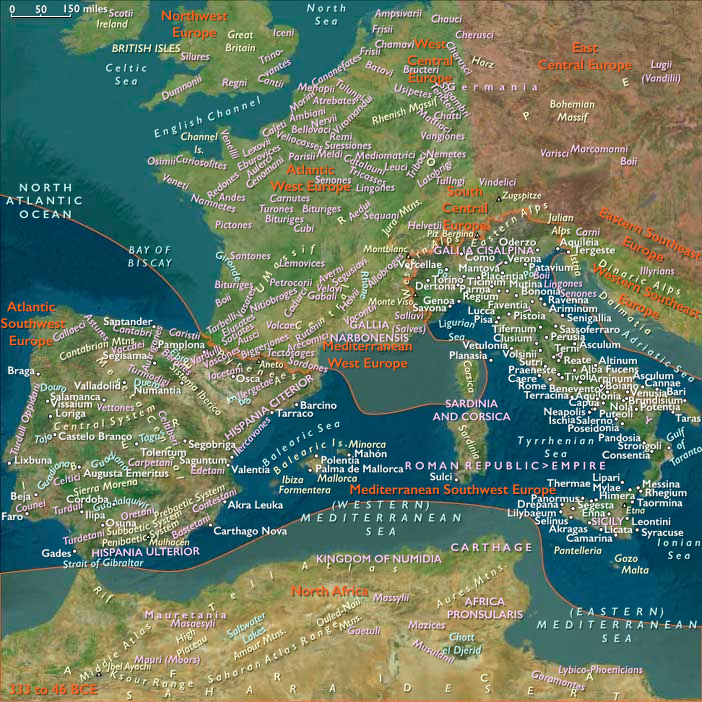
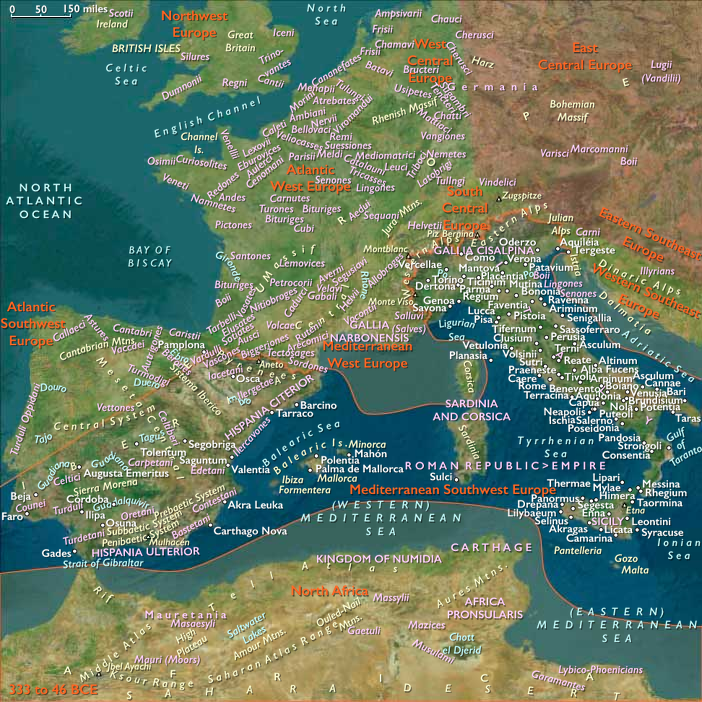
Hasdrubal, summoned to join his brother in Italy, had eluded Scipio by crossing the Pyrenees at their western extremity and safely made his way into Gaul in the winter of 208, waiting until the spring of 207 to make his way through the Alps and into Northern Italy.
Hasdrubal has made much faster progress than his brother had, partly due to the constructions left behind by Hannibal's army when he had passed via the same route a decade earlier, but also due to the removal of the Gallic threat that had plagued Hannibal during said expeditions.
The Gauls now fear and respect the Carthaginians, and not only is Hasdrubal allowed to pass through the Alps unmolested, his ranks are bolstered by many enthusiastic Gauls.
Hasdrubal, in the same fashion as his brother, succeeds in bringing his war elephants, raised and trained in Hispania.
It is not until Hasdrubal sends messengers to Hannibal that decisive measures are taken.
Hasdrubal wishes to meet with his brother in South Umbria, but this is not to be.
Hasdrubal's messengers are captured and he is ultimately checked by two Roman armies, and being forced to give battle is decisively defeated at the Battle of the Metaurus River.
The aid now essential to his brother’s Italian campaign is lost.
Hasdrubal himself dies bravely in the fight; he is beheaded, his head packed in a sack and thrown into his brother Hannibal's camp as a sign of his utter defeat, in stark contrast of Hannibal's treatment of the bodies of fallen Roman consuls.
Cato is among the select group who has accompanied the consul Gaius Claudius Nero on his northern march from Lucania with reinforcements to intercept Hasdrubal’s progress.
It is recorded that Cato’s services had contributed to the decisive victory.
Locations
People
Groups
Topics
Commodoties
Subjects
Regions
Subregions
Related Events
Showing 10 events out of 63597 total
Years: 207BCE - 207BCE
Locations
People
Groups
Topics
Commodoties
Subjects
Regions
Subregions