
Hasan ibn al-Nu'man had been sent in …
Years: 700 - 700
Hasan ibn al-Nu'man had been sent in 692 to continue the Islamic conquest in North Africa all the way to Morocco.
However, his policies were quite strict and he did not tolerate Berber traditions.
He was relieved of his command for allowing continuing imperial attacks.
Musa bin Nusayr had then been sent to renew the attacks against the Berbers, but he has not imposed Islam by force, rather, he respects Berber traditions and uses diplomacy in subjugating them.
This proves highly successful, as many Berbers convert to Islam and even enter his army as soldiers and officers, possibly including Tariq bin Ziyad, who will lead the later Islamic expedition in Iberia.
Musa had been made the governor of Ifriqiya in 698, charged with the responsibility for completing the conquest of North Africa and of the Balearic Islands and Sardinia.
He is the first governor of Ifriqiya not to be subordinate to the governor of Egypt.
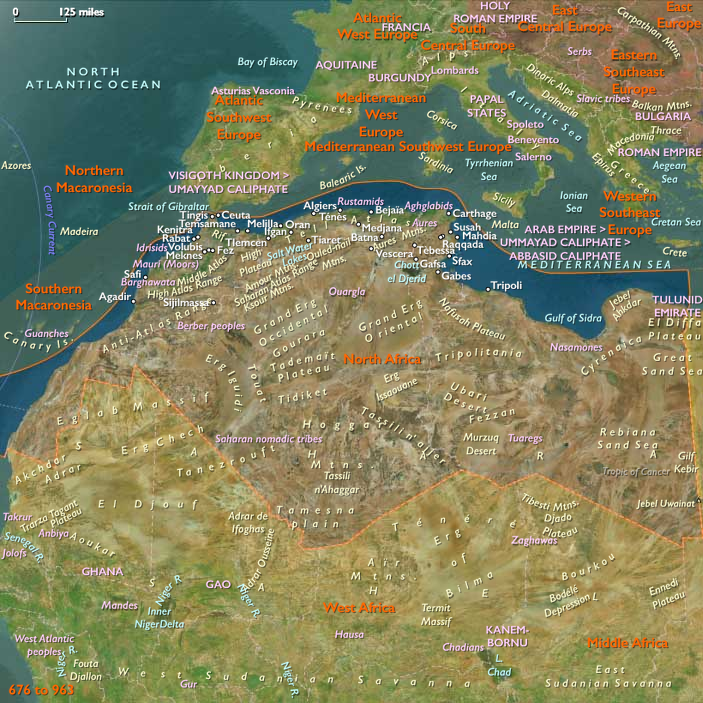
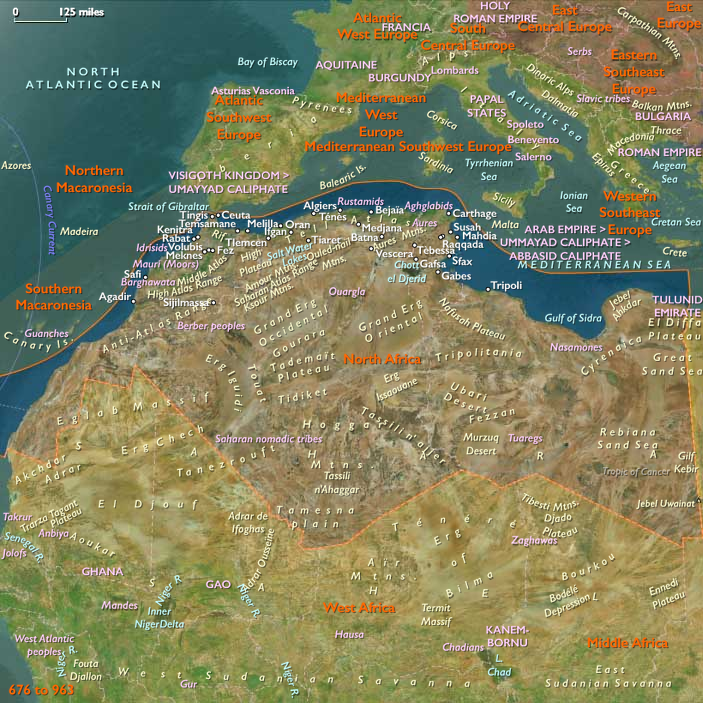
He is the first Muslim general to take Tangiers and occupy it; his troops have also conquered the Sous, effectively taking control of all of modern Morocco.
He also has to deal with constant harassment from the imperial navy and he builds a navy that will go on to conquer the islands of Ibiza, Majorca, and Minorca.
After a defeat by the Berber warrior queen al-Kahina, he had retired to Libya for several years, then returns to Ifriqiya and kills al-Kahina in battle.
This effectively brings Ifriqiya (modern Tunisia and eastern Algeria) under Arab control.
Locations
People
Groups
- Arab people
- Berber people (also called Amazigh people or Imazighen, "free men", singular Amazigh)
- Islam
- Egypt in the Middle Ages
- Umayyad Caliphate (Damascus)
- Ifriqiya, Ummayad
Topics
- Migration Period
- Migration Period Pessimum
- Arab-Byzantine Wars
- Muslim conquest of the Maghreb
- Byzantine-Muslim War of 692-718
Commodoties
Subjects
Regions
Subregions
Related Events
Showing 10 events out of 55890 total
Years: 700 - 700
Locations
People
Groups
- Arab people
- Berber people (also called Amazigh people or Imazighen, "free men", singular Amazigh)
- Islam
- Egypt in the Middle Ages
- Umayyad Caliphate (Damascus)
- Ifriqiya, Ummayad
Topics
- Migration Period
- Migration Period Pessimum
- Arab-Byzantine Wars
- Muslim conquest of the Maghreb
- Byzantine-Muslim War of 692-718
Commodoties
Subjects
Regions
Subregions