
Hasan-e Sabbah and other Isma'ilites in Iran …
Years: 1100 - 1100
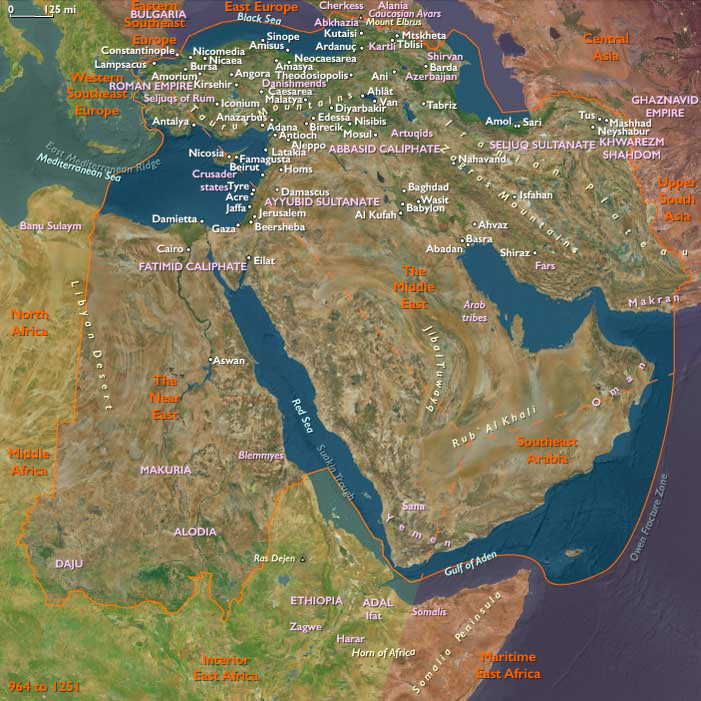
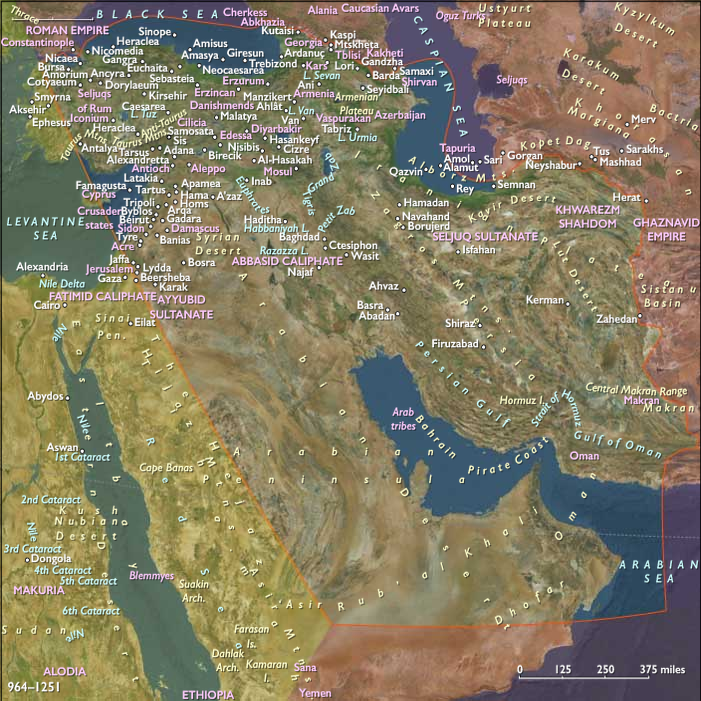
Hasan-e Sabbah and other Isma'ilites in Iran have refused to recognize the new Fatimid caliph in Cairo and have transferred their allegiance to his deposed elder brother, Nizar, and the latter's descendants.
There thus will grow up the sect of the Nizari Isma'ilites, who are at odds with the Fatimid caliphs in Cairo and are also deeply hostile to the 'Abbasids.
The Nizaris will make many changes in Isma'ilite doctrine, the most significant, from the point of view of the outside world, being the adoption of terrorism as a sacred religious duty.
From Alamut, by the end of the eleventh century, Hasan, as grand master or leader of the sect, commands a chain of strongholds all over Iran and Iraq, a network of propagandists, a corps of devoted terrorists, and an unknown number of agents in enemy camps and cities.
The Seljuq sultanate's attempts to capture Alamut fail, and soon the Assassins are claiming many victims among the generals and statesmen of the 'Abbasid caliphate, including two caliphs.
(This group, joining with Sabbah's terrorists, becomes known in the West as Assassins, a designation that derives from the Arabic “hashashin”, meaning “users of hashish”, based on stories—unconfirmed in any Ismaili sources—related by Marco Polo and others that the group employs hallucinatory drugs to stimulate them to their murderous acts.)
Locations
People
Groups
- Persian people
- Berber people (also called Amazigh people or Imazighen, "free men", singular Amazigh)
- Islam
- Muslims, Shi'a
- Ismailism
- Fatimid Caliphate
- Assassins
Topics
Commodoties
Subjects
Regions
Subregions
Years: 1100 - 1100
Locations
People
Groups
- Persian people
- Berber people (also called Amazigh people or Imazighen, "free men", singular Amazigh)
- Islam
- Muslims, Shi'a
- Ismailism
- Fatimid Caliphate
- Assassins
Topics
Commodoties
Subjects
Regions
Subregions