
Hasan al-Utrush was born in Medina around …
Years: 913 - 913
Hasan al-Utrush was born in Medina around 844; his father was a descendant of Husayn ibn Ali, the grandson of Muhammad and third Shi'a Imam, via his eldest son Zayn al-Abidin, while his mother was an unnamed enslaved Khurasani.
When Hasan ibn Zayd, a descendant of Husayn's brother Hasan, established his rule over Tabaristan in the 860s, Hasan had joined him there.
However, he eventually fell out with Hasan ibn Zayd's brother and successor, Muhammad ibn Zayd, who distrusted him.
Hasan left Tabaristan and tried to set up a realm of his own in the provinces further east.
To this end, he had allied himself with the ruler of Khurasan, Muhammad ibn Abdallah al-Khujistani, who was an enemy of Muhammad ibn Zayd.
Soon, however, al-Khujistani too had come to distrust him and had him imprisoned and scourged, as a result of which he lost his hearing and received the sobriquet al-Utrush ("the Deaf"), by which he is known.
When he was released from imprisonment, Hasan had returned to Tabaristan and the service of Muhammad ibn Zayd.
Hasan had been present and fought alongside the latter in the disastrous battle in 900 at Gurgan against the Samanid army of Muhammad ibn Harun al-Sarakhsi.
Muhammad ibn Zayd had been defeated and died of his wounds, leaving Tabaristan open to Samanid occupation.
Hasan had managed to escape the defeat and at first sought refuge in Rayy, where he received the invitation of the Justanid king of Daylam, who had also supported and served the Zaydid brothers.
Together, Hasan and the Justanids had tried in 902 and 903 to recover control of Tabaristan, but without success.
Worried by the fickleness of the Justanids, Hasan had resolved to build a power base of his own, and engaged in a mission to the as yet unconverted Gilites and the Daylamites to the north of the Alburz mountains, where he preached in person and founded mosques.
His efforts were swiftly crowned by success: the mountain Daylamites and the Gilites east of the Safid Rud river recognized him as their imam with the name of al-Nāṣir li'l-Ḥaqq ("Defender of the True Faith") and were converted to his own branch of Zaydi Islam, which is named after him as the Nasiriyya and differs in some practices from the "mainstream" Qasimiyya branch adopted in Tabaristan following the teachings of Qasim ibn Ibrahim.
This development had threatened the position of the Justanid king, Justan ibn Vahsudan, but in the ensuing showdown between the two, Hasan was able to affirm his position and compel the Justanid to swear allegiance to him.
The Samanid ruler Ahmad ibn Isma'il, seeing Hasan's rise to power, sends an army under Muhammad ibn Sa'luk to Tabaristan to oppose a new Zaydid takeover of the province.
Although the Samanid force is far superior in numbers and equipment, Hasan manages to inflict a crushing defeat upon it in December 913 at Burdidah on the river Burrud west of Chalus.
A detachment that manages to find refuge in the fortress of Chalus is induced to surrender and then massacred by his son-in-law, Abu Muhammad al-Hasan ibn al-Qasim.
After this success, the provincial capital Amul opens its gates to the Zaydid forces, and Hasan takes up residence in the palace.
Locations
People
Groups
- Khorasan, Greater
- Islam
- Tabaristan, (Ka'usiyeh) Principality of
- Zaidiyyah
- Samanid dynasty
- Saffarid dynasty
- Abbasid Caliphate (Baghdad)
Topics
Commodoties
Subjects
Regions
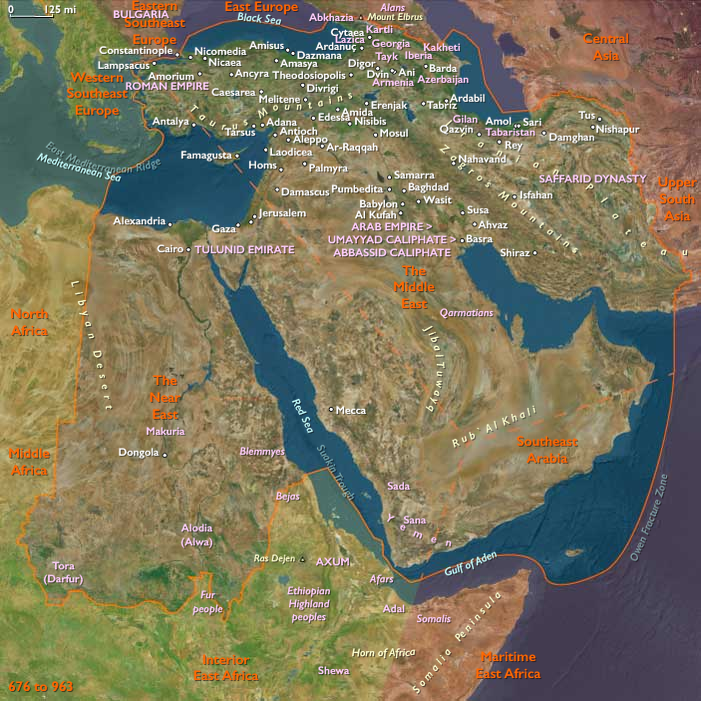
Subregions
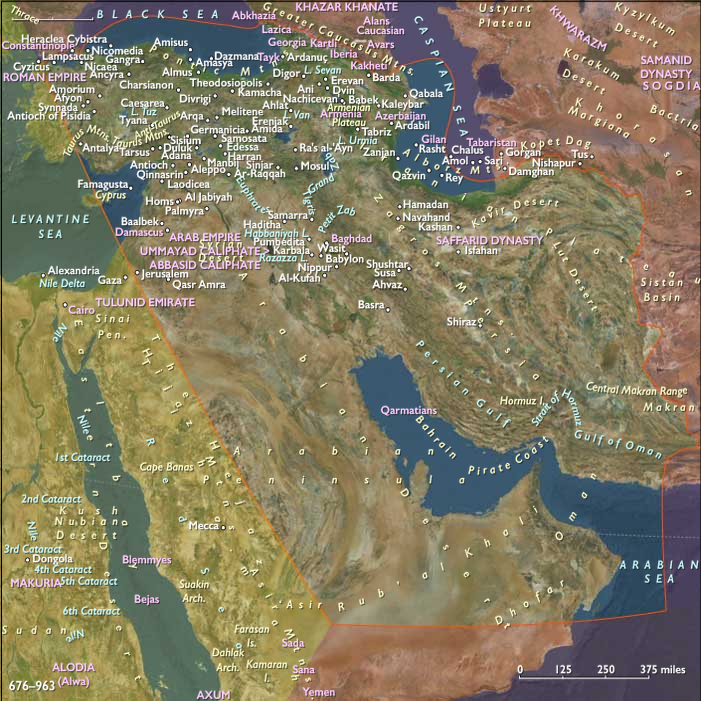
Years: 913 - 913
Locations
People
Groups
- Khorasan, Greater
- Islam
- Tabaristan, (Ka'usiyeh) Principality of
- Zaidiyyah
- Samanid dynasty
- Saffarid dynasty
- Abbasid Caliphate (Baghdad)
Topics
Commodoties
Subjects
Regions
Subregions