
Gulf and Western North America (820 – …
Years: 820 - 963
Gulf and Western North America (820 – 963 CE): Mound-Builders, Chaco Flourishing, and California’s Canoe Chiefs
Geographic and Environmental Context
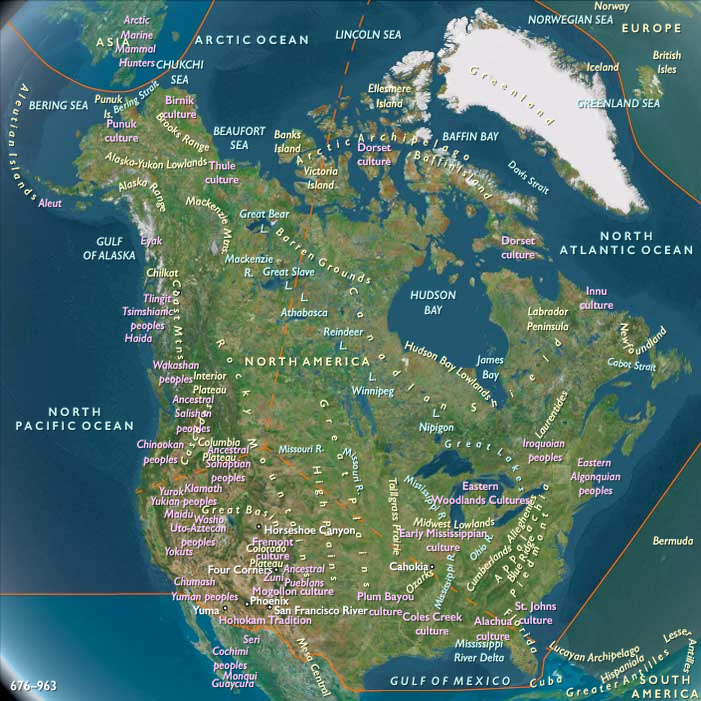
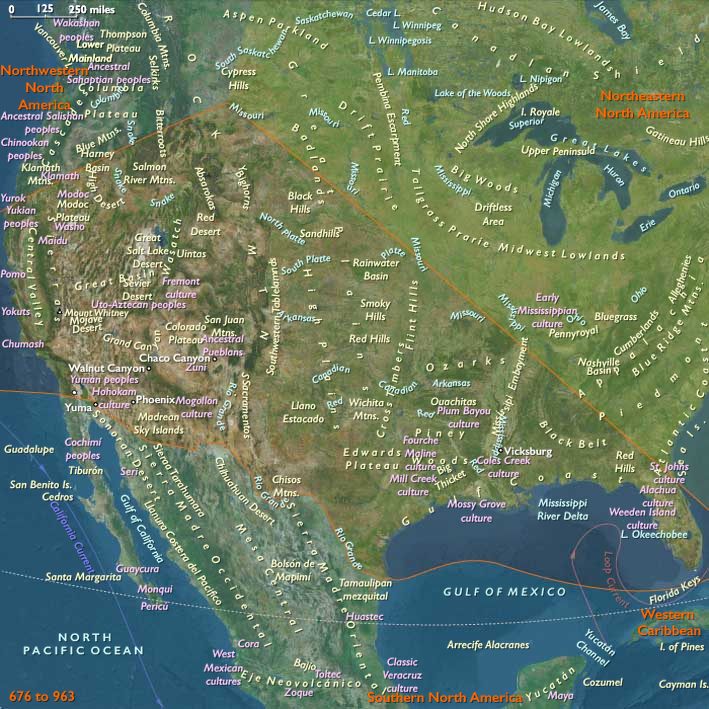
Gulf and Western North America includes: Mississippi, Louisiana, Arkansas, Texas, Oklahoma, Kansas, New Mexico, Colorado, Wyoming, Arizona, Utah, Nevada, nearly all of California (except far northwest), Florida (except the Jacksonville corridor), southwestern Georgia, most of Alabama (except Huntsville corner), southwestern Tennessee, southern Illinois (Little Egypt), southwestern Missouri, most of Nebraska (except northeast around Omaha), southeastern South Dakota, southern Montana, southern Idaho, southeastern Oregon.
-
Anchors: Lower Mississippi towns (Plaquemine precursors), Natchez bluffs, Gulf fisheries (Calusa, Pensacola), Southern Plains nodes (early Spiro), Chaco Canyon great houses, Hohokam canals in Salt–Gila basin, Mogollon Rim, Great Basin foragers, California coast (Chumash Channel Islands, Sacramento–San Joaquin wetlands).
Climate and Environmental Shifts
-
Benefited from the Medieval Warm Period: ample rainfall on the Mississippi bottomlands, supporting maize expansion; drought cycles more subdued than in later centuries.
-
Southwest: ideal for canal irrigation and Chaco aggregation.
-
California: steady oak acorn harvests and rich marine productivity.
Societies and Political Developments
-
Mississippian precursors: maize cultivation expanded; Plaquemine and Caddoan mound centers rose in the lower Mississippi.
-
Southern Plains: early mound activity at Spiro foreshadowed its later role.
-
Southwest: Chaco Canyon reached its zenith, with great houses, roads, and ritual centers (850–1130).
-
Hohokam irrigated villages flourished, cultivating maize, cotton, beans.
-
Mogollon and Sinagua villages dotted uplands.
-
California: Chumash chiefdoms expanded; tomol plank canoes connected Channel Islands to mainland.
-
Great Basin: highly mobile foragers harvested seeds, hunted rabbits, and traded obsidian.
Economy and Trade
-
Maize surpluses redistributed at mound centers.
-
Chaco trade: turquoise, macaws, copper bells from Mesoamerica.
-
Hohokam cotton & shells exported widely.
-
Chumash shell beads spread along Pacific.
-
Great Basin obsidian and salt linked desert to Puebloan centers.
Belief and Symbolism
-
Mound cosmologies tied earth/sky/underworld.
-
Chaco ritual kivas, astronomical alignments structured calendars.
-
Chumash cosmology tied celestial navigation to canoe exchange.
Long-Term Significance
By 963, the region contained Mississippian precursors, Chaco’s great houses, Hohokam canals, and Chumash maritime chiefdoms, forming a continental crossroads of exchange and ritual.
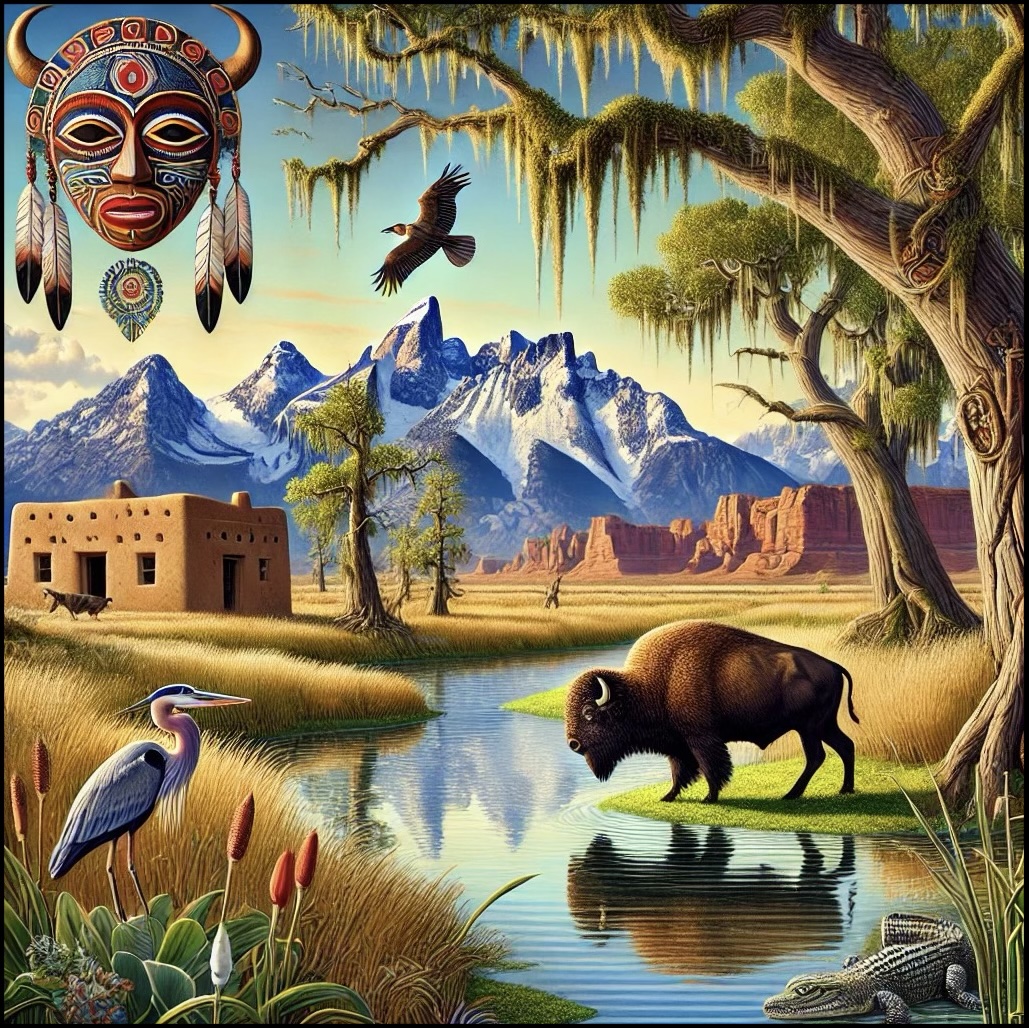
Gulf and Western North America (with civilization) ©2024-25 Electric Prism, Inc. All rights reserved.
Groups
- Zuni people (Amerind tribe)
- Fremont culture
- Hohokam
- Mogollon culture
- Basket Maker III culture
- Coles Creek culture
- Ancestral Puebloans
- Pueblo I culture
- Caddoan Mississippian culture
- Mississippian culture
- Pueblo II culture
Topics
Commodoties
Subjects
Regions
Subregions
Related Events
Showing 10 events out of 54673 total
Years: 820 - 963
Gulf and Western North America (with civilization) ©2024-25 Electric Prism, Inc. All rights reserved.
Groups
- Zuni people (Amerind tribe)
- Fremont culture
- Hohokam
- Mogollon culture
- Basket Maker III culture
- Coles Creek culture
- Ancestral Puebloans
- Pueblo I culture
- Caddoan Mississippian culture
- Mississippian culture
- Pueblo II culture
Topics
Commodoties
Subjects
Regions
Subregions