
Gulf and Western North America (4,365–2,638 …
Years: 4365BCE - 2538BCE
Gulf and Western North America (4,365–2,638 BCE): Early Holocene — Late Archaic/Chalcolithic — Coastal–Delta Hamlets & Canyon Aggregation
Geographic and Environmental Context
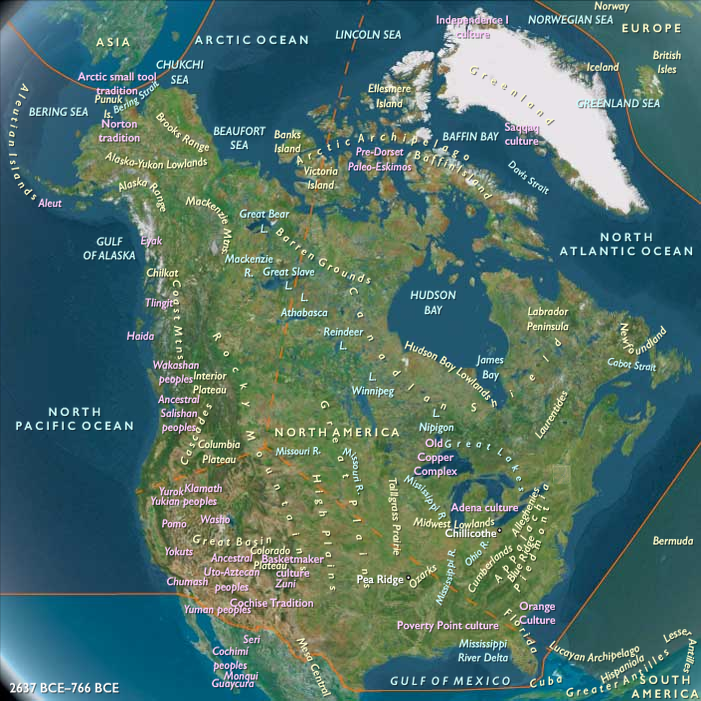
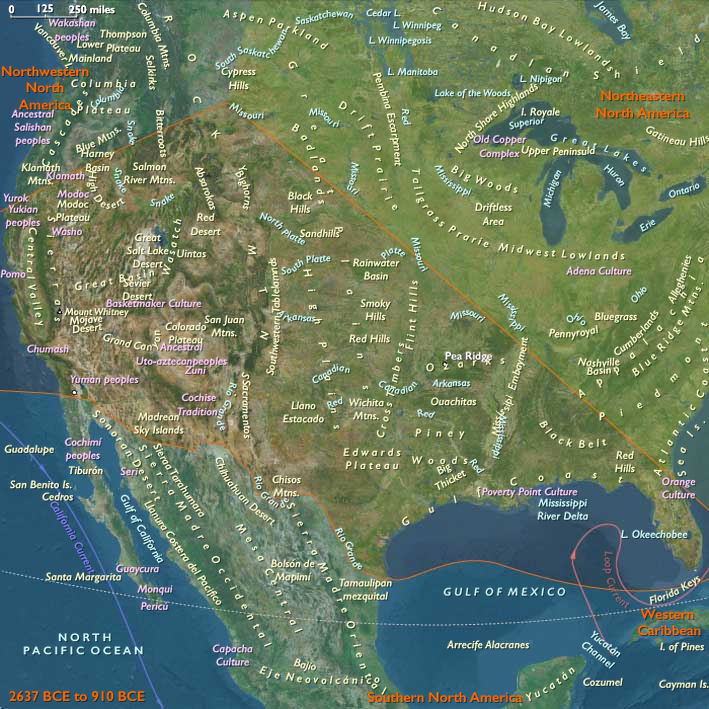
Gulf and Western North America includes Mississippi–Lower Mississippi, Gulf Coast Plains (FL Panhandle, AL–MS–LA–TX), Southern Plains (TX–OK–KS), Southwest deserts/plateaus (NM–AZ), Rocky Mountain fringes (CO–WY south), Great Basin (UT–NV), and nearly all California (except far NW).
Anchors: Lower Mississippi & Yazoo–Natchez bluffs; Mobile–Pensacola–Calusa estuaries; Edwards Plateau–Pecos; Chihuahuan–Sonoran drainages (Gila–Salt–Rio Grande); Colorado Plateau canyons; Great Basin playas; Sacramento–San Joaquin delta; Channel Islands & Chumash coast.
Subsistence & Settlement
-
California: stable coastal villages; intensified kelp fisheries.
-
Lower Mississippi/Gulf: larger shell-ring villages; mound precursors.
-
Southwest: aggregation at reliable springs; intensified geophyte/roasting; proto-agave cultivation in places.
-
Great Basin: seed–pine nut economies; waterhole networks.
Technology & Material Culture
-
Expanded milling technology; slate/obsidian points; early ceramics on Gulf fringes; fiber sandals/textiles.
Movement & Interaction Corridors
-
California canoe corridors; Lower Mississippi trade fairs; Rio Grande–Gila–Colorado nodes.
Cultural & Symbolic Expressions
-
Coastal mortuary areas; canyon rock art dense (ancestral panels); seasonal fairs (shell/stone exchange).
Environmental Adaptation & Resilience
-
Portfolio subsistence + exchange buffered drought/flood pulses; redundant networks across coast–delta–canyon–basin.
Transition
-
After 2,638 BCE, the region’s ceramic and horticultural transformations accelerate (already in your later ages).
Groups
Topics
Commodoties
Subjects
Regions
Subregions
Related Events
Showing 10 events out of 519 total
Years: 4365BCE - 2538BCE
Groups
Topics
Commodoties
Subjects
Regions
Subregions