
Gulf and Western North America (49,293 – …
Years: 49293BCE - 28578BCE
Gulf and Western North America (49,293 – 28,578 BCE): Upper Pleistocene I — Ice Age Coastlines, Desert Basins, and Canyon Shelters
Geographic and Environmental Context
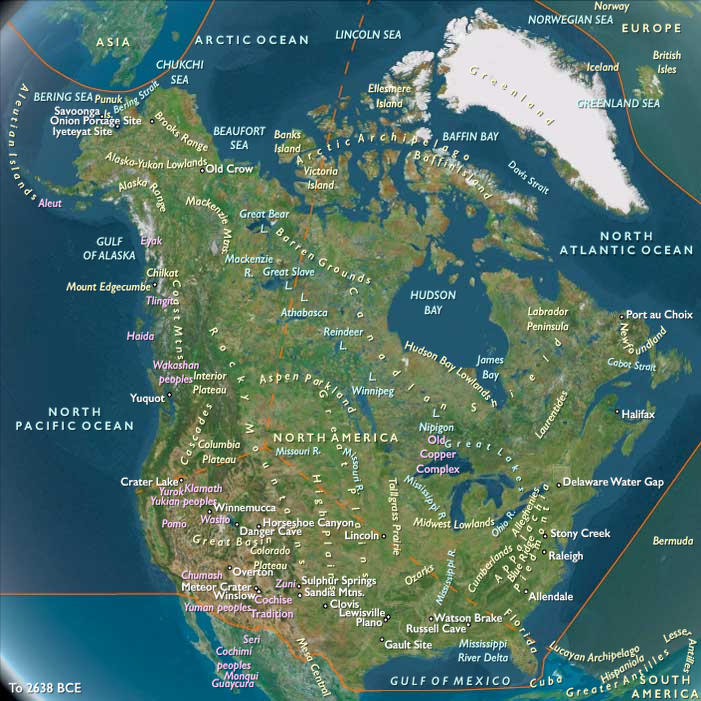
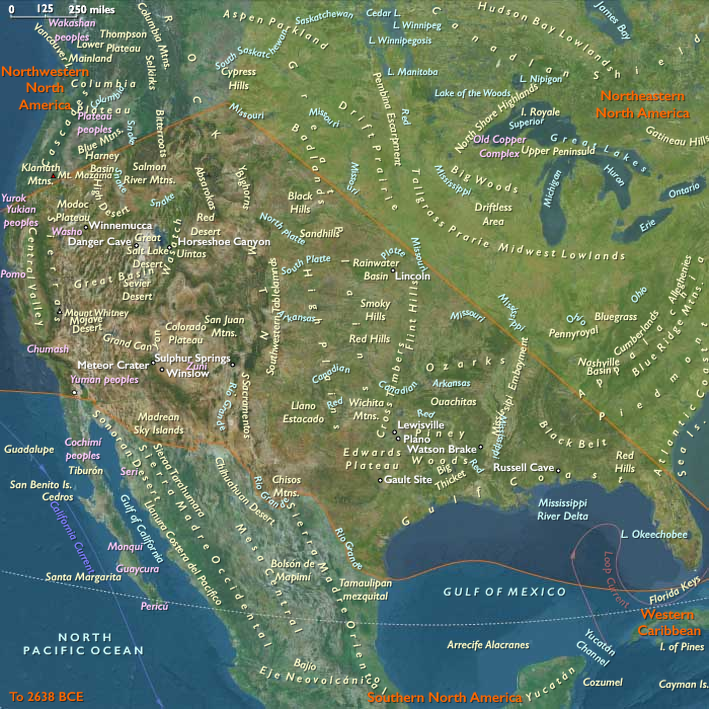
Gulf and Western North America includes Mississippi–Lower Mississippi, Gulf Coast Plains (FL Panhandle, AL–MS–LA–TX), Southern Plains (TX–OK–KS), Southwest deserts/plateaus (NM–AZ), Rocky Mountain fringes (CO–WY south), Great Basin (UT–NV), and nearly all California (except far NW).
Anchors: Lower Mississippi & Yazoo–Natchezbluffs; Mobile–Pensacola–Calusa estuaries; Edwards Plateau–Pecos; Chihuahuan–Sonoran drainages (Gila–Salt–Rio Grande); Colorado Plateau canyons; Great Basin playas; Sacramento–San Joaquin delta; Channel Islands & Chumash coast.
-
Sea level ~100 m lower expanded Gulf/California shelves; Great Basin larger pluvial lakes (Bonneville/Lahontan ancestors); Southwest cooler/drier; California coasts broad.
Climate & Environmental Shifts
-
LGM cold, arid interiors; pluvial pulses in basins; productive upwelling along California.
Subsistence & Settlement
-
Early people likely present by later in this span:
-
Coastal: shellfish, pinnipeds, fish; kelp beds (California, Gulf estuaries).
-
Interior: camelid, horse (early), later deer/pronghorn; small game; seed geophytes.
-
Canyon/rockshelter residence in Colorado Plateau, Edwards Plateau.
-
Technology & Material Culture
-
Flake–blade industries; early hafting; fire use; ochre pigments.
Movement & Interaction Corridors
-
Gulf estuaries, Lower Mississippi river-terraces; Rio Grande–Gila–Salt; coastal highway along California.
Cultural & Symbolic Expressions
-
Hearth structuring; pigment use; early engraved stones in some regions.
Environmental Adaptation & Resilience
-
Coast–canyon–lake mobility hedged climate extremes.
Transition
-
Deglaciation will enlarge estuaries, stabilize river plains, and build Holocene fisheries.
Groups
Topics
Commodoties
Subjects
Regions
Subregions
Years: 49293BCE - 28578BCE
Groups
Topics
Commodoties
Subjects
Regions
Subregions