
Gulf and Western North America (1828–1971 CE): …
Years: 1828 - 1971
Gulf and Western North America (1828–1971 CE): Frontiers, States, and Modern Transformations
Geographic & Environmental Context
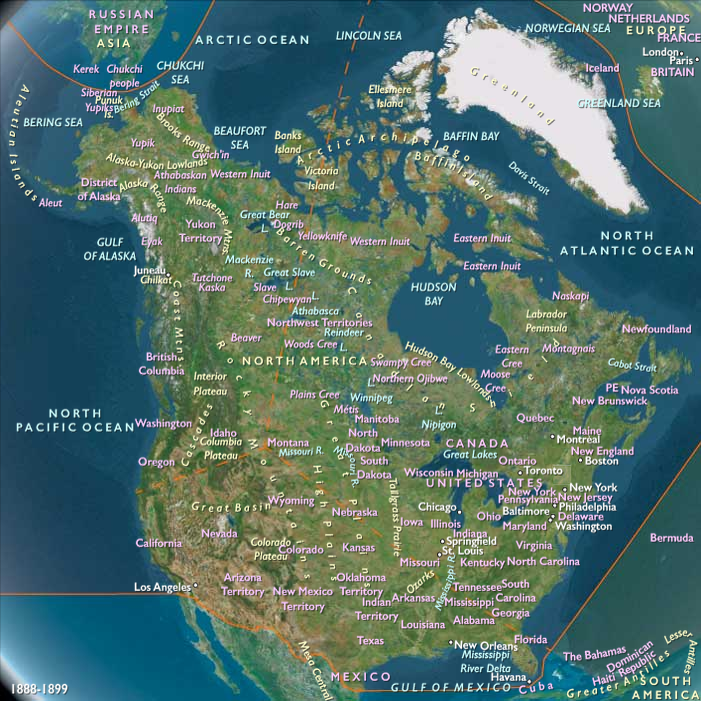
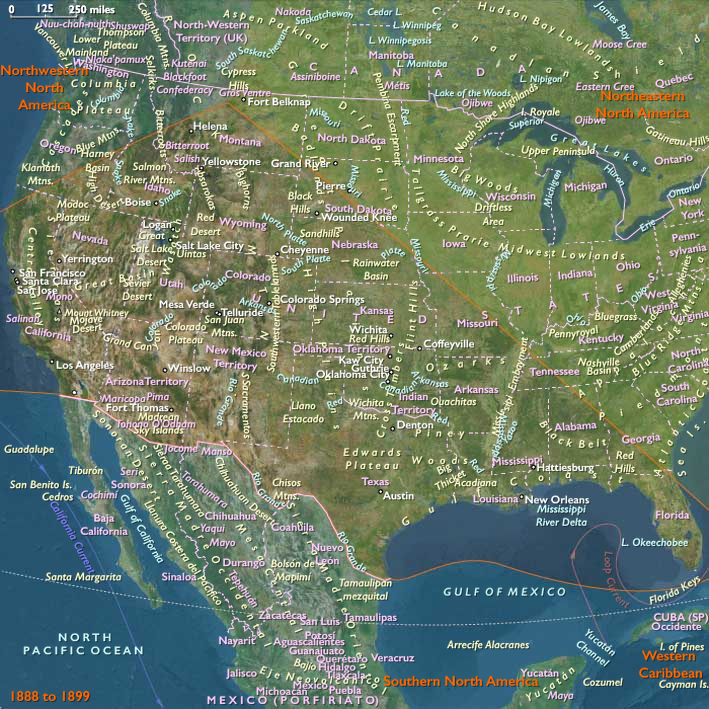
The subregion of Gulf and Western North America includes Mississippi, Louisiana, Arkansas, Texas, Oklahoma, Kansas, New Mexico, Colorado, Wyoming, Arizona, Utah, Nevada, nearly all of California (except the far northwest), nearly all of Florida (except the extreme northeast), southwestern Georgia, most of Alabama, southwestern Tennessee, southern Illinois, southwestern Missouri, most of Nebraska, southeastern South Dakota, southern Montana, southern Idaho, and southeastern Oregon. Anchors included the lower Mississippi delta, the Rio Grande, the California goldfields, and the Great Plains.
Climate & Environmental Shifts
The 19th century saw the end of the Little Ice Age. Periodic droughts afflicted the Great Plains and Southwest, while hurricanes ravaged the Gulf Coast. The Dust Bowl of the 1930s devastated Oklahoma, Texas, and Kansas. Irrigation and damming transformed western rivers (Colorado, Rio Grande).
Subsistence & Settlement
-
United States expansion reshaped the subregion. The Texas Revolution (1836) and U.S.–Mexican War (1846–1848) annexed vast territories from Mexico.
-
California Gold Rush (1849) spurred migration westward. Railroads linked Gulf, Plains, and Pacific coasts.
-
Farming of cotton, rice, and sugar persisted in the Gulf South under slavery until the Civil War (1861–1865), after which sharecropping replaced plantations.
-
The Plains saw mounted bison hunting collapse under U.S. expansion and commercial slaughter.
-
The Southwest and California shifted to ranching, citrus, and irrigated agriculture.
-
Native nations endured forced removals, wars, and confinement to reservations, though cultural lifeways persisted.
Technology & Material Culture
Steamboats plied the Mississippi; railroads crossed the Plains; telegraphs and later highways knit regions together. Oil fields in Texas, Oklahoma, and California transformed economies. Cities like New Orleans, Houston, Dallas, Los Angeles, and San Francisco grew as industrial hubs. Spanish mission architecture survived as heritage, while new skyscrapers and freeways symbolized modernization.
Movement & Interaction Corridors
-
The Mississippi River system remained central to transport.
-
Railroads and highways tied Gulf ports to western mines and farms.
-
The Panama Canal (1914) enhanced Gulf–Pacific linkages.
-
Air routes by mid-20th century tied Los Angeles, Houston, and Miami to global circuits.
Cultural & Symbolic Expressions
-
Native American rituals persisted underground and revived on reservations.
-
African American culture flourished in music—blues, jazz, gospel—rooted in Gulf South experience.
-
Mexican American communities preserved fiesta traditions, Catholic devotions, and bilingual culture across the Southwest.
-
Symbols of progress included oil derricks, rail hubs, and Hollywood.
Environmental Adaptation & Resilience
Dams, canals, and aqueducts adapted deserts for agriculture. Coastal levees tried to buffer hurricanes. Communities adjusted to Dust Bowl migrations, civil rights struggles, and industrial booms. Native, African American, and Mexican American resilience shaped cultural survival under marginalization.
Transition
By 1971 CE, Gulf and Western North America was a mosaic of industrial hubs, farms, and diverse communities. U.S. expansion had fully incorporated the subregion, yet its Indigenous, African American, and Mexican American peoples continued to define cultural resilience and identity.
People
Groups
- Georgia, State of (U.S.A.)
- United States of America (US, USA) (Washington DC)
- Louisiana, State of (U.S.A.)
- Mississippi, State of (U.S.A.)
- Texas, Mexican
- Alabama, State of (U.S.A.)
- Texas, Republic of
- Texas, State of (U.S.A.)
- Alabama, State of (U.S.A.)
- California, State of (U.S.A.)
- Nevada, State of (U.S.A.)
- Arizona, State of (U.S.A.)
- United Farm Workers of America
- American Indian Movement (AIM)
Topics
- Indian Wars in Upper North America
- Texas Revolution or Texas War of Independence
- Trail of Tears, Cherokee
- “Manifest Destiny” and American Expansion; 1840-1851
- Mexican-American War
- American Civil War (War between the States, War of the Rebellion, War of Secession, War for Southern Independence)
- American Civil War & Reconstruction; 1864 through 1875
- Red River War
- Great Sioux War of 1876
- Great Migration
- World War, First (World War I)
- Dust Bowl
- World War, Second (World War II)
- American Civil Rights Movement
- Vietnam War, or Second Indo-China War
Commodoties
Subjects
- Performing Arts
- Environment
- Labor and Service
- Government
- Custom and Law
- Aeronautics
- political movement
- social movements
Regions
Subregions
Years: 1828 - 1971
People
Groups
- Georgia, State of (U.S.A.)
- United States of America (US, USA) (Washington DC)
- Louisiana, State of (U.S.A.)
- Mississippi, State of (U.S.A.)
- Texas, Mexican
- Alabama, State of (U.S.A.)
- Texas, Republic of
- Texas, State of (U.S.A.)
- Alabama, State of (U.S.A.)
- California, State of (U.S.A.)
- Nevada, State of (U.S.A.)
- Arizona, State of (U.S.A.)
- United Farm Workers of America
- American Indian Movement (AIM)
Topics
- Indian Wars in Upper North America
- Texas Revolution or Texas War of Independence
- Trail of Tears, Cherokee
- “Manifest Destiny” and American Expansion; 1840-1851
- Mexican-American War
- American Civil War (War between the States, War of the Rebellion, War of Secession, War for Southern Independence)
- American Civil War & Reconstruction; 1864 through 1875
- Red River War
- Great Sioux War of 1876
- Great Migration
- World War, First (World War I)
- Dust Bowl
- World War, Second (World War II)
- American Civil Rights Movement
- Vietnam War, or Second Indo-China War
Commodoties
Subjects
- Performing Arts
- Environment
- Labor and Service
- Government
- Custom and Law
- Aeronautics
- political movement
- social movements
Regions
Subregions